
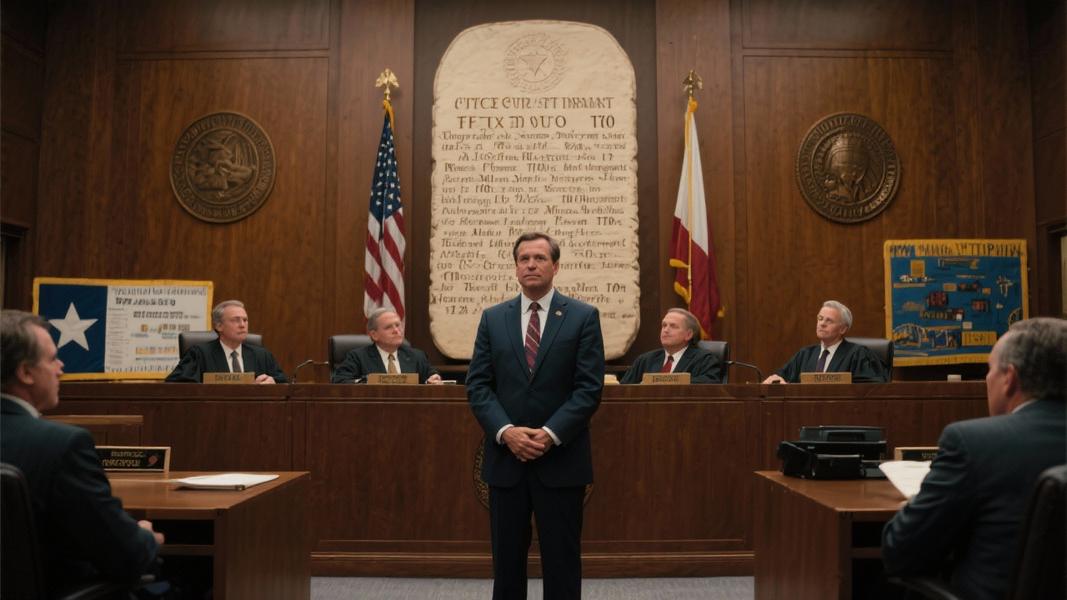
Texas Attorney General Ken Paxton is heading to court — again — this time to defend a controversial law requiring the Ten Commandments to be displayed in public school classrooms across the state.
The U.S. Court of Appeals for the Fifth Circuit has granted Paxton an en banc hearing before the full court in Nathan v. Alamo Heights Independent School District, a case that will determine whether Texas schools can legally post the biblical directives on classroom walls. The court will also review a similar Louisiana law during the proceedings.
How did we get here? The legal battle began after a federal judge temporarily blocked Senate Bill 10 — which mandates Ten Commandments displays in public schools — following lawsuits from families seeking to prevent implementation. Paxton swiftly appealed the decision, setting up this high-stakes constitutional showdown.
“I’m proud to defend Texas’s right to uphold our legal and moral heritage by protecting the display of the Ten Commandments in public schools,” Paxton said in a statement. “There is no reason any school district should be prohibited from displaying these foundational words that have guided our laws and values for centuries. The Ten Commandments reflect principles that shaped both our State and our nation, and students benefit greatly from being able to learn from them daily.”
The Fifth Circuit has ordered expedited briefing in the case, though oral arguments aren’t expected until early 2026 — meaning the legal uncertainty could hang over Texas schools for more than a year.
Despite the ongoing litigation, Paxton hasn’t backed down. He recently issued a legal advisory to school districts across Texas, asserting they still have both the right and obligation to display donated copies of the Ten Commandments in classrooms, as required by the legislation.
The case represents yet another flashpoint in the ongoing national debate about religious expression in public education. Critics argue the mandatory displays violate separation of church and state principles, while supporters maintain the Ten Commandments represent historical and cultural foundations of American legal tradition.
For Texas schools caught in the middle, the outcome of this legal battle will determine whether “Thou shalt not” becomes required classroom reading.
