
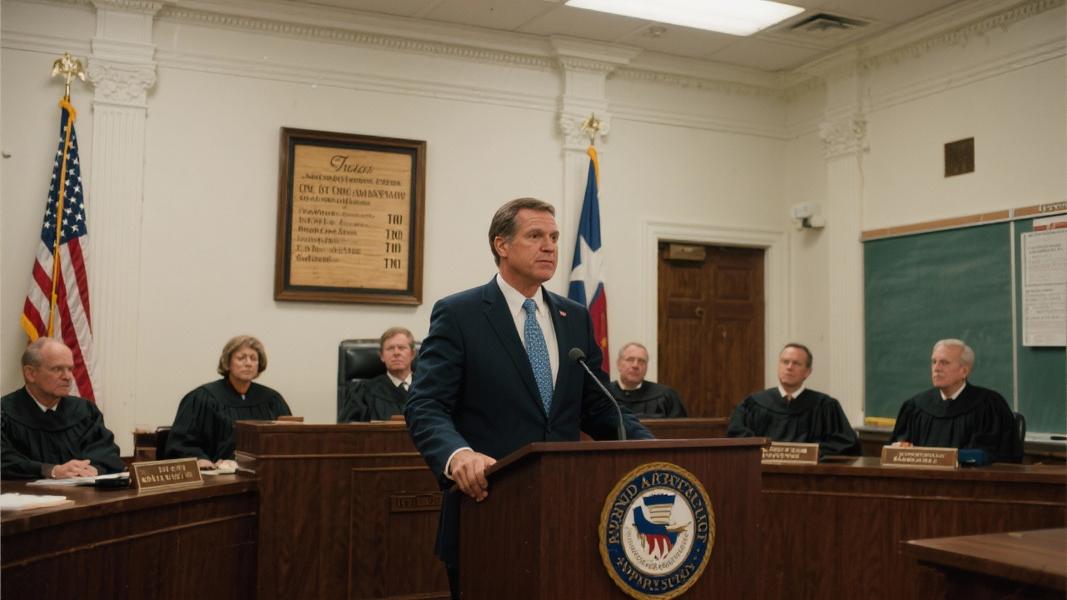
Texas Attorney General Ken Paxton has secured a full-court review in a pivotal legal battle over displaying the Ten Commandments in public school classrooms. The entire Fifth Circuit Court of Appeals will hear arguments in the Nathan v. Alamo Heights Independent School District case, with expedited briefing already ordered and oral arguments expected in early 2026.
The high-profile case centers on Senate Bill 10, a Texas law mandating the display of the Ten Commandments in public school classrooms statewide. Implementation of the controversial legislation was halted by a federal judge after multiple school districts faced lawsuits challenging the requirement.
“I’m proud to defend Texas’s right to uphold our legal and moral heritage by protecting the display of the Ten Commandments in public schools,” Paxton stated in a November 4 press release. “There is no reason any school district should be prohibited from displaying these foundational words that have guided our laws and values for centuries.”
Constitutional Showdown Looms
The en banc hearing, which involves all active judges on the Fifth Circuit rather than the typical three-judge panel, signals the constitutional significance of the dispute. The case will be heard alongside similar litigation from Louisiana, potentially setting up a precedent-making decision that could reshape the boundaries between church and state in public education.
Why does this matter now? The Ten Commandments have long occupied a contested space in American public life, with the Supreme Court previously striking down similar display requirements in public schools while allowing them in other government contexts depending on their presentation and purpose.
Paxton’s office has been aggressive in defending the law, issuing a legal advisory to school districts after SB10’s passage affirming their “right and obligation” to display donated copies of the Ten Commandments. His team maintains the displays represent a valid expression of Texas’s historical and moral foundations rather than an unconstitutional government endorsement of religion.
Critics of the law argue it clearly violates the First Amendment’s Establishment Clause by mandating religious text in public schools. Supporters counter that the Ten Commandments hold historical and cultural significance beyond their religious origins.
“The Ten Commandments reflect principles that shaped both our State and our nation, and students benefit greatly from being able to learn from them daily,” Paxton added in his statement defending the displays.
The case represents just the latest front in an ongoing national debate about religious expression in public institutions. Texas isn’t alone — several states have pursued similar legislation in recent years, though few have advanced as far as Texas’s mandatory display requirement.
Legal experts suggest the Fifth Circuit’s eventual ruling could potentially work its way to the Supreme Court, where the current 6-3 conservative majority might be more receptive to religious displays in public settings than previous courts have been.
With arguments not expected until early 2026, Texas school districts remain in legal limbo about whether they’ll ultimately be required to hang the biblical text in their classrooms or whether such displays will be deemed unconstitutional — a testament to the enduring tension between religious heritage and secular governance in American public life.
