
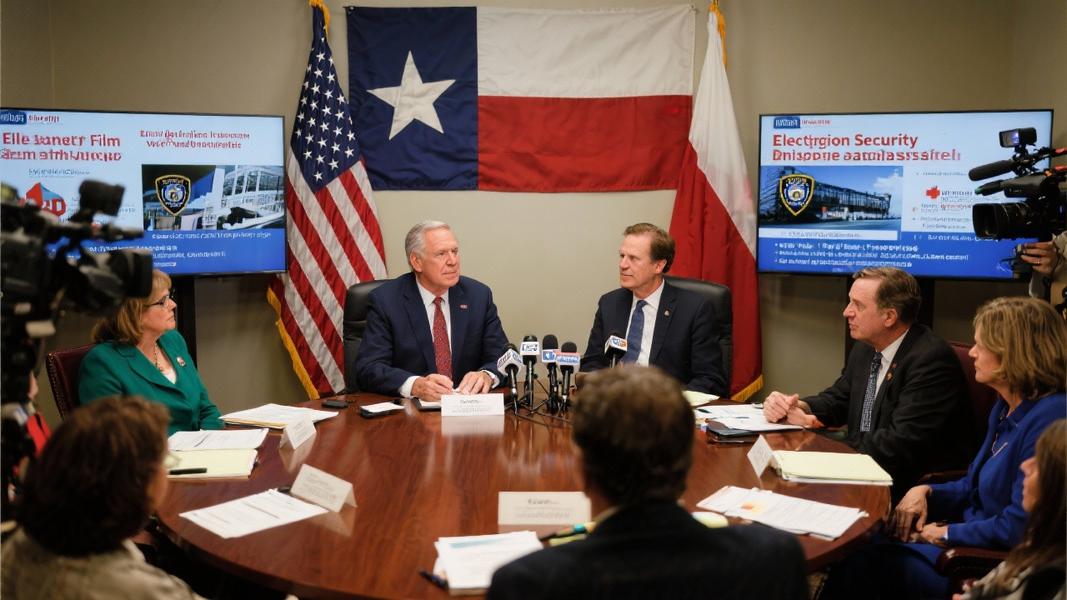
Texas and federal officials unveiled an ambitious $50 billion plan to revitalize rural healthcare during a high-profile roundtable in Austin last week, addressing what one top official called a “crisis” in America’s countryside.
Governor Greg Abbott and newly appointed U.S. Health and Human Services Secretary Robert F. Kennedy Jr. announced the joint initiative on August 28, committing $300 million in state funds alongside $100 million annually in federal support over the next five years to bolster healthcare access across Texas’ rural communities. The funding will target behavioral telehealth, artificial intelligence innovations, and critical laboratory upgrades in areas where medical resources have been dwindling for years.
Rural America’s Healthcare Crisis
“Rural America is in a crisis, and rural hospitals are absolutely critical for them,” Kennedy said following the roundtable with Abbott and local healthcare leaders. The stark assessment comes as rural hospitals nationwide face mounting financial pressures.
The situation in Texas illustrates the nationwide problem. Between 2010 and 2020, the state saw 20 rural hospitals close their doors, with another shuttering in the following four years. Hundreds more facilities remain at risk, including those in Marble Falls, Burnet, Caldwell, and Fredericksburg, according to the Texas Organization of Rural and Community Hospitals, as reported by CBS Austin.
Why such widespread closures? Rural hospitals have been caught in a perfect storm of shifting demographics, escalating operational costs, and limited reimbursements from insurers. Meanwhile, more than 6 million Texans spread across 190+ rural counties continue to depend on these struggling facilities.
The “Big Beautiful Bill”
At the core of the federal response is what Kennedy referred to as the “One Big Beautiful Bill Act,” which will increase Medicaid funding for rural hospitals from $19 billion to $50 billion annually. The distribution mechanism splits the funds into two equal portions: $25 billion will be allocated evenly among states, while the remaining $25 billion will be awarded competitively to states that submit proposals by December 1, 2025, as detailed in recent coverage.
Texas’ own contribution comes through the “Make Texas Healthy Again” package and the Rural Healthcare Transformation Program, which Abbott has positioned as central to his administration’s healthcare strategy. “Texas has more than 190 rural counties serving over 6 million residents. Supporting these communities remains a statewide priority,” the governor emphasized during the joint press conference.
The initiative marks an unusual moment of federal-state alignment in Texas, which has historically maintained an arm’s length relationship with federal healthcare programs.
Technology at the Forefront
Much of the funding aims to modernize rural healthcare delivery through technology. Telehealth services for behavioral health, AI-driven diagnostic tools, and upgraded laboratory facilities figure prominently in the plans outlined by Becker’s Hospital Review.
“This represents an unprecedented fast pace intended to meet the dire need that people have,” Kennedy stated, underscoring the urgency behind the initiative.
But when will rural Texans actually see improvements in their local healthcare options? That remains unclear. Despite the sizable financial commitments, neither Kennedy nor Abbott provided specific timelines for implementation or service expansion during their announcement.
Still, the joint federal-state approach represents one of the most significant investments in rural healthcare in recent memory, potentially offering a lifeline to facilities that provide not just medical care but also economic stability to small communities across the Lone Star State.
For millions of rural Texans who’ve watched their local hospitals struggle — or close entirely — the funding can’t come soon enough. The question now is whether this massive injection of resources will be enough to reverse the decade-long trend of rural healthcare decline, or if it’s merely treating symptoms of a more fundamental problem in America’s healthcare system.
