
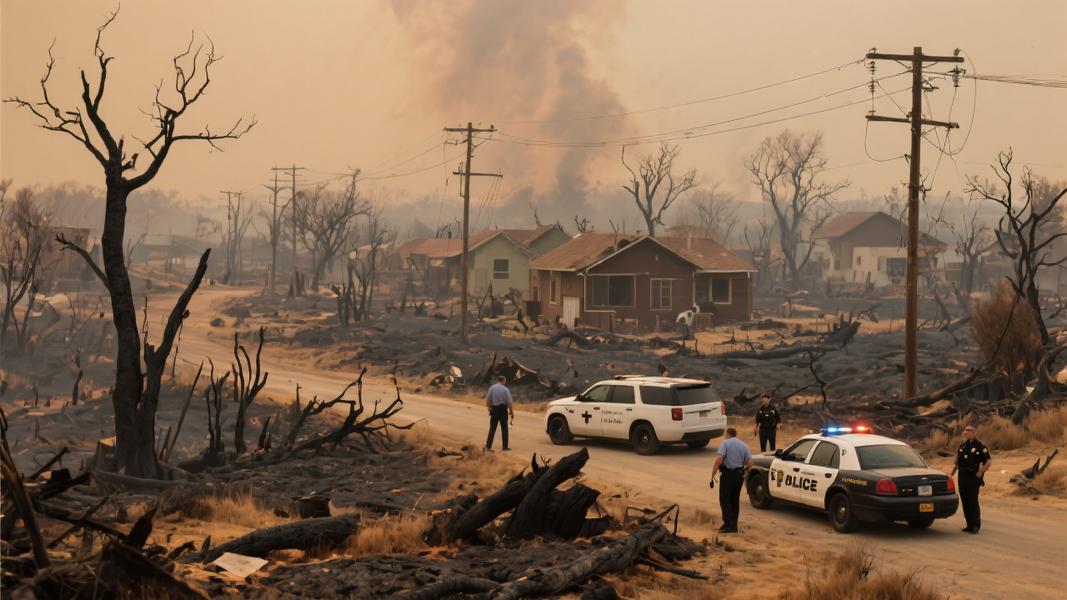
The devastating wildfires that scorched over 1 million acres of the Texas Panhandle earlier this year weren’t just an act of nature — they were potentially preventable disasters caused by neglected infrastructure, according to state investigators. Now, utility companies are facing serious questions about whether corporate priorities trumped public safety.
Texas Attorney General Ken Paxton has launched a formal investigation into the catastrophic Smokehouse Creek and Windy Deuce Fires that tore through the region in 2024, destroying more than 130 homes and claiming two lives. The investigation specifically targets Xcel Energy, Osmose Utilities Services, and Southwestern Public Services Company, with Paxton’s office issuing civil investigative demand letters to all three companies to determine if Texas laws were violated.
Decaying Infrastructure at the Heart of the Disaster
A Texas House committee’s investigative report delivered a damning assessment: the largest and most destructive fires were caused by power lines and electrical equipment in disrepair. The Smokehouse Creek Fire — the largest of the blazes — reportedly began from a decaying power pole that had previously been identified by Osmose Utility Services as needing replacement.
“It is unconscionable that utility companies might have sacrificed infrastructure maintenance, public safety, and the well-being of our Texas communities for radical ESG and DEI goals,” said Attorney General Paxton in a scathing statement.
While Xcel Energy has acknowledged responsibility for the fires, the company has denied any negligence in their maintenance practices. But the question remains: how could infrastructure failures of this magnitude occur under regular inspection protocols?
Human Cost and Environmental Damage
The human toll of these fires can’t be overstated. Two people lost their lives, more than 130 homes were reduced to ash, and the ecological damage to over 1 million acres of Texas Panhandle will take years to recover. Ranchers in the region reported devastating livestock losses, with some losing entire herds built over generations.
That devastation has prompted swift legislative action. Texas lawmakers have advanced several bills aimed at mitigating future wildfire risks, including the creation of the Texas Interoperability Council to improve emergency communications during disasters.
“My aim is to ensure that every first responder risking their life to combat these fires and other emergencies has the tools to communicate effectively with those around them,” Representative Ken King said regarding the new legislation.
Corporate Priorities Under Scrutiny
The investigation has raised uncomfortable questions about whether utility companies prioritized environmental, social, and governance (ESG) initiatives and diversity, equity, and inclusion (DEI) programs over critical infrastructure maintenance. Critics argue that resources may have been diverted from essential safety protocols to satisfy corporate social responsibility metrics.
Industry defenders point out that the region faces unique challenges, including vast territories to monitor and maintain, harsh weather conditions that accelerate deterioration, and the economic realities of servicing rural communities.
Still, the investigative committee’s findings suggest a pattern of “irresponsible” behavior by utility providers who weren’t held accountable for maintaining their equipment to safe standards.
As Texas enters another dry season, the state’s response to these findings may determine whether the next inevitable spark becomes a manageable incident or another historic disaster. For the residents rebuilding their lives across the charred landscape of the Panhandle, the difference isn’t academic — it’s everything.
