
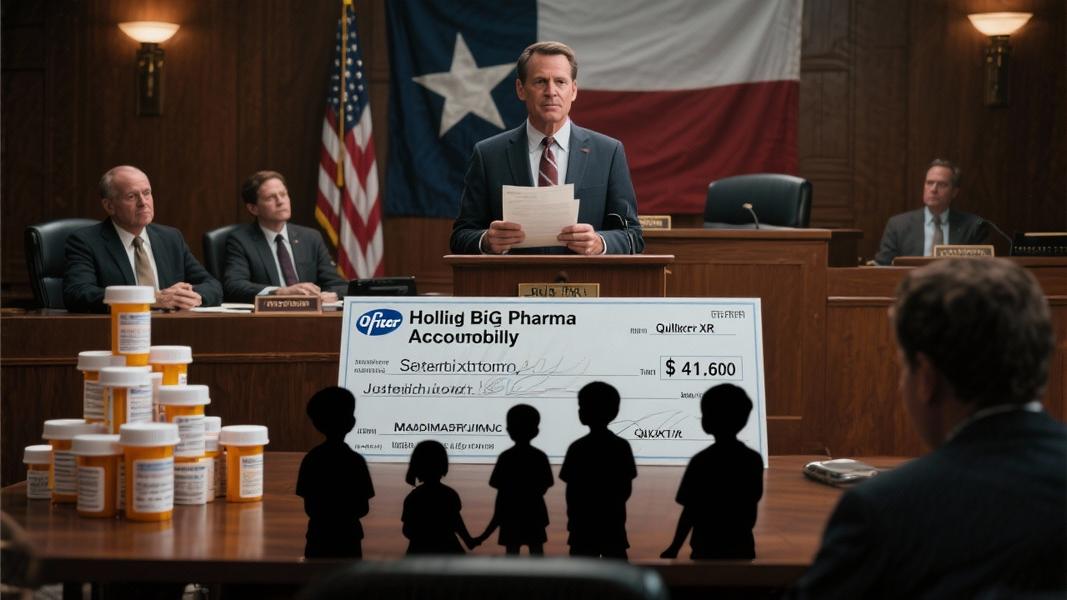
Texas Secures $41.5 Million Settlement from Pfizer and Tris Pharma Over Adulterated ADHD Medication
Texas Attorney General Ken Paxton has secured a $41.5 million settlement from pharmaceutical giants Pfizer and Tris Pharma over allegations they provided adulterated ADHD medication to children on Medicaid while manipulating test results to hide quality problems.
The settlement resolves a lawsuit that claimed the companies defrauded Texas Medicaid by providing substandard Quillivant XR, a liquid ADHD medication, to Texas children while falsifying quality tests to ensure the drug remained eligible for Medicaid reimbursement between 2012 and 2018.
“I will never back down from taking on the biggest corporations in the world that deceive and take advantage of Texans,” Paxton said in a statement. “Pfizer and Tris Pharma provided adulterated drugs to children for years and changed test results in order to obtain the benefit of taxpayer-funded Medicaid reimbursement.”
Years of Alleged Manipulation
According to the lawsuit, Tris Pharma, which manufactured the medication, allegedly altered testing methods to ensure Quillivant XR would pass regulatory requirements. Meanwhile, Pfizer, which marketed and distributed the drug, allegedly misrepresented its compliance with federal and state laws to Texas Medicaid officials.
“For years, Tris altered the drug’s testing method in violation of federal and state laws to ensure Quillivant passed regulatory hurdles and could continue to be sold,” investigators revealed. “Despite knowing about these serious problems, Pfizer misrepresented to the Medicaid program that Quillivant was in compliance.”
The suit specifically targeted both companies for submitting false claims to Texas Medicaid for a medication that allegedly failed to meet required manufacturing standards. The state’s legal complaint also named Tris Pharma CEO Ketan Mehta as a defendant, though the court later limited jurisdiction over him based on geographic considerations.
Why would established pharmaceutical companies risk their reputations with such practices? The financial incentives were substantial — getting and keeping Quillivant XR on Texas’s preferred drug list for Medicaid meant guaranteed sales across one of America’s largest state healthcare systems.
Legal Complexities
Court documents indicate that “Mr. Mehta directed the adulteration of Quillivant XR and knew it would ultimately reach Texas Medicaid patients.” However, jurisdictional challenges complicated the case, as “the Court of Appeals emphasized that jurisdiction must rest on a defendant’s own contacts with Texas, not the unilateral acts of third parties such as Pfizer.”
This settlement represents another significant victory for Paxton’s Civil Medicaid Fraud Division, which has been aggressively pursuing pharmaceutical companies for alleged improprieties in their dealings with the state’s Medicaid program.
“Our Civil Medicaid Fraud Division has done an outstanding job holding these pharmaceutical companies accountable,” Paxton noted, pointing to other recent recoveries including $26 million from Apotex and $158 million from Johnson & Johnson.
Broader Implications
The $41.5 million settlement underscores Texas’s willingness to take on major pharmaceutical companies over alleged misconduct affecting vulnerable populations. For families of children who were prescribed Quillivant XR through Medicaid during the six-year period in question, the case raises troubling questions about medication quality and regulatory oversight.
Neither Pfizer nor Tris Pharma has publicly admitted wrongdoing as part of the settlement agreement, which is common in such cases. The settlement amount, however, speaks volumes — representing one of the larger pharmaceutical fraud recoveries in Texas’s recent history.
For Paxton, who has positioned himself as a crusader against corporate malfeasance, the case reinforces his message to pharmaceutical companies: “Under my watch, Big Pharma will not escape justice for lying about the effectiveness of its drugs.”
