
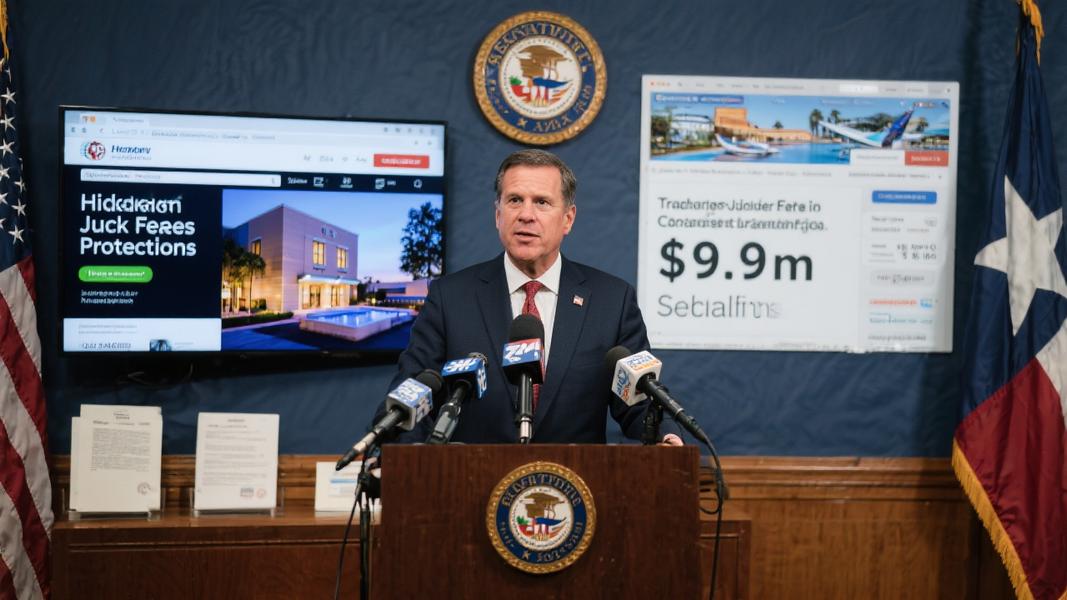
Texas Attorney General Ken Paxton has secured a $9.5 million settlement with travel giant Booking Holdings Inc., marking the largest state-level recovery ever related to hidden “junk fees” in the travel industry.
The landmark agreement, announced by Paxton’s office this week, addresses what investigators described as deceptive marketing practices that deliberately concealed mandatory hotel room fees from consumers until late in the booking process.
Hidden Fees, Real Costs
“Deceiving Texans by hiding fees is both a deeply unethical business practice and a violation of the law. Yet, that’s exactly what Booking chose to do, and now it’s time for the company to pay for their unlawful actions,” Paxton said in a statement.
The case centered on Booking Holdings’ practice of advertising artificially low room rates that weren’t actually available to consumers. The company, which operates major travel platforms including Booking.com, Priceline.com, and Kayak.com, also allegedly obscured mandatory fees by bundling them with government taxes under a single “Taxes and Fees” category — a move investigators say misled consumers and gave the company an unfair competitive advantage.
What does this mean for travelers? For starters, more transparency. The settlement requires Booking to disclose all additional fees upfront, allowing consumers to compare actual prices more efficiently when shopping for accommodations.
Part of a Broader Crackdown
This isn’t Paxton’s first rodeo when it comes to tackling hidden fees in the hospitality industry. His office has previously secured similar agreements with major hotel chains including Marriott, Omni, Choice Hotels, and Hilton, pushing for greater transparency in pricing.
The widespread practice of hiding mandatory fees — often labeled as “resort fees,” “destination fees,” or “facility charges” — has been a longstanding consumer irritant. These charges typically range from $20 to $40 per night but can sometimes exceed $100 at luxury properties.
Industry watchers note that these enforcement actions have helped spur broader regulatory attention. The Federal Trade Commission has recently proposed rules targeting these so-called “junk fees” across multiple industries, including hospitality and travel.
Consumer Impact
For Texas consumers, the settlement represents not just financial compensation but a shift toward more honest pricing practices. The $9.5 million recovery — substantially larger than previous settlements in this arena — signals that authorities are taking the issue of fee transparency increasingly seriously.
“The settlement’s terms require Booking to disclose any fees added on to a hotel room’s price upfront, allowing consumers to more efficiently shop and compare prices,” the AG’s office explained.
Frustrated by those surprise fees at checkout? This settlement suggests relief may be coming, though industry-wide changes will likely take time to fully implement.
Paxton has positioned himself as “a national leader in taking on companies that mislead consumers by hiding fees,” according to the press materials from his office.
While the settlement represents a significant win for consumer advocates, the true test will be whether it leads to permanent changes in how the travel industry as a whole approaches pricing transparency — or if companies will simply find new ways to obscure the true cost of their services.
