
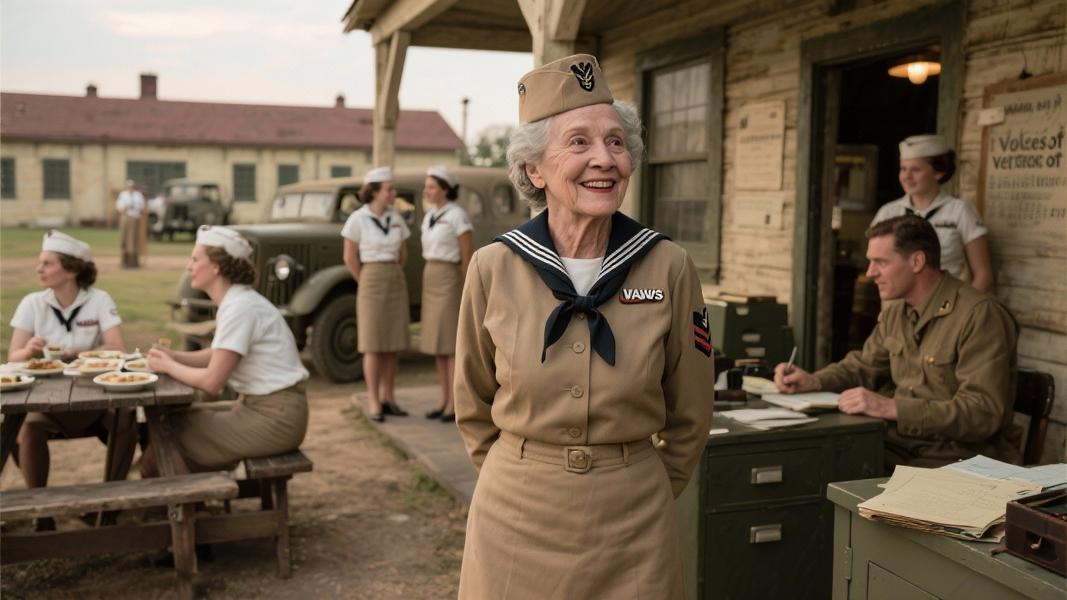
From her bed in West Texas, Frances Relyea first heard the news that would change her life — and America’s trajectory — crackle through the radio. Pearl Harbor had been attacked.
“I was lying on a bed at my mother’s place, and I heard the news on the radio, and I got up and I shook my mother, who’s hard of hearing, got her attention, and I said they just bombed Pearl Harbor,” Relyea recalled in her oral history, now preserved by the Texas Veterans Land Board.
Born on October 3, 1921, this shy West Texas woman would soon find herself swept into history as one of the thousands of women who joined the Navy WAVES (Women Accepted for Volunteer Emergency Service) during World War II — a decision that transformed her life in unexpected ways.
Finding Her Voice in Service
“I did go into the Navy. My sister talked me into it. I never would’ve done that because I was so shy, but I guess it’s one of the best things that ever happened to me because they really took that shyness out, believe me. It didn’t take long either,” Relyea shared about her enlistment decision.
After completing basic training in the Bronx, New York, Relyea was stationed at Whiting Field in Florida. It was there, amid the disciplined routine of military life, that a chance encounter at the base library would change the course of her personal history.
“Some sailors sat down with us. I do not know to this day why or how it happened, but before the night was over, I was sitting with him, and I’ve been sitting with him ever since,” she explained, describing the first meeting with the man who would become her husband.
A Wartime Love Story
Who would have guessed that the head of the WAVES chow hall, a man with a reputation for sternness, would capture the heart of this formerly shy Texan? With characteristic humor, Relyea joked that “I married a dumb Yankee,” referring to her husband’s New York origins.
Their wartime romance might have faced an early separation had fate not intervened. Her husband was initially slated for submarine duty — a particularly dangerous assignment during World War II — but was spared due to high blood pressure, allowing the couple to remain together throughout the conflict.
After their service concluded, the couple built a life together in Texas, adopting a daughter and raising two sons. Years later, they would settle at the William R. Courtney Texas State Veterans Home in Temple, Texas. “When we first came in here, walked in, Charles was with me. Charles, this is it,” Relyea remembered about their decision to make the veterans home their final residence.
Preserving Veterans’ Voices
Relyea’s story represents just one of more than 500 oral histories collected through the Texas Veterans Land Board’s Voices of Veterans program. The initiative, the first of its kind run by a state agency, documents Texas veterans’ experiences both during their military service and after returning home.
Texas Land Commissioner and Veterans Land Board Chairwoman Dawn Buckingham, M.D., has made preserving these stories a priority. The program continues to grow, with Relyea’s account representing the latest installment in the ongoing series.
For women like Frances Relyea, military service during World War II wasn’t just about patriotic duty — it was transformative. That shy girl from West Texas found her voice in the Navy WAVES, along with love and a lifetime of memories that now serve as valuable historical testimony for future generations.
