
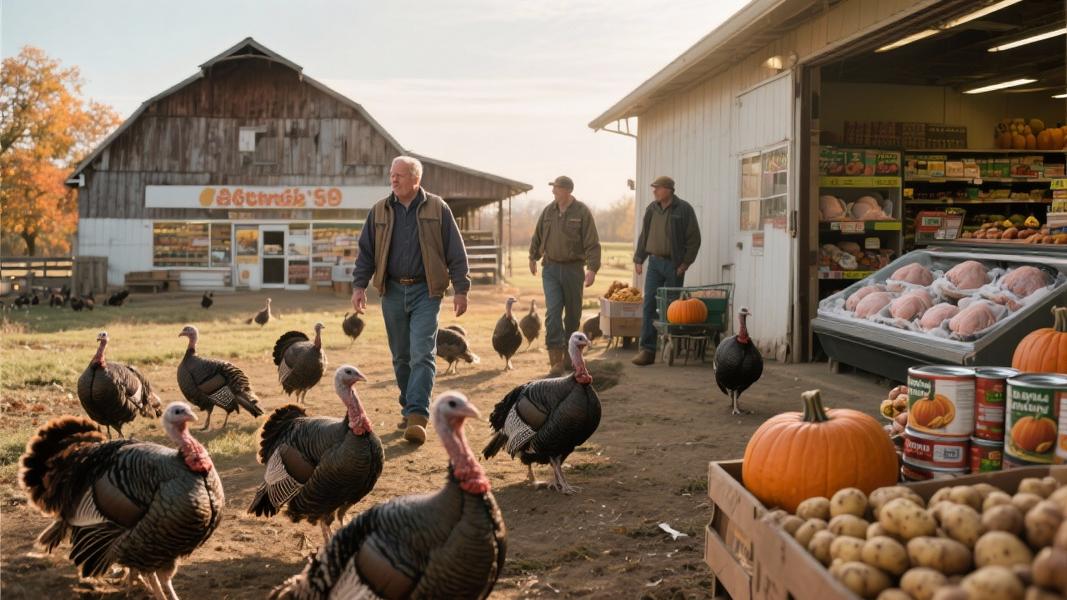
Thanksgiving shoppers can breathe a small sigh of relief this year, as the cost of the traditional holiday feast isn’t rising as dramatically as many had feared — though your grocery bill will still depend heavily on what’s on your menu.
Despite significant wholesale turkey price increases fueled by bird flu outbreaks and reduced supply, many consumers won’t feel the full impact at checkout. “Wholesale turkey prices are up big, experts say, but shoppers preparing for Thanksgiving may not see higher prices, because many grocers are offering discounted turkeys to get customers in the door,” according to a recent market analysis published by Fox6.
Mixed signals on meal costs
The overall picture shows modest increases for the complete Thanksgiving spread. Deloitte’s annual holiday food survey found that “the combined cost of turkey, sides, and sparkling cider for a gathering of eight amounts to US$76.50, up only 0.6% from 2024 and somewhat below the food-at-home inflation rate,” as indicated in their consumer products analysis.
Even more encouraging, the American Farm Bureau Federation’s data suggests actual price decreases for some traditional items. Their survey shows “the average cost of Thanksgiving staples that make up a classic holiday feast for 10” at $55.18 — working out to roughly $5.52 per person. This includes a 16-pound frozen turkey priced at $21.50 (or $1.34 per pound), representing a drop of more than 16% compared to last year.
So why are some shoppers still experiencing sticker shock in the grocery aisles?
The devil’s in the details
That relatively stable overall picture masks significant volatility across individual items. The Century Foundation notes that “some staples will run families over 20 percent more than last year’s prices, including onions (56 percent), spiral hams (49 percent), cranberry sauce (22 percent), and creamed corn (21 percent).”
These dramatic increases on select items are driving an overall meal cost increase of nearly 10% in some market analyses, with experts pointing to tariffs and ongoing avian flu impacts as key factors. The discrepancy between various reports largely comes down to which items researchers include in their “traditional” meal calculations.
For budget-conscious shoppers, the turkey itself remains the centerpiece of good news. Major retailers continue the long-standing practice of using turkeys as “loss leaders” — items priced at or below cost to drive foot traffic, with the expectation that customers will purchase higher-margin sides and desserts during the same shopping trip.
“It’s a strategic calculation for grocers,” explains retail analyst Maria Sanchez, who wasn’t involved in the surveys. “They know consumers are price-sensitive about the main dish, but might splurge on specialty cranberry sauce or premium pumpkin pie.”
That means savvy shoppers who cherry-pick deals across multiple stores could potentially serve Thanksgiving dinner for less than last year. Still, those who grab everything at one location or opt for premium versions of traditional sides might see their total bill climb substantially higher than the modest increases suggested by national averages.
As families finalize their shopping lists, one thing is clear: in 2025’s Thanksgiving economy, what you eat might matter as much as where you shop.
