
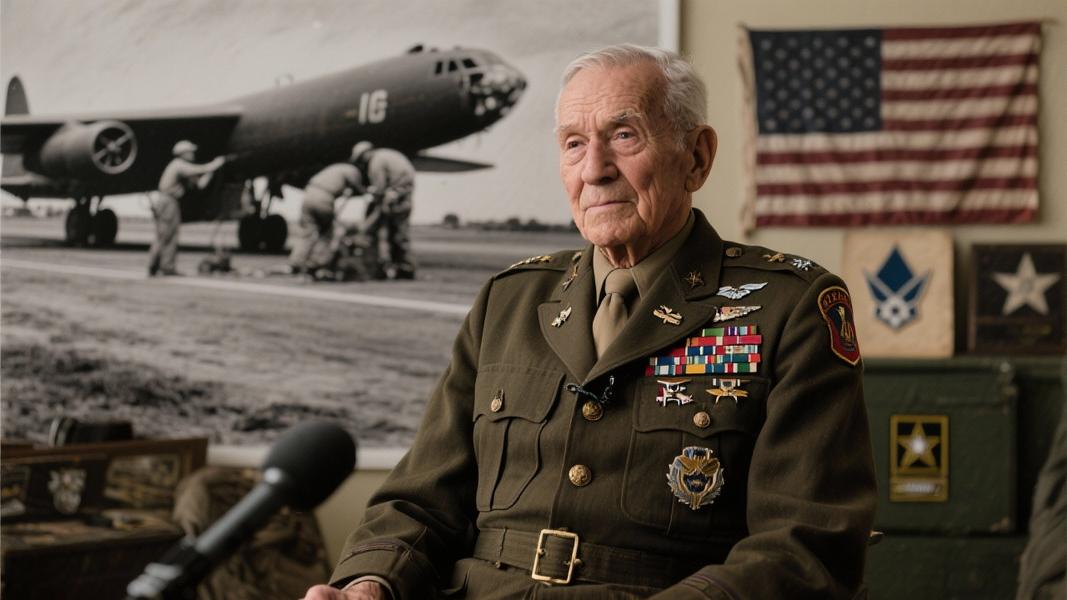
From World War II to Vietnam, the name Conrad has become something of a military tradition in America, with multiple generations serving across different branches and conflicts. These servicemembers, sharing a surname but often separated by decades and different theaters of operation, represent a cross-section of American military experience spanning nearly a century.
A Legacy of Service
Senior Master Sergeant Edward Conrad’s military career reads like a timeline of America’s 20th century conflicts. Joining the U.S. Army Air Forces at just 17 years old in 1935, his service stretched through World War II, Korea, and Vietnam, according to records documented by the Texas General Land Office. As part of the 7th Bombardment Wing, Conrad played a critical role regenerating B-52 aircraft returning from combat missions over Vietnam.
His exceptional service earned him Airman of the Year honors twice before his retirement in 1966. Today, he resides at the Frank M. Tejeda Texas State Veterans Home in Floresville, Texas — one of many facilities providing specialized care for aging veterans.
But the Conrad military connection doesn’t end there. In a different era, Captain Edgar M. Conrad from Kansas City, Missouri commissioned through West Point in 2010, as military records show. His career has included various military police roles from platoon leader to commander, with postings ranging from Guantanamo Bay to South Korea.
Different Generations, Different Wars
How far back does the Conrad military tradition extend? Surprisingly, to the earliest days of Texas history. Edward Conrad, born in Philadelphia in April 1811, became an early Texas soldier and politician, as historical archives reveal. His service predates both world wars, representing an even earlier chapter in American military history.
Another Edward Conrad took a different path, first enrolling at Eastern Kentucky University in 1954 before taking leave in 1958 to join the Army. His service included time at Fort Gordon, Georgia, according to his obituary published in the Daily Press.
The World War II era saw yet another Edward Conrad drafted into the US Army Air Corps in 1940. Following basic training at Fort Dix, he served two years in North Africa, as noted in funeral home records.
Modern Service
The tradition continues today. Air Force personnel named Conrad currently supports the Explosive Ordnance Disposal Unit (EOD), as highlighted in Air Force media materials. And during holiday seasons, Master Sgt. Edouard Conrad from RAF Lakenheath has been recorded sending seasonal greetings: “My name is Master Sergeant read from RAF Lakenheath. I want to wish a Merry Christmas and Happy Holidays to our all of friends and family.”
For many veterans like Edward E. Conrad, their service lives on through digital memorials where stories, photos, and tributes preserve their military legacies.
What connects these different Conrads across time isn’t just a surname but a shared commitment to service that spans generations and conflicts. From World War II’s North African campaign to today’s modern military operations, the Conrad name has become woven into America’s military fabric — a small but telling example of how military service often runs through American families across decades, wars, and branches of service.
