
In a world where foreign policy doctrines come and go, one American declaration has stood the test of time for over two centuries, shaping hemispheric relations and projecting U.S. power far beyond its borders.
America’s Original Foreign Policy: The Monroe Doctrine at 200
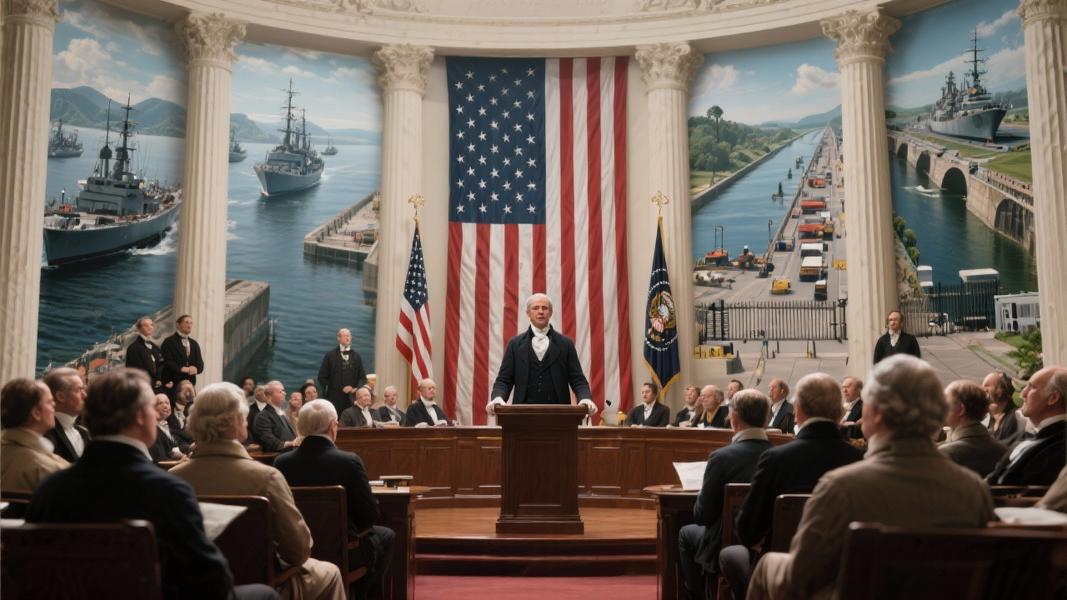
On December 2, 1823, President James Monroe delivered his seventh annual State of the Union address to Congress, articulating what would become one of the most enduring principles in American diplomacy. “The American continents, by the free and independent condition which they have assumed and maintain, are henceforth not to be considered as subjects for future colonization by any European powers,” Monroe declared, establishing a cornerstone of U.S. foreign policy that would echo through generations.
The doctrine wasn’t just about protecting newly independent Latin American republics. It was a bold assertion of American interests in its own neighborhood, warning European powers to keep their imperial ambitions an ocean away. “We should consider any attempt on their part to extend their system to any portion of this hemisphere as dangerous to our peace and safety,” the president stated in language that left little room for interpretation.
What’s often forgotten is how the doctrine came to be. Secretary of State John Quincy Adams, the shrewd diplomat and future president, pushed for America to stake its claim independently rather than joining forces with Britain. Adams convinced Monroe “to make a unilateral declaration of American policy” rather than issue a joint statement that might have limited U.S. freedom of action later.
The Monroe Doctrine established clear boundaries: the United States would respect existing European colonies but would oppose any new attempts at colonization or political intervention in the Americas. “The United States proclaimed, first, that the continents of North America and South America ‘are henceforth not to be considered as subjects for future colonization by any European power.’ The United States, however, would not interfere with existing colonies or dependencies,” as documented in Monroe’s historic message.
But what began as a defensive posture for a young nation eventually transformed into a justification for American intervention throughout Latin America. The doctrine has been reinterpreted, expanded, and invoked by presidents from Theodore Roosevelt to John F. Kennedy, often in ways Monroe himself might not have recognized.
Has the doctrine always lived up to its lofty ideals? That’s complicated. While initially designed to protect newly independent Latin American nations from European reconquest, it later became associated with U.S. military interventions and support for friendly regimes, even undemocratic ones.
Still, the doctrine’s core principle of protecting the hemisphere from outside threats has remained remarkably consistent. “In the centuries since, President Monroe’s doctrine of sovereignty has guarded the American continents against communism, fascism, and foreign infringement,” the White House has noted, highlighting its adaptability to evolving global threats.
Two hundred years later, as great power competition once again dominates international relations, Monroe’s words continue to reverberate through American foreign policy discussions. Perhaps that’s the true legacy of the doctrine – not as a rigid set of rules, but as a flexible framework that has allowed the United States to define its role in the Western Hemisphere according to the challenges of each era.
