
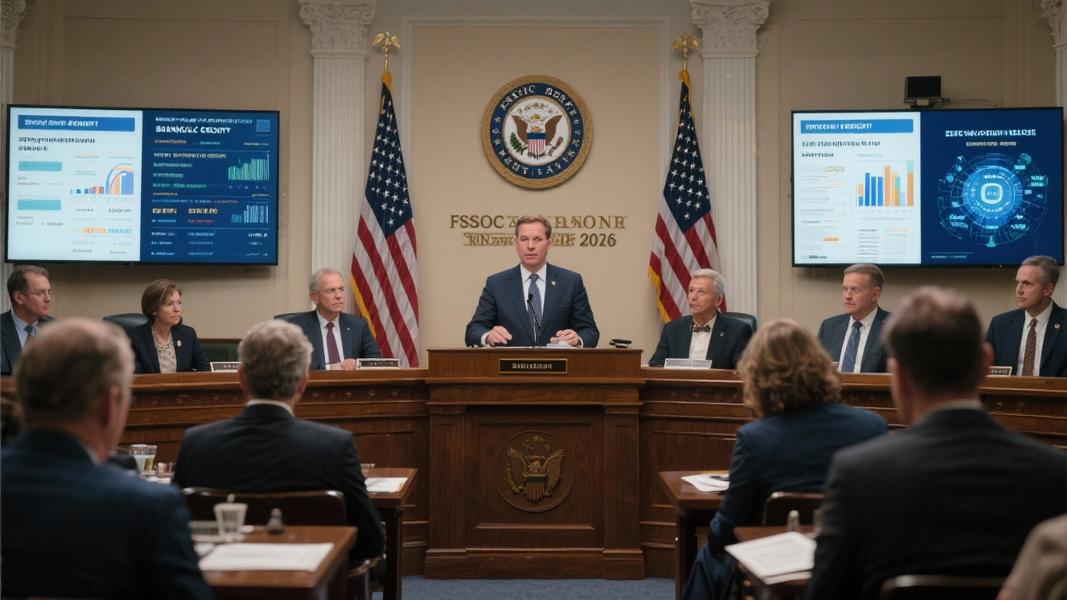
Treasury Secretary Scott Bessent took aim at the Biden administration’s financial regulatory approach during a Senate hearing Thursday, characterizing it as “regulation by reflex” that he claims contributed to multiple major bank failures in 2023.
Appearing before the Senate Banking Committee to present the Financial Stability Oversight Council’s 2025 annual report, Bessent outlined the Trump administration’s dramatically different regulatory vision focused on what he called “Parallel Prosperity” — positioning economic growth at the center of financial oversight.
“Since Day One, President Trump has focused on building Parallel Prosperity—an era of economic expansion where Wall Street and Main Street grow together,” Bessent testified, marking a clear break from his predecessors’ approach.
Sharp Criticism of Past Policies
The Treasury Secretary’s comments represent the administration’s most pointed critique yet of financial regulatory policies during President Biden’s term. Bessent directly linked what he characterized as overzealous regulation to the collapse of three major financial institutions in 2023, which included the second, third, and fourth largest bank failures in U.S. history.
His testimony comes just a day after a particularly contentious exchange with House Democrats, where lawmakers repeatedly interrupted Bessent, with some reportedly telling him to “shut up” during questioning about economic policy, according to video from the hearing.
The contrast between the two hearings highlighted the increasingly partisan divide over financial regulation, with Republicans generally supporting Bessent’s deregulatory approach while Democrats warn of potential risks to financial stability.
New Regulatory Priorities
What exactly does “Parallel Prosperity” mean for Wall Street regulation? Bessent outlined four key areas of focus for the Financial Stability Oversight Council under his leadership: Treasury markets, cybersecurity, regulatory modernization, and artificial intelligence.
Notably absent were many climate-related financial risk initiatives that had been priorities under the previous administration. Instead, Bessent emphasized market liquidity and functioning, particularly in Treasury markets.
“Ongoing monitoring and targeted reforms by individual agencies remain essential to financial stability,” Bessent stated, highlighting the work of the Inter-Agency Working Group on Treasury Market Surveillance and the Market Resilience Working Group.
The shift represents a fundamental reorientation of financial regulatory priorities under the second Trump administration, with economic growth considerations now apparently taking precedence over what the administration characterizes as excessive risk mitigation.
Political Battleground
Can this new approach gain bipartisan support? That seems increasingly unlikely given the heated exchanges with Democratic lawmakers this week.
Several Democratic senators pushed back during questioning, suggesting that rolling back regulations could expose the financial system to new vulnerabilities. Republican members generally praised the new direction, arguing that excessive regulation had stifled economic growth and innovation.
Banking industry representatives have largely welcomed the shift, while consumer advocates and some academic experts have expressed concern about potential systemic risks.
The Treasury Department has indicated that more detailed regulatory proposals will be forthcoming in the coming months, setting the stage for what promises to be a contentious battle over the future of financial regulation in America — one that could reshape Wall Street and Main Street alike for years to come.
