
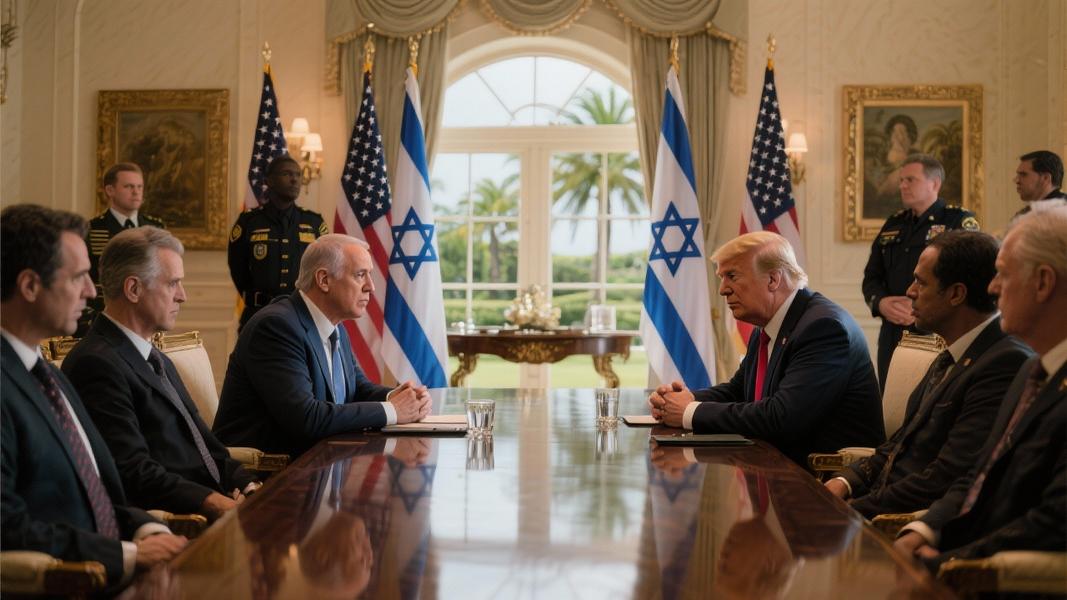
President Trump and Israeli Prime Minister Benjamin Netanyahu met Monday at Mar-a-Lago for critical talks that could reshape Middle East policy as conflicts simmer across multiple fronts.
The high-stakes meeting between the two leaders comes at what many analysts view as a pivotal moment in the region, with decisions pending on Gaza, Lebanon and Iran that could determine the trajectory of conflicts that have intensified over the past year. This marks their sixth face-to-face meeting, but perhaps none has carried such immediate consequences for regional stability as tensions continue to mount across multiple fronts, according to sources who spoke with the Times of Israel.
Critical Timing
Netanyahu arrived at Trump’s Florida resort after earlier meetings with key members of the incoming administration. The Israeli leader held talks with Secretary of State Marco Rubio Monday morning, followed by discussions with Defense Secretary Pete Hegseth — two figures who will help shape America’s Middle East policy after the January inauguration, ABC News confirmed.
What’s actually on the agenda? Foremost is the fragile Gaza ceasefire implemented in October, which represents just the first phase of a three-stage peace plan. The details of the second phase remain under active negotiation, with significant sticking points remaining between the parties involved, as noted by security analysts tracking the process.
The ceasefire has largely held despite occasional flare-ups. “The ceasefire in Gaza is broadly holding, despite sporadic clashes between the Israel Defense Forces and Gaza militants — plus deadly IDF strikes,” one regional expert told reporters. Israeli forces have pulled back to what military planners call the “yellow line,” creating a buffer zone that has temporarily reduced the intensity of the conflict while negotiations continue behind the scenes.
Regional Complexities
Beyond Gaza, the talks are expected to address broader regional concerns, including tensions with Lebanon and the ongoing threat posed by Iran. Netanyahu has consistently maintained that Israel faces existential threats requiring a firm response, a position he’s likely to emphasize with Trump as the president-elect prepares to take office.
“Yet the sixth, slated for Monday at Trump’s Mar-a-Lago resort, comes at an especially critical point, where difficult decisions must be made on the way forward in Gaza, Lebanon and Iran,” the Times of Israel reported, underscoring the complex calculus facing both leaders.
The meeting carries particular significance as both men prepare for significant transitions. Netanyahu faces mounting political pressure at home, while Trump is assembling his administration ahead of returning to the White House in January.
Observers will be watching closely for signals about how the incoming Trump administration might approach these regional conflicts differently than his predecessor. The outcomes of these discussions could set the tone for U.S.-Israeli relations for years to come, with implications stretching far beyond the borders of either country.
