
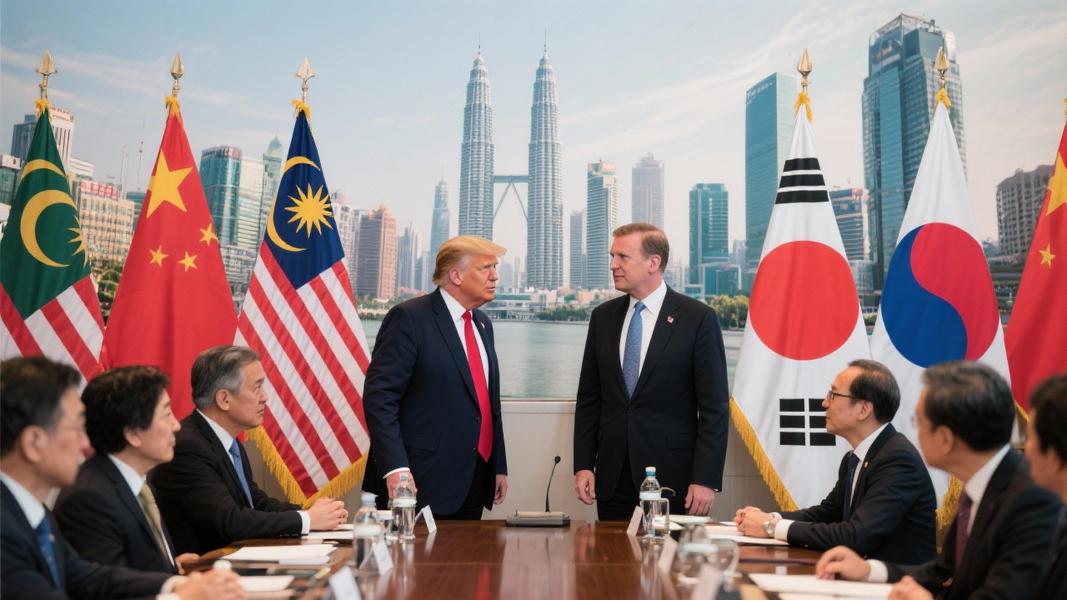
Treasury Secretary Scott Bessent will join President Donald Trump on a three-nation Asian tour next week, with a high-stakes meeting with Chinese officials on trade tensions topping the agenda amid ongoing economic friction between the world’s two largest economies.
The trip, which begins October 23, 2025, will take the pair to Malaysia, Japan, and South Korea, the Treasury Department announced Wednesday. The Asian tour represents one of Trump’s most significant international engagements since returning to office and places Bessent at the center of critical economic diplomacy efforts.
China Trade Talks Headline Malaysia Stop
Perhaps the most closely watched moment will come in Malaysia, where Bessent plans to meet with Chinese Vice Premier He Lifeng on the sidelines of the 47th ASEAN Summit in Kuala Lumpur. The meeting follows a recent video call between the two officials, which resulted in an agreement to hold formal trade talks.
What’s at stake? Plenty. The scheduled discussions represent the latest attempt to navigate the complex economic relationship between Washington and Beijing, which has been marked by tariffs, export controls, and mutual suspicion since Trump’s first term.
“While in Malaysia, Secretary Bessent will meet with Vice Premier He Lifeng of the People’s Republic of China to discuss trade between the United States and China,” the Treasury Department stated in its release. The meeting comes as both nations have signaled interest in finding common ground despite lingering tensions.
Japan State Visit and APEC Forum
After Malaysia, the delegation will head to Tokyo, where Bessent will participate in Trump’s state visit. The Japan leg underscores the administration’s focus on strengthening ties with key allies in the region as it simultaneously navigates its China relationship.
The trip concludes in South Korea, where Bessent will take part in the Asia-Pacific Economic Cooperation (APEC) South Korea 2025 Forum in Gyeongju. The multilateral gathering brings together economies responsible for approximately 60 percent of global GDP.
Economic observers view the upcoming trip as a critical test for Bessent, who has been tasked with implementing Trump’s trade agenda while maintaining stability in global markets. The Treasury Secretary has been walking a delicate line between the president’s protectionist instincts and the need for predictable international economic relations.
Still, questions remain about how productive these engagements will be. The Malaysia meeting, in particular, follows months of stop-start negotiations between Washington and Beijing that have yielded limited concrete progress despite multiple rounds of talks.
For Southeast Asian nations hosting the ASEAN summit, the presence of both American and Chinese officials offers an opportunity to advance regional priorities while navigating the complex dynamics between the superpowers that dominate their economic relationships.
As the departure date approaches, all eyes will be on whether this Asian tour marks a turning point in economic diplomacy or simply another chapter in the ongoing saga of great power competition that continues to reshape global trade patterns and alliances.
