
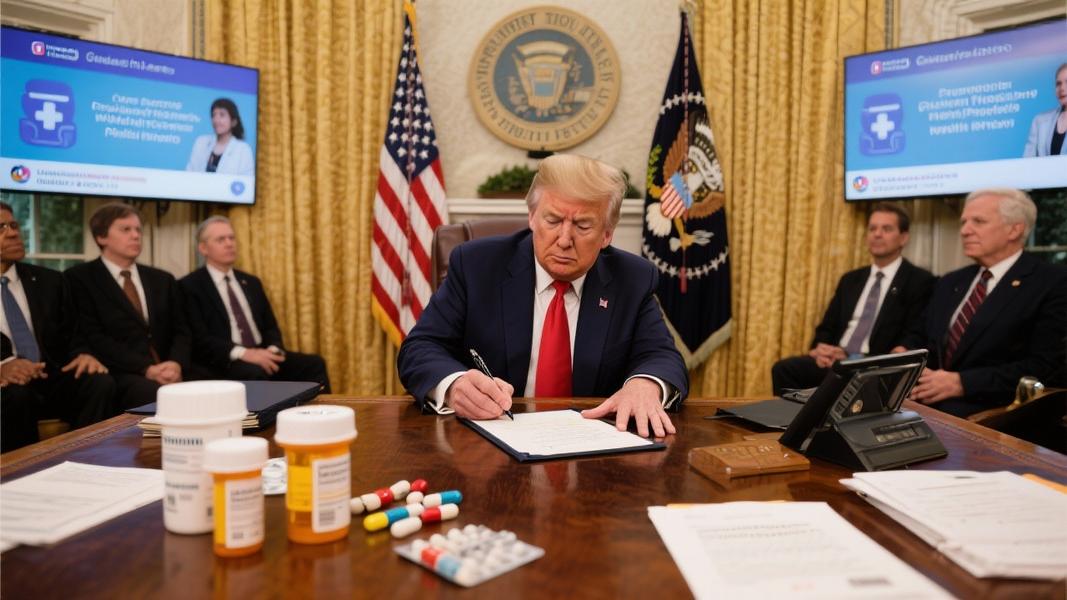
President Trump has taken aim at pharmaceutical advertising, signing a Presidential Memorandum Monday that could dramatically reshape how drug companies market their products to American consumers.
The directive, issued September 9, 2025, instructs the Department of Health and Human Services to crack down on misleading prescription drug advertisements, with particular focus on social media influencer campaigns and online promotions that fail to adequately disclose risks and side effects.
What’s changing? The administration plans to send 100 cease and desist enforcement letters and thousands of warning notices to pharmaceutical companies found violating transparency laws, according to White House officials. The move represents one of the most aggressive enforcement actions against drug advertising in recent memory.
A senior administration official didn’t mince words about the motivation behind the crackdown: “There has been broad frustration with the increasing prevalence of these ads creating a misleading impression, specifically not disclosing side effects appropriately — ads that have encroached now into social media without proper disclosures, and ads of online pharmacies that are not following the same rules that many pharmaceutical companies follow.”
The pharmaceutical industry spent over $10 billion on direct-to-consumer advertising in 2024 alone, making it one of America’s highest-spending advertising sectors. This marketing blitz is somewhat unique to the American healthcare landscape — the U.S. is one of only two countries worldwide that permit drug companies to advertise prescription medications directly to consumers, as noted in White House documents.
Critics of drug advertisements have long argued they create unrealistic expectations among patients while downplaying potential risks. Research cited by the administration found that social media promotions for pharmaceuticals provide particularly low-quality information, with only about one-third of posts mentioning potential harms.
Part of a Broader Agenda
This isn’t Trump’s first move targeting drug prices and healthcare transparency in his second term. Earlier this year, he signed Executive Orders aimed at reviving price transparency regulations from his first administration and implementing “most-favored-nation” pricing for prescription drugs — a policy designed to align U.S. drug prices with lower rates paid in other developed countries.
At the signing ceremony, Trump positioned himself as an advocate for patients rather than pharmaceutical interests. “I’ve [never] been loyal to the special interests; I have been loyal to our patients and our people that need drugs — prescription drugs — and devoted myself completely to fighting for the American people,” the president declared.
The memorandum specifically directs the FDA Commissioner to enforce existing legal requirements that prescription drug advertisements be truthful and not misleading. This seemingly straightforward standard has become increasingly complex to enforce as pharmaceutical marketing expands beyond traditional television and print ads into influencer partnerships, social media campaigns, and targeted digital advertising.
Will the enforcement actions change consumer behavior? That remains unclear. Decades of direct-to-consumer pharmaceutical advertising have trained generations of Americans to “ask their doctor” about specific brand-name medications, potentially bypassing more affordable alternatives or non-pharmaceutical interventions.
The administration’s fact sheet specifically mentions this concern, suggesting that current advertising practices often encourage medication use over lifestyle changes and can interfere with the doctor-patient relationship.
For now, Americans can expect to see more detailed risk information in drug advertisements — and possibly fewer pharmaceutical promotions flooding their social media feeds as companies adapt to the stricter enforcement environment.
