
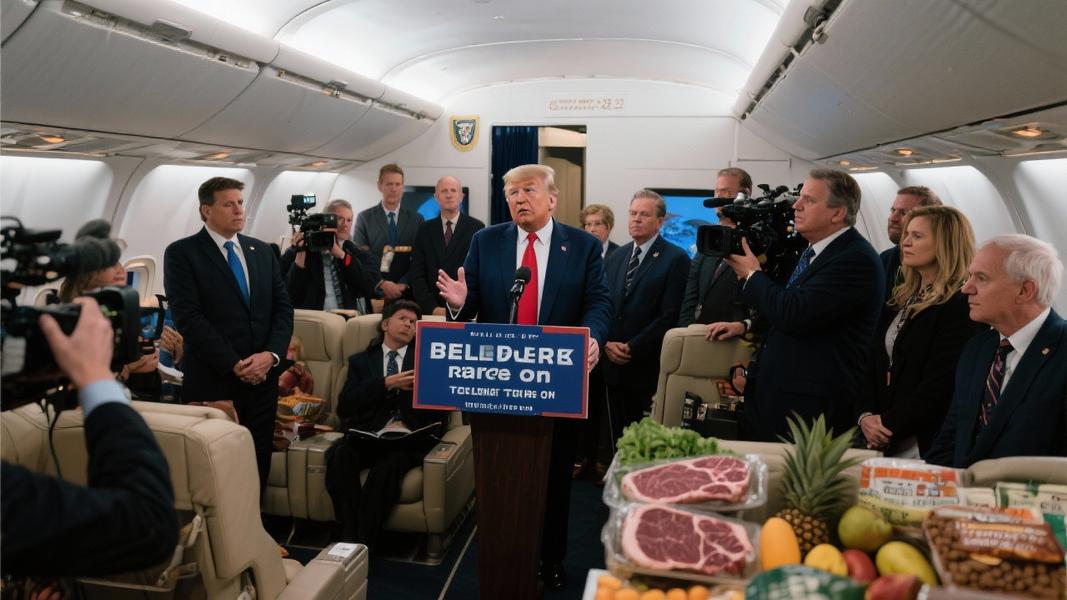
President Trump has announced a rollback of tariffs on coffee, beef, tropical fruits and other food imports in a move aimed at reducing grocery costs for Americans — an unexpected pivot that’s stirred both praise and skepticism across Washington.
The tariff reductions target a range of everyday items including tea, fruit juice, cocoa, spices, bananas, oranges, tomatoes, and certain fertilizers. “We just did a little bit of a rollback on some foods like coffee,” Trump said while discussing the measure.
Why now? The administration framed the decision as a strategic response to concerns about rising food prices, though critics were quick to characterize it as an implicit admission that Trump’s broader tariff policies have contributed to inflation.
In a rare moment of qualification regarding his signature economic policy, Trump acknowledged that “they may, in some cases have that effect,” referring to tariffs potentially raising consumer prices. He quickly added, however, that “to a large extent they’ve been borne by other countries.”
The Food Industry Association welcomed the president’s proclamation, calling it “a critical step ensuring continued adequate supply at prices consumers can afford.”
Behind the scenes, the White House has been laying diplomatic groundwork for the move, citing new trade agreements with Ecuador, Guatemala, El Salvador, and Argentina as enabling factors for these specific tariff reductions.
Political Calculations
Democrats wasted no time in portraying the decision as a validation of their longstanding criticism. “President Trump is finally admitting what we always knew: his tariffs are raising prices for the American people,” one Democratic spokesperson stated.
The move wasn’t entirely unexpected by those following Trump’s recent comments. In an interview earlier this month, he had hinted, “Coffee, we’re going to lower some tariffs. We’re going to have some coffee come in,” signaling this policy shift was already in the works.
The timing has raised eyebrows among economic analysts, coming amid persistent inflation concerns that have dominated kitchen table conversations across America.
Trump has also floated a novel idea for the revenue generated from his broader tariff regime — suggesting Americans could receive $2,000 checks in 2026. When pressed for specifics on timing, he remained characteristically vague, responding, “Sometime during the year. This is money earned as opposed to money that was made up. Everybody but the rich will get this.”
But the president also mentioned using tariff funds to address the national debt, creating some confusion about his ultimate intentions. “That’s not made up. That’s real money. That comes from other countries,” he added.
For now, many Americans will simply be wondering whether their morning coffee and weekly grocery bills might actually get cheaper — and how soon. The implementation timeline for these tariff reductions remains unclear, as does their potential impact on retail prices in an economy still grappling with inflationary pressures.
