
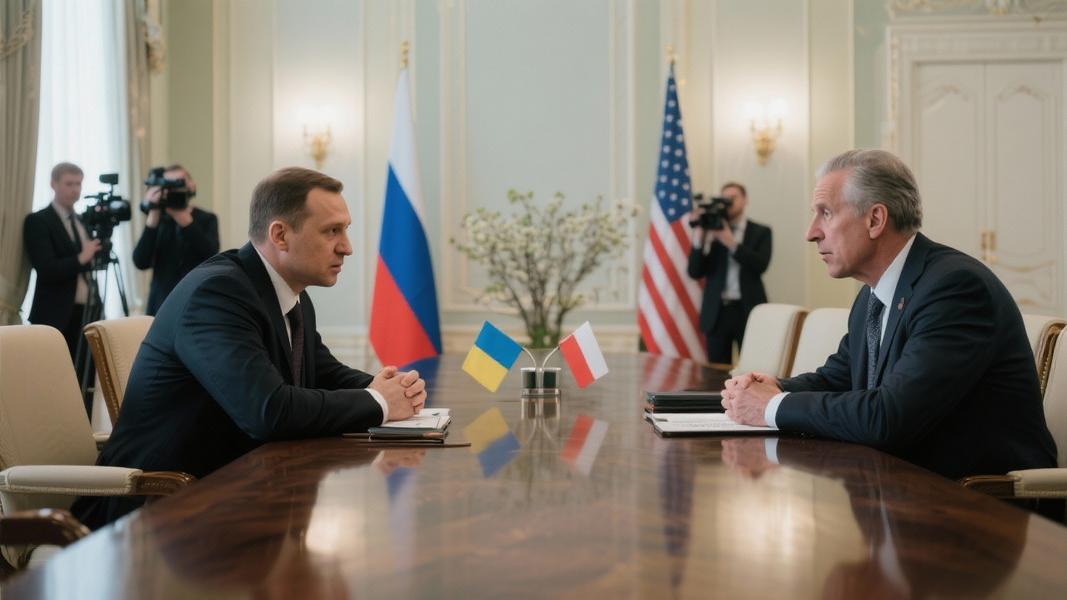
Trump envoy Witkoff caught coaching Russia on how to pitch Ukraine peace plan, transcript reveals
A leaked transcript has revealed that Steve Witkoff, President Donald Trump’s special envoy to Russia, advised Vladimir Putin’s aide on how the Russian leader should approach Trump about a peace plan for Ukraine — including specific talking points designed to appeal to Trump’s ego.
The bombshell disclosure shows Witkoff instructing Putin’s senior foreign policy adviser, Yuri Ushakov, that Putin should congratulate Trump on the Gaza ceasefire as a way to frame himself as supportive of Trump’s peacemaking efforts. “From that, it’s going to be a really good call,” Witkoff said, according to the transcript, which the White House has confirmed is authentic.
Coaching the Kremlin
The transcript shows Witkoff suggesting Putin should call Trump to congratulate him on the Gaza peace deal and emphasize that Russia supported it. “Maybe he says to President Trump: you know, Steve and Yuri discussed a very similar 20-point plan to peace and that could be something that we think might move the needle a little bit, we’re open to those sorts of things,” Witkoff advised Ushakov.
When questioned about the communications, Ushakov acknowledged frequent phone conversations with Witkoff but declined to discuss their content, describing them as confidential. “It’s unlikely this is being done to improve relations,” he noted, suggesting the leak was intended to damage U.S.-Russia diplomacy.
Trump, for his part, defended Witkoff’s approach as “standard” negotiation tactics. “He’s got to sell this to Ukraine. He’s got to sell Ukraine to Russia,” Trump explained. “That’s what a dealmaker does.”
Critics cry foul
Not everyone sees Witkoff’s coaching as harmless diplomatic maneuvering. U.S. Representative Don Bacon has called for Witkoff’s removal, stating on social media: “He cannot be trusted to lead these negotiations. Would a Russian paid agent do less than he? He should be fired.”
The timing raises eyebrows too. Trump and Putin spoke just one day before Trump’s meeting with Ukrainian President Volodymyr Zelenskyy. Following that October 17 meeting, Trump suggested that Ukraine and Russia should “stop where they are” on the battlefield — effectively asking Ukraine to concede territory Russia had seized.
Is this what diplomacy looks like in the Trump administration? The White House thinks so. Communications director Steven Cheung defended Witkoff: “This story proves one thing: Special Envoy Witkoff talks to officials in both Russia and Ukraine nearly every day to achieve peace, which is exactly what President Trump appointed him to do.”
The Russian peace plan
The transcript also reveals debates within Putin’s inner circle about how aggressively to push Russian demands in any peace framework. Kirill Dmitriev, a close Putin adviser, traveled to Florida for talks with Witkoff and Jared Kushner centered on a 28-point peace plan that heavily favored Russian interests.
That plan reportedly included Ukraine ceding the Donbas region, reducing its military size, and Europe agreeing Ukraine would never join NATO. “I’ll informally pass it along, making it clear that it’s all informal. And let them do like their own,” Dmitriev told Ushakov. “But, I don’t think they’ll take exactly our version, but at least it’ll be as close to it as possible.”
After the transcript leaked, Dmitriev quickly labeled it “Fake” on social media, insisting that “The closer we get to peace, the more desperate warmongers become.” The Russian Embassy in Washington has declined to comment.
Secretary of State Marco Rubio has pushed back against criticism, asserting that the peace proposal was authored by the United States with input from both Russia and Ukraine — not simply a Russian wish list as some bipartisan critics have suggested.
Meanwhile, Trump has announced he’s sending Army Secretary Dan Driscoll to meet Ukrainian officials while Witkoff meets with Putin, and has indicated he might meet both Putin and Zelenskyy himself after further progress in negotiations.
But as the transcripts make clear, the question remains whether these negotiations are taking place on a level playing field — or if Trump’s envoy has already tipped the scales toward Moscow.
