
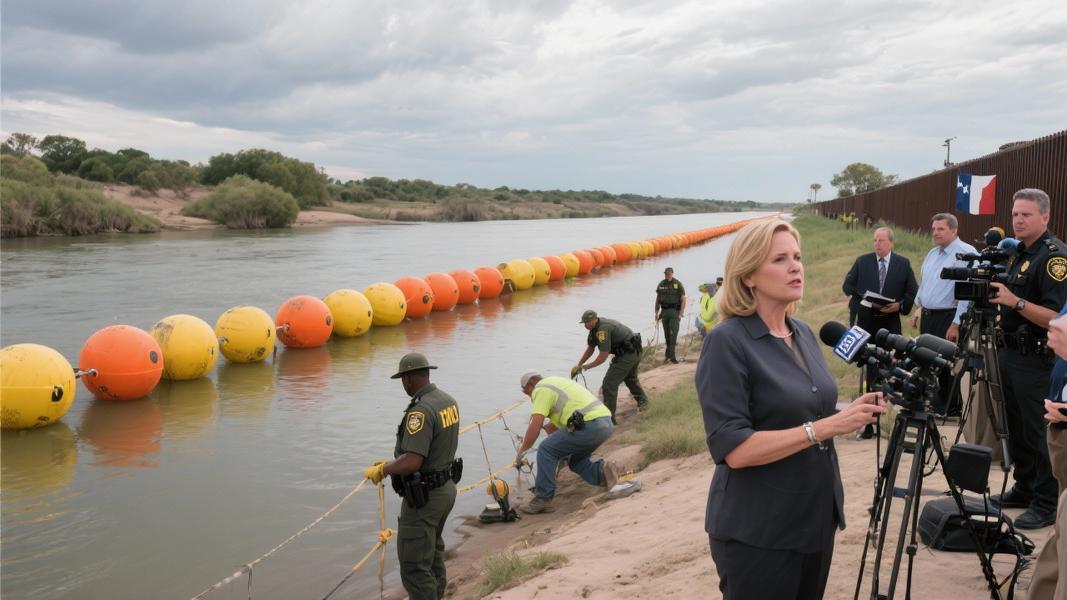
The Trump administration plans to install 500 miles of floating buoys along the Rio Grande, dramatically expanding a controversial border security measure first implemented by Texas under Governor Greg Abbott’s Operation Lone Star.
Department of Homeland Security Secretary Kristi Noem announced the massive expansion of the water barrier system this week, claiming the buoys will both enhance border security and prevent migrant deaths. “They’ll create a safer environment for agents on patrol. And securing our waterways not only protects Americans, it saves the lives of illegal aliens by deterring them from daring to attempt to cross through this treacherous water,” Noem said during the announcement.
From State Project to Federal Priority
The new barriers will consist of large floating buoys approximately four to five feet in diameter and up to 15 feet long. About 130 miles of the water barrier are already under contract, with installation beginning immediately, according to Noem’s announcement. The buoys will be manufactured by a family-owned Texas company and installed under supervision of the U.S. International Boundary and Water Commission, according to officials familiar with the project.
Texas first deployed similar floating barriers near Eagle Pass in 2023 as part of Governor Abbott’s border initiative, adding another 1,000 feet after Trump took office in 2025. The state’s initial deployment quickly became embroiled in legal challenges from the previous administration, triggering a series of court battles over whether the buoys could remain in the river.
What’s changed? The new federal program represents a complete reversal in federal policy, with the DHS now embracing and dramatically expanding the very approach it once fought to remove.
“Texas finally has a partner in the White House,” said Andrew Mahaleris, press secretary for Abbott, in a statement Wednesday. “The floating marine barriers deployed by Texas have been a resounding success, and Governor Abbott is proud to work with the Trump Administration and Border Patrol to expand the program.”
Smart Wall Strategy
The buoy deployment is part of President Trump’s broader “Smart Wall” concept, which combines physical barriers with surveillance technology. This integrated approach includes steel barriers, waterborne obstacles, patrol roads, lighting, cameras and detection technology, funded through the 2025 tax and spending package Trump dubbed the “One Big Beautiful Bill.”
Critics have questioned the timing and necessity of the massive buoy deployment. Border crossings have substantially decreased since President Trump took office, yet the administration is moving forward with the expanded barrier system at what will likely be significant cost to taxpayers.
Meanwhile, Abbott and other Texas officials have sought federal reimbursement for billions in state taxpayer dollars spent on Operation Lone Star since the start of Trump’s second term. The buoy expansion appears intertwined with this broader debate over cost-sharing and border security responsibilities between state and federal authorities.
Humanitarian Concerns
The DHS has framed the 500-mile buoy deployment as both a security measure and humanitarian effort. Noem specifically cited the deaths of nearly 3,000 migrants attempting to cross into the United States under the Biden administration as justification for the expanded barriers.
“By deterring them from daring to attempt to cross through this treacherous water… it saves the lives of illegal aliens,” she stated during the announcement.
The original Texas buoy installation sparked significant controversy when first deployed, with critics arguing the barriers created additional hazards in the river and potentially violated treaties with Mexico regarding shared waterways.
But the administration appears undeterred by potential pushback. With 130 miles already under contract and installation beginning, the buoys represent one of the most visible and extensive border security initiatives of Trump’s second term so far — a physical manifestation of his campaign promise to dramatically reduce illegal crossings through aggressive enforcement measures.
