
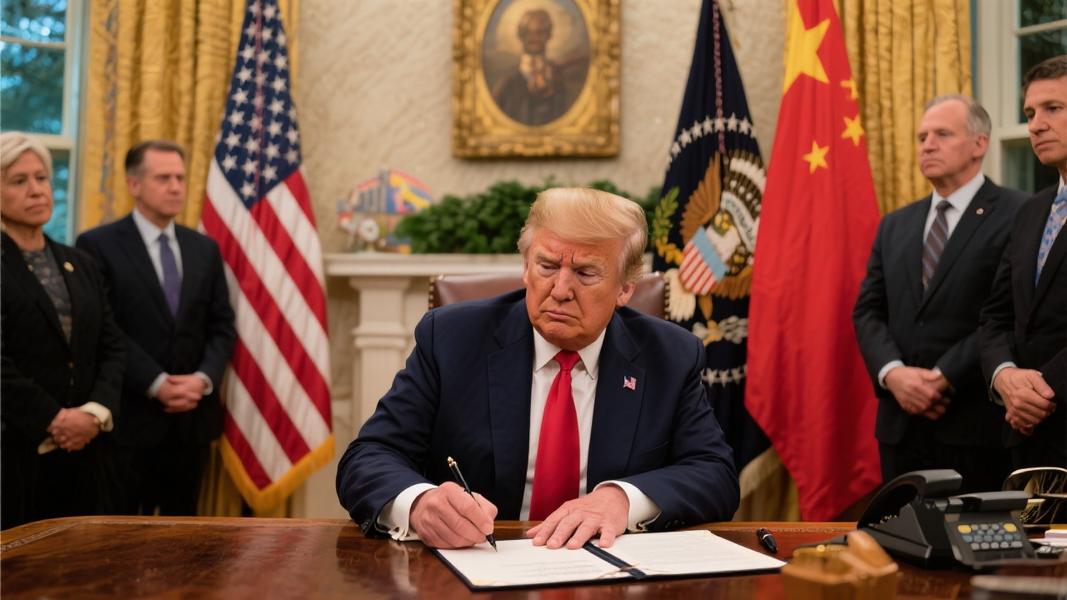
President Trump has extended a pause on higher tariffs against China for another 90 days, signing an executive order just hours before the existing suspension was set to expire at midnight on August 11, 2025.
The order maintains the current 10% reciprocal tariff on Chinese imports until November 10, avoiding what would have been a significant escalation in trade tensions between the world’s two largest economies. Other existing U.S. tariff measures on China will remain in place during this period, according to a statement from the White House.
“We’re getting along with China very well,” Trump remarked about the decision. “We’ll see what happens. They’ve been dealing quite nicely. The relationship is very good with President Xi (Jinping) and myself.”
Negotiations Ongoing
The extension follows multiple rounds of trade talks between U.S. and Chinese officials, most recently in Stockholm. These negotiations have focused on addressing trade reciprocity, national security concerns, and what the administration characterizes as unfair trade practices by China, with the goal of expanding market access for American exports.
The 10% reciprocal tariff isn’t just a holding pattern. According to the White House, it “sets a fair baseline to encourage domestic production, strengthen our supply chains, and ensure that American trade policy supports American workers first, instead of undercutting them.” The administration views the tariff as essential to maintaining America’s economic competitiveness while negotiations continue.
What’s driving this cautious approach? The persistent trade imbalance remains a central concern for the administration. In 2024, the U.S. goods trade deficit with China reached a staggering $295.4 billion — the largest with any trading partner — though officials note this figure is “already decreasing substantially” on an annual basis.
Strategic Flexibility
Trump’s approach to the negotiations reveals a deliberate flexibility. Sources familiar with the President’s thinking indicate that he “is happy to do the deal, but is equally as happy […] just to have the tariff income,” giving the U.S. “a lot of negotiating flexibility” in ongoing talks.
The administration continues to frame the trade deficit as a national emergency requiring decisive action. “President Trump is taking action that he deems necessary to address the national emergency involving our growing and persistent trade deficit with foreign trading partners, such as China,” the White House explained in its announcement.
Critics have questioned whether the threat of escalating tariffs will yield substantive changes in Chinese trade practices, pointing to the mixed results of similar strategies during Trump’s first term. Supporters counter that maintaining pressure through tariffs while engaging in negotiations represents the most effective approach to addressing longstanding trade grievances.
The 90-day extension pushes the next decision point to shortly after the U.S. midterm elections — a timing that hasn’t gone unnoticed among political observers. Still, administration officials insist the timeline is based solely on the progress of negotiations rather than domestic political considerations.
As the clock now resets for another three months, both sides have signaled a willingness to continue dialogue. But the fundamental question remains: Will these talks produce meaningful structural changes in the trade relationship, or simply kick the can down the road once again?
