
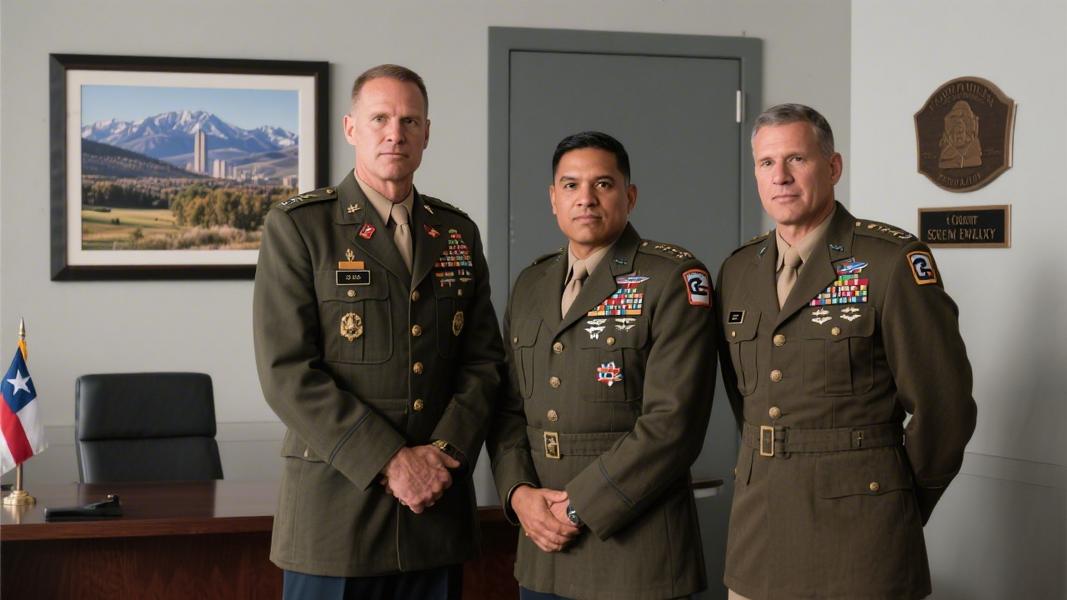
Three Army colonels are headed for their first stars — and the man pinning them is also busy fighting a very different kind of battle, this one with the American press corps.
On March 9, 2026, Secretary of War Pete Hegseth announced that President Trump had nominated three U.S. Army Reserve colonels for promotion to brigadier general. The announcements came just days after Hegseth drew sharp criticism for remarks he made at the Pentagon about media coverage of U.S. casualties in the ongoing war with Iran — a conflict that’s already claimed American lives and ignited a fierce debate in Washington over transparency, legal authority, and the human cost of combat.
The Nominations
The three officers tapped for promotion represent a cross-section of the Army’s medical and logistics infrastructure. Col. Paul A. Lucci, Jr., currently serving as chief of staff of the 807th Medical Command (Deployment Support) in Salt Lake City, Utah, is among those nominated. So is Col. Arnold Rivera-Sanchez, who commands the 191st Regional Support Group at Fort Allen, Puerto Rico — a posting that puts him at the center of the Army Reserve’s Caribbean operational footprint.
Rounding out the list is Col. Scott C. Valley, chief of staff for the 3rd Medical Command (Deployment Support) at Gillem Enclave, Georgia. All three nominations require Senate confirmation before the promotions become official. Hegseth’s office stated the announcements in a standard release, offering no additional commentary on the individual officers or the timeline for Senate action.
Still, the timing is notable. Medical command leadership doesn’t typically make headlines. But in the context of an active war with Iran — one that has already produced American casualties — the elevation of officers overseeing deployment medical support carries a weight that’s hard to ignore.
Hegseth vs. the Press
Here’s where it gets complicated. Just three days earlier, during a Pentagon briefing, Hegseth went after journalists covering the war’s human toll — specifically the deaths of six U.S. Army reservists killed in Kuwait. His remarks were pointed, and they weren’t subtle. “When a few drones get through or tragic things happen, it’s front-page news,” Hegseth said, according to reporting by the Los Angeles Times. “I get it. The press only wants to make the president look bad. But try for once to report the reality. The terms of this war will be set by us at every step.”
That’s the kind of line that tends to follow a cabinet secretary around for a while. Critics — including press freedom advocates and several Democratic lawmakers — seized on the comments as an attempt to manage, or outright suppress, public reckoning with wartime losses. The White House didn’t back down. When CNN’s Kaitlan Collins pressed press secretary Karoline Leavitt on the remarks, Leavitt fired back: “You take every single thing this administration says and try to use it to make the president look bad. That’s an objective fact.” Leavitt defended the secretary without qualification.
Whether or not you agree with the administration’s framing, there’s a longer history here that’s worth acknowledging. Governments — Democratic and Republican alike — have long struggled with how much of war’s ugliness to put on public display. Hegseth’s comments aren’t an aberration so much as a continuation of an old and uncomfortable tradition. That doesn’t make them less troubling. It just means they fit a pattern.
Congress Pushes Back
Democrats aren’t waiting quietly. On March 2, 2026, House Intelligence Committee Democrats sent a formal letter to Hegseth, Secretary of State Marco Rubio, CIA Director John Ratcliffe, and Chairman of the Joint Chiefs General Caine, demanding answers about the legal basis and strategic objectives of the Iran conflict. “The decision to initiate or expand armed conflict is among the gravest responsibilities entrusted,” the letter began — a line that reads less like a formality and more like a warning shot.
The letter raises questions that haven’t been publicly answered: What legal authorization underpins the conflict? What are the defined objectives? And perhaps most urgently — what are the acceptable risks to American personnel? Six reservists are already dead. The three colonels nominated this week lead commands built, in part, to care for the wounded and support forces in the field. Those two facts aren’t unrelated.
What Comes Next
Senate confirmation for the three nominees could move quickly, or it could get tangled in the broader political turbulence surrounding Hegseth and the war. That’s the reality of Washington in 2026 — even routine military promotions don’t exist in a vacuum anymore.
For Lucci, Rivera-Sanchez, and Valley, the path to a general’s star runs straight through a confirmation process that may feel anything but routine. And for Hegseth, the challenge isn’t just managing a war — it’s managing a public that’s watching, and a press corps that, whatever he thinks of it, isn’t going anywhere.
As one old Pentagon hand once put it: the first casualty of war may be truth, but the second is always the press secretary’s patience.
