
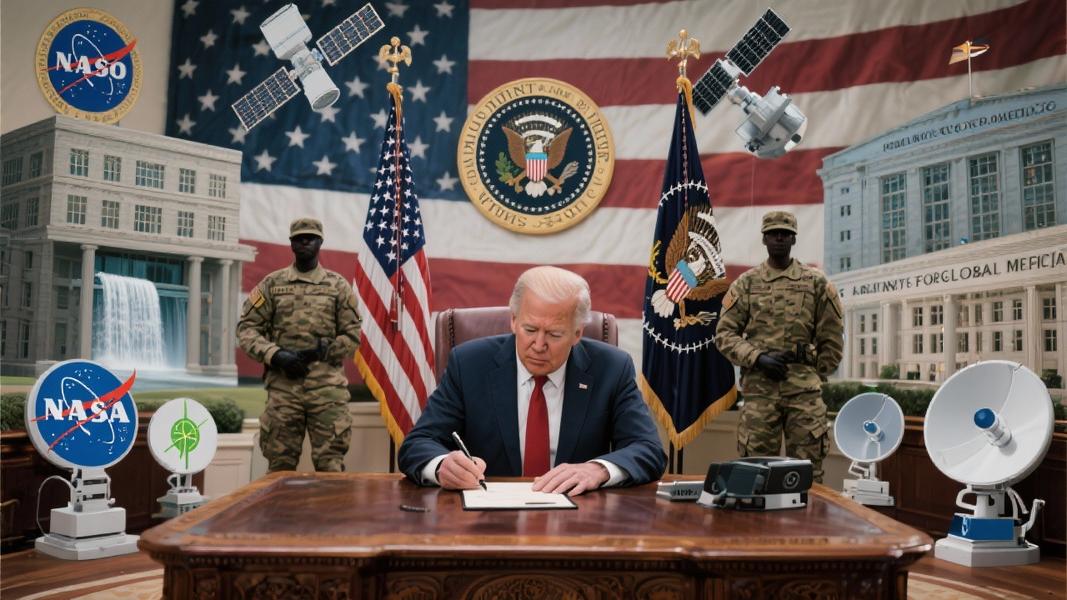
President Trump has signed an Executive Order stripping collective bargaining rights from federal workers across multiple agencies with national security functions, dramatically expanding the number of federal employees who cannot unionize.
The March 27, 2025 order affects workers at several agencies previously not exempt from labor laws, including NASA, the National Weather Service, the Patent and Trademark Office, hydropower facilities at the Bureau of Reclamation, and the U.S. Agency for Global Media. The White House argues these agencies have “primary functions” involving national security, putting them under a provision of the Civil Service Reform Act that allows presidential exemptions from collective bargaining.
“Certain procedural requirements in Federal labor-management relations can create delays in agency operations,” the order states, claiming such delays “can impact the ability of agencies with national security responsibilities to implement policies swiftly and fulfill their critical missions.”
Significant Expansion of Bargaining Exemptions
Until now, only four federal agencies — the FBI, CIA, NSA, and Secret Service — were exempt from federal collective bargaining requirements. The new order dramatically expands this list by including agencies that haven’t traditionally been categorized primarily as security agencies.
The Bureau of Reclamation’s hydropower plants, for instance, were included because they “provide critical black start capacity” — the ability to restart the electric grid after major outages — according to White House documents. The administration also cited NASA’s development of “advanced air and space technologies” and the National Weather Service’s provision of “weather and climate data that inform the weather forecasting used to plan U.S. military deployments.”
Why include the Patent and Trademark Office? The administration points to its enforcement of the Invention Secrecy Act, which “tasks the PTO with reviewing inventions made in the United States, assessing whether their release could harm national security, and if so, issuing secrecy orders that prevent public disclosure.”
Union Backlash and Legal Questions
The order has sparked immediate opposition from labor organizations. “This Executive Order uses ‘national security’ as a political weapon to silence federal workers who have protected this country with integrity for decades—many of them who are veterans themselves,” the AFL-CIO declared in a statement.
Critics question both the legal basis and the practical necessity of the move. These agencies have operated under collective bargaining agreements for decades without documented national security compromises. Labor representatives argue the order represents an unprecedented expansion of executive authority over federal workers’ rights.
The executive action will likely face legal challenges as unions and affected workers prepare to contest what they see as an overreach of presidential power. Legal experts note the Civil Service Reform Act does grant the president authority to exempt agencies with national security as a “primary function” — but whether these agencies truly fit that definition remains contentious.
“These workers have always operated under collective bargaining without compromising national security,” labor representatives insist. “This move is not about protection—it’s about power.”
For thousands of federal employees across these agencies, the immediate impact remains unclear as the order takes effect and potential legal challenges unfold. What’s certain is that the relationship between these federal workers and their agencies has fundamentally changed — with implications that could extend well beyond the current administration.
