
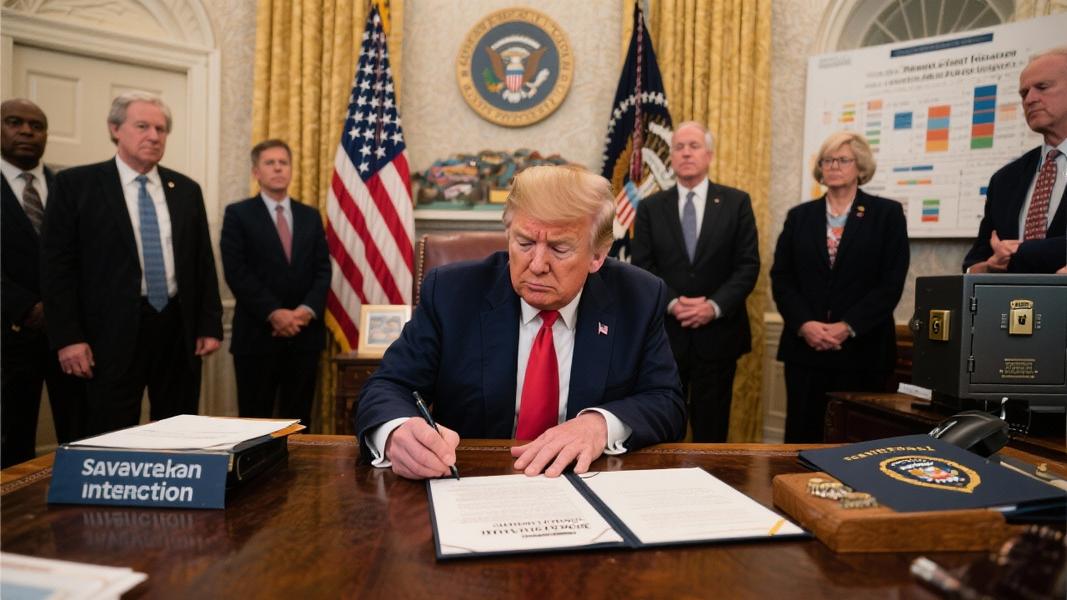
President Trump has issued an Executive Order mandating a return to classical architecture for federal buildings, marking a significant shift in how America’s civic structures will be designed. The directive, signed this month, establishes classical architecture as the “preferred style” for all federal public buildings, particularly in Washington, D.C.
The order represents Trump’s renewed push to reshape the aesthetic identity of government buildings after a similar 2020 initiative was rescinded by President Biden in 2021. “The Founding Fathers wanted America’s public buildings to inspire the American people and encourage civic virtue,” the administration noted in its announcement.
A Return to Tradition
At its core, the directive requires that federal buildings be “visually identifiable as civic buildings” and respect regional architectural heritage. Any designs that deviate from classical styles — particularly those embracing Brutalist, Deconstructivist, or other modernist approaches — will require notification to the President through the Assistant to the President for Domestic Policy, according to the White House statement.
Why classical architecture? The administration argues it’s about honoring American values and fostering civic pride. The order specifically directs the Administrator of the General Services Administration to “submit to me within 60 days recommendations to advance the policy that Federal public buildings should be visually identifiable as civic buildings and respect regional, traditional, and classical architectural heritage.”
The move directly challenges the architectural principles that have dominated government buildings since the 1960s. Those guidelines, often attributed to the late Senator Daniel Patrick Moynihan, explicitly avoided mandating specific architectural styles in favor of more functional modern designs.
Echoing the Founding Fathers
Trump’s administration points to historical precedent for this approach. The White House highlights how the Founding Fathers themselves — particularly George Washington and Thomas Jefferson — personally guided the designs of iconic buildings like the Capitol and White House.
The shift toward modernist and Brutalist styles in the 1960s has long been a point of contention. Administration officials claim these architectural approaches proved unpopular with the American public, asserting that “the current majority of American taxpayers prefer classical, regionally inspired public buildings.”
Critics, however, might view this as an unnecessary restriction on architectural creativity and expression. Still, the order doesn’t completely prohibit modern designs — it simply establishes a preference and creates additional oversight for deviations.
Broader Cultural Agenda
This architectural directive isn’t happening in isolation. It’s part of Trump’s broader agenda touching on American symbols and spaces. The president also signed “an Executive Order to protect America’s monuments from vandalism and revive the National Garden of American Heroes.”
What’s driving this focus on architectural aesthetics? The initiative appears to reflect Trump’s consistent emphasis on traditional American symbolism. The GSA, which oversees most federal buildings, will now be required to involve architects and administrators with appropriate training in classical design principles when implementing the order.
The practical implementation remains to be seen. The GSA has been tasked with submitting recommendations within 60 days for advancing the policy, including potential revisions to federal architectural guidelines and incorporating community input into design decisions.
As Washington prepares for this architectural shift, one question looms: Will this order create a renaissance of classical civic buildings, or simply another political battleground in America’s ongoing culture wars?
For now, the columns, pediments, and proportional harmony of classical architecture appear poised for a comeback on America’s civic landscape — at least until another administration potentially reverses course once again.
