
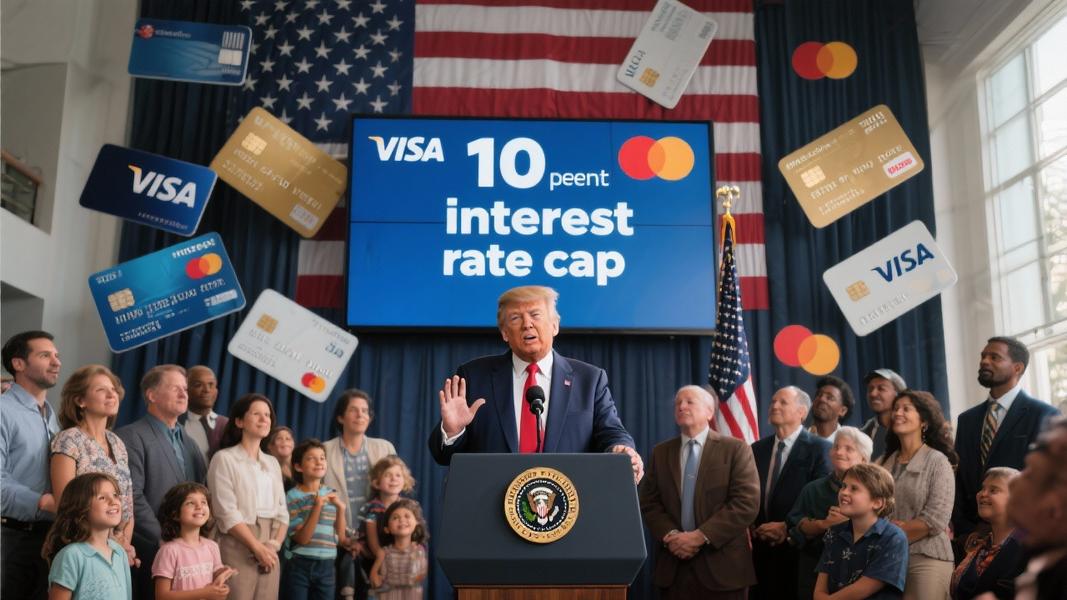
Former President Donald Trump has unveiled a plan to cap credit card interest rates at 10% for one year, promising to save Americans “tens of billions” in interest payments amid ongoing concerns about consumer debt.
The proposal, which revives a campaign pledge from earlier this year, takes aim at what Trump characterizes as predatory lending practices by major credit card companies. “We will no longer let the American Public be ripped off by Credit Card Companies that are charging Interest Rates of 20 to 30%,” Trump declared in a statement announcing the initiative.
Banking Industry Pushes Back
The response from the financial sector was swift and unequivocal. A coalition of five banking associations, including the influential American Bankers Association, has warned that such a cap would ultimately harm the very consumers it aims to protect.
What’s the real concern? According to industry representatives, artificially capping interest rates would force lenders to dramatically restrict credit availability, particularly for Americans with less-than-stellar credit histories.
“At the same time, evidence shows that a 10% interest rate cap would reduce credit availability and be devastating for millions of American families and small business owners who rely on and value their credit cards, the very consumers this proposal intends to help,” the banking groups stated in their joint response.
The proposed cap represents one of Trump’s most direct challenges to the financial industry since announcing his return to politics. It comes at a time when many Americans are struggling with record-high credit card balances and interest rates that have climbed steadily following the Federal Reserve’s aggressive campaign against inflation.
Economic Implications
Trump’s team frames the proposal as a simple consumer protection measure that would provide immediate relief to millions of households. Yet economists remain divided on whether such intervention would achieve its intended effects.
The timing of the proposal has raised eyebrows among some financial analysts. Credit card interest rates currently hover near historic highs, with the national average approaching 21% for many consumers. A forced reduction to 10% would represent a seismic shift in the consumer lending landscape.
Banking representatives argue that credit card rates reflect genuine risk assessments, not corporate greed. They suggest that borrowers unable to qualify for traditional credit under a 10% cap would likely turn to payday lenders, pawn shops, and other alternative financial services with potentially more predatory terms.
Still, consumer advocates have long criticized the credit card industry for what they see as excessive interest rates that trap users in cycles of debt. For many working-class Americans facing high-interest payments, the proposed cap might seem like welcome relief regardless of industry warnings.
Whether the proposal will gain traction beyond campaign rhetoric remains to be seen, but it has already accomplished one thing: reigniting the perennial debate about the proper balance between consumer protection and market freedom in America’s financial system.
