
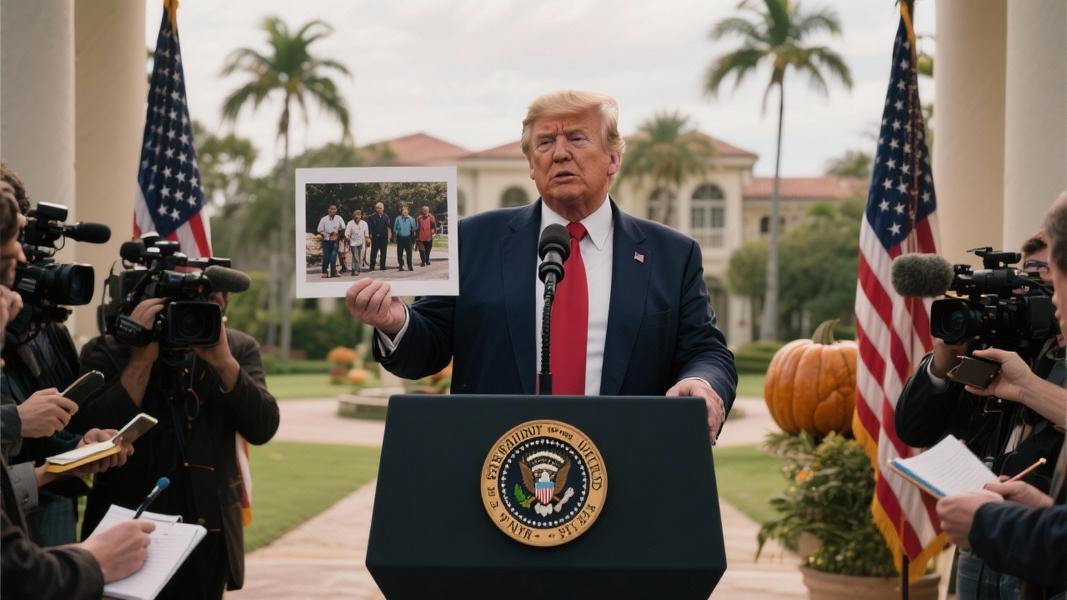
President Donald Trump announced plans to “permanently pause migration” from what he termed “Third World Countries,” linking his dramatic policy shift to a recent shooting of National Guard members in Washington, D.C. The sweeping proposal comes just days after an Afghan national was charged in the attack that left one guardsman dead.
“I will permanently pause migration from all Third World Countries to allow the U.S. system to fully recover,” Trump declared on social media Thursday, in what represents one of the most expansive immigration restrictions proposed by his administration.
Shooting Triggers Immediate Policy Response
The president’s announcement follows the arrest of Rahmanullah Lakanwal, an Afghan national who allegedly shot two National Guard members in the capital. One guardsman died from his injuries. Lakanwal, who reportedly assisted the CIA during the Afghanistan War, had been admitted under a refugee resettlement program and was granted asylum earlier this year with a pending green card application.
Trump wasted no time connecting the incident to broader immigration policy, stating, “We must now reexamine every single alien who has entered our country from Afghanistan under Biden, and we must take all necessary measures to ensure the removal of any alien from any country who does not belong here or add benefit to our country,” he wrote on his Truth Social platform.
The administration has already moved swiftly in response. U.S. Citizenship and Immigration Services has suspended “the processing of all immigration requests relating to Afghan nationals… indefinitely pending further review of security and vetting protocols,” effective immediately.
Broad Claims About Immigrants
Beyond the immediate response to the shooting, Trump’s statements ventured into sweeping characterizations of immigrants in America. He claimed that “most” foreign-born U.S. residents “are on welfare, from failed nations, or from prisons, mental institutions, gangs, or drug cartels” — assertions that run counter to available data.
In fact, research tells a different story. A study by economists found that immigrants are 60% less likely to be incarcerated than people born in the U.S., with immigrants having been imprisoned at lower rates for approximately 150 years.
Is this just rhetoric, or a genuine policy shift? The administration’s actions suggest the latter. Joseph Edlow, director of U.S. Citizenship and Immigration Services, announced enhanced screening measures for immigrants from 19 “high-risk” countries, connected to previous travel bans from 12 nations and restrictions on seven others for national security concerns.
Expanded Plans and Economic Questions
Trump’s social media announcement outlined several additional measures, including plans to “terminate” millions of admissions granted during President Biden’s term. He also proposed ending federal benefits and subsidies for noncitizens, denaturalizing people “who undermine domestic tranquility” and deporting foreign nationals deemed “non-compatible with Western Civilization,” according to his statement.
The president’s rhetoric extended to specific communities as well. He claimed immigrants from Somalia are “completely taking over the once great State of Minnesota” while using a dated slur to mock Governor Tim Walz, who was the Democratic vice presidential nominee in last year’s election.
Such a broad pause on migration could have significant economic implications. America’s foreign-born workers currently account for nearly 31 million jobs, according to the Bureau of Labor Statistics data. Economists and business leaders have yet to weigh in on the potential disruption to labor markets that could follow such dramatic policy changes.
That said, it’s unclear how quickly or comprehensively the administration could implement these proposals, which would likely face significant legal challenges from immigration advocates and affected communities.
As the White House moves forward with its immediate response to the National Guard shooting, the broader implications of what Trump calls a “permanent pause” on migration from developing nations remain to be seen — both in terms of policy specifics and the human consequences for millions of current and prospective immigrants.
