
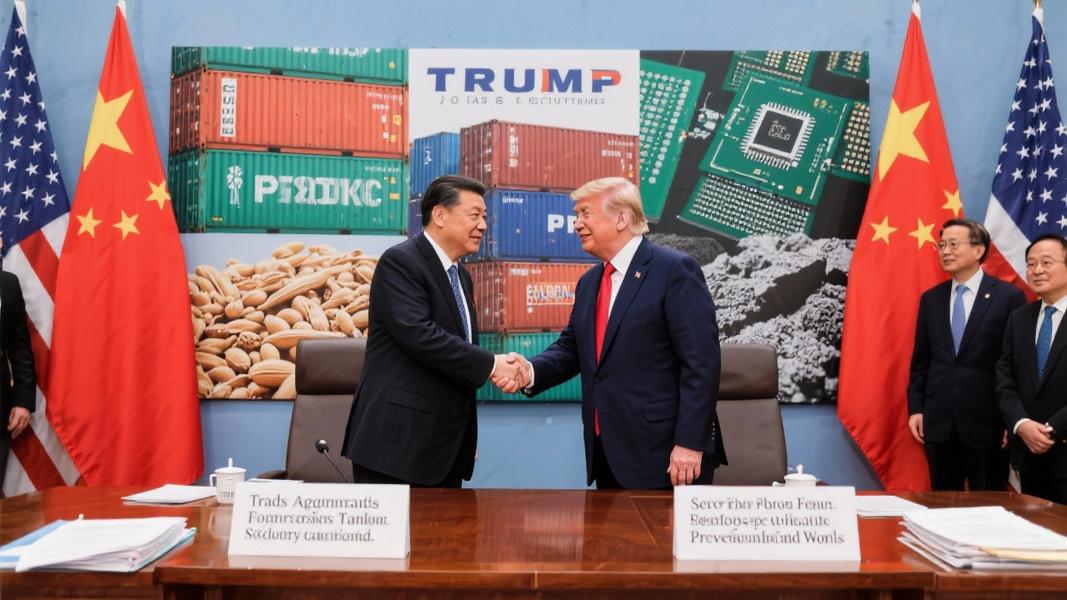
President Trump has secured what the White House is calling a “massive victory” in trade negotiations with China, finalizing a comprehensive deal during his visit to South Korea that addresses critical economic and security concerns between the world’s two largest economies.
The agreement, announced on Friday, includes Chinese commitments to halt the flow of fentanyl precursors to the United States, eliminate export controls on rare earth minerals, end retaliatory actions against U.S. semiconductor manufacturers, and significantly increase purchases of American agricultural products.
Curbing Fentanyl and Securing Critical Minerals
“This historic agreement” represents a significant shift in U.S.-China relations that had grown increasingly tense throughout 2025, according to a White House fact sheet released following the summit. Among the most notable provisions, China has agreed to “take significant measures to end the flow of fentanyl to the United States,” addressing a key concern that has fueled America’s deadly opioid crisis.
China will also suspend its recently announced export controls on rare earths and related minerals that had alarmed U.S. manufacturers. The October 9th measures had threatened to disrupt supply chains for everything from electric vehicles to defense systems. Under the new agreement, China will “issue general licenses valid for exports of rare earths, gallium, germanium, antimony, and graphite” benefiting U.S. end users and their suppliers.
What’s in it for American farmers? Quite a lot, it seems. Beijing has committed to purchase at least 12 million metric tons of U.S. soybeans during the remaining two months of 2025, with guaranteed purchases of at least 25 million metric tons annually from 2026 through 2028. China will also resume buying U.S. sorghum and hardwood logs, providing relief to agricultural sectors that have struggled with market access.
Tariff Relief and Semiconductor Protections
The deal provides mutual tariff relief, with China agreeing to “suspend all of the retaliatory tariffs that it has announced since March 4, 2025” while also removing non-tariff barriers that had targeted U.S. companies. For its part, the United States will lower tariffs on Chinese imports aimed at curbing fentanyl by removing 10 percentage points from the cumulative rate starting November 10.
Semiconductor companies caught in the crossfire of deteriorating relations will see immediate benefits. China has pledged to terminate “various investigations targeting U.S. companies in the semiconductor supply chain, including its antitrust, anti-monopoly, and anti-dumping investigations.” The agreement specifically ensures the resumption of trade from Nexperia’s facilities in China, allowing production of critical legacy chips to flow to global markets.
The Biden administration had previously launched a Section 301 investigation into China’s “Targeting the Maritime, Logistics, and Shipbuilding Sectors for Dominance” that led to reciprocal sanctions. Under the new agreement, both sides will step back, with the U.S. suspending implementation of responsive actions for one year while China removes measures it took in retaliation.
Broader Asian Diplomacy Tour
The China deal caps what has been a whirlwind Asian tour for President Trump. Beyond the headline-grabbing agreement with Beijing, his trip yielded significant results across the region.
In Malaysia, the President signed Agreements on Reciprocal Trade with both Malaysia and Cambodia, while announcing frameworks for trade negotiations with Thailand and Vietnam. Critical minerals cooperation agreements were also finalized with Thailand and Malaysia, addressing supply chain vulnerabilities for resources essential to advanced manufacturing.
Trump’s stop in Japan proved equally productive. The visit advanced Japan’s previous $550 billion investment commitment to the United States, aimed at revitalizing the U.S. industrial base. The two nations also signed what the White House described as a “landmark critical minerals agreement” and secured “historic purchases of U.S. energy from Japan.”
In South Korea, where the China agreement was ultimately sealed, President Trump secured “billions in landmark commitments” supporting American jobs, energy production, and technology leadership, while strengthening the U.S.-Korea maritime partnership.
How will these agreements play out in practice? That remains to be seen. Previous U.S.-China trade deals have sometimes fallen short of their promised targets, and implementation will require ongoing monitoring and enforcement mechanisms that weren’t fully detailed in the initial announcements.
Still, the comprehensive nature of the agreement addresses several festering points of contention between Washington and Beijing, potentially establishing a more stable foundation for the complex relationship between the global superpowers as Trump prepares to begin his second term in office.
“This massive victory safeguards U.S. economic strength and national security while putting American workers, farmers, and families first,” the White House claimed in its official statement — a characterization that will likely be tested as the intricate details of implementation unfold across multiple sectors in the months ahead.
