
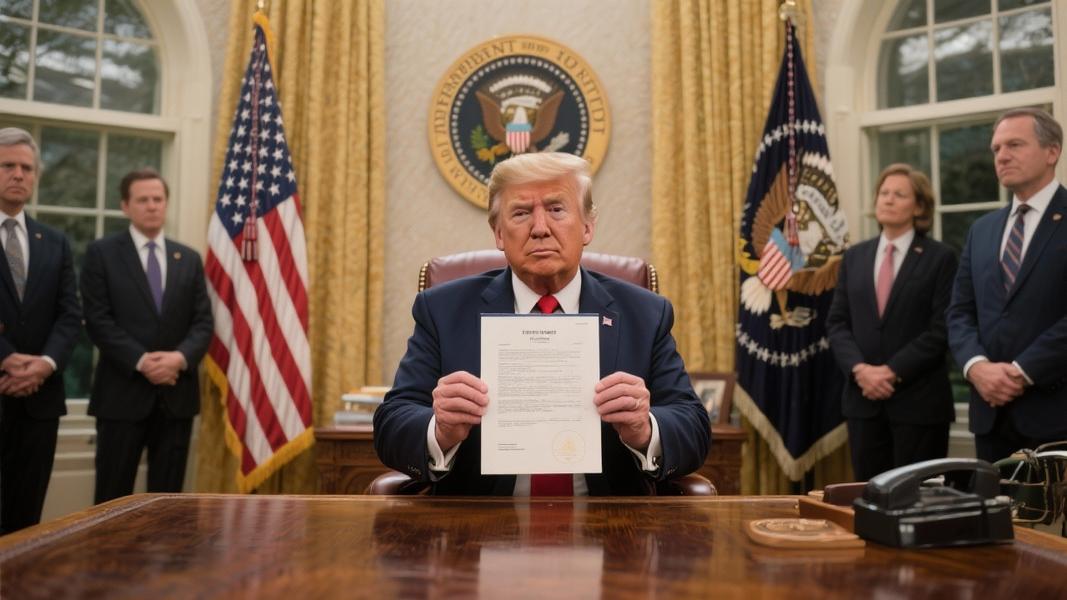
President Trump has signed a continuing resolution that ends a record-breaking 43-day government shutdown and funds federal programs through January 30, 2026. The resolution, passed by Congress after intense negotiations, provides a temporary reprieve for federal agencies operating without appropriations.
The Senate approved the measure by a vote of 54-46, following earlier House passage largely along party lines. Federal employees who had received reduction-in-force notices will see those reversed, with guarantees of back pay for time worked during the shutdown.
“Thanks to the President’s decisive leadership in the face of radical left opposition,” the shutdown has concluded, the Treasury Department stated in its announcement of the resolution’s signing.
Funding Details and Administrative Flexibility
The continuing resolution temporarily extends funding for nine annual appropriations bills, including Labor, Health and Human Services, and Education through January 30, while providing FY2026 appropriations for certain departments via a separate “minibus” package. The Department of Veterans Affairs is among those receiving full-year funding under this arrangement, according to sources familiar with the legislation.
What’s unusual about this particular CR? It maintains funding generally at FY2024 levels while creating significant administrative flexibility that the Trump administration could use to reallocate funds across programs within accounts for the remainder of fiscal year 2025.
Education policy experts note that “absent specific instructions, the Trump Administration may take advantage of the flexibility in a CR to implement federal funding for some programs for the remainder of FY2025 without congressional input.” This creates a situation where executive discretion could significantly reshape funding priorities within the constraints of overall account limits.
Oversight and Reporting Requirements
The Full-Year Continuing Appropriations and Extensions Act, 2025 (Public Law 119–4) establishes strict reporting mechanisms to monitor how agencies utilize these funds. The Office of Management and Budget must submit monthly obligation reports to the House and Senate Appropriations Committees beginning May 15, 2025, and continuing through November 1, 2025, according to the legislative text.
These reports will detail “all obligations incurred in fiscal year 2025” by each department and agency using funds allocated under the continuing resolution, providing some congressional visibility into executive branch spending decisions.
The resolution also addresses other government operations. The U.S. Department of the Treasury has announced that the federal government will stop issuing paper checks for most federal payments on September 30, 2025, encouraging beneficiaries to switch to electronic payment methods.
Political Implications
The passage of this continuing resolution reflects the ongoing political tensions in Washington. Earlier, the Senate passed a long-term Continuing Resolution by a vote of 54-46 to provide annual, discretionary federal funding through the remainder of fiscal year 2025, which ends on September 30, 2025. The House had previously enacted related continuing appropriations legislation during the 119th Congress.
Still, the administrative flexibility granted in this CR represents a significant shift in how federal funding may be managed. Critics worry that without specific allocations for certain programs, the administration could effectively defund initiatives it opposes while boosting preferred ones, all within the overall account constraints.
As federal agencies now resume normal operations, the focus shifts to January 30, when Congress will again need to address government funding—either through regular appropriations bills or another continuing resolution. Until then, the Trump administration holds unprecedented discretion in determining how billions in federal dollars will actually be spent.
