
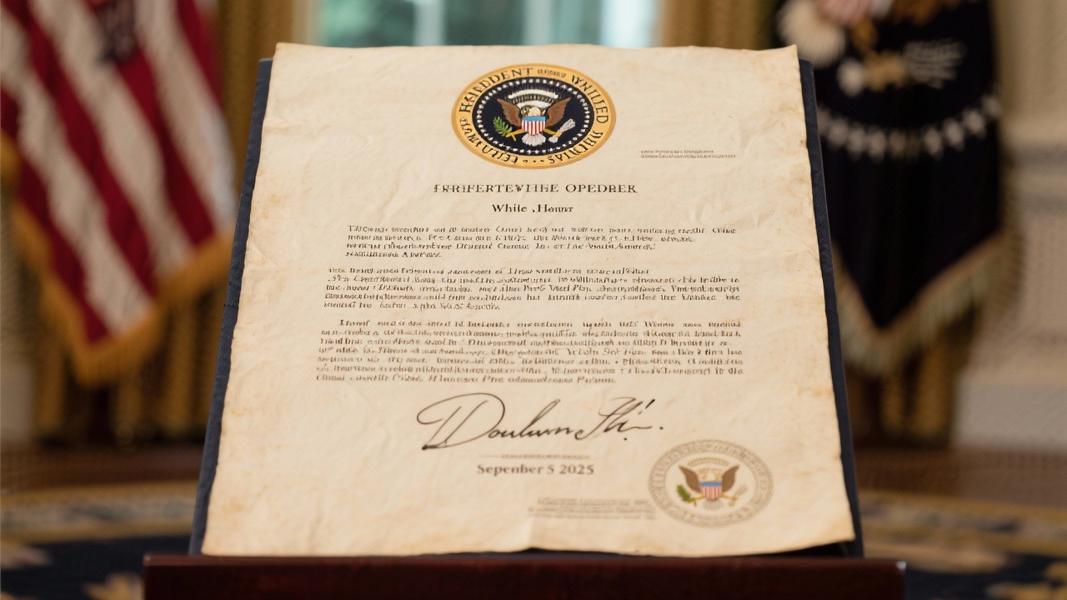
President Donald Trump has signed a sweeping executive order that creates a new designation for countries that wrongfully detain American citizens, marking a significant escalation in how the U.S. confronts what officials call “hostage diplomacy.”
The order, signed on September 5, 2025, establishes a formal process for the Secretary of State to label foreign nations as “State Sponsors of Wrongful Detention” — a designation that triggers sanctions, travel restrictions, and other punitive measures similar to those used against terrorist organizations.
New Tools for American Hostages
“The United States Government is committed to using every tool available to curb this coercive tactic used by foreign adversaries and must hold such adversaries to account,” states the executive order, according to a White House fact sheet released alongside the signing.
Senior administration officials have already identified China, Iran, and Afghanistan as countries likely to face review under the new designation system. “Today, everything changes with regards to rogue regimes and regimes who think Americans can be treated as pawns,” one official told reporters during a background briefing.
The order outlines specific criteria for a country to receive the designation, including instances where the government itself wrongfully detains Americans, fails to release detained U.S. nationals after being notified of their status, or provides “material support” for such detentions. These parameters are detailed in the full text of the executive action.
Teeth Behind the Threat
What separates this from previous administrations’ approaches to hostage situations? The new designation comes with serious consequences. Countries labeled as State Sponsors of Wrongful Detention could face sanctions under the International Emergency Economic Powers Act, travel restrictions for their officials, limitations on foreign assistance, and targeted export controls.
The order also extends beyond officially recognized governments. In an unusual provision, it specifies that “an entity exercising control over most or all of the territory of a country” can also be designated — potentially allowing the U.S. to target non-state actors or unrecognized regimes that hold Americans.
Mickey Bergman, CEO of Global Reach, a nonprofit focused on bringing home detained Americans, praised the move. “This designation is something that will put real teeth behind the US government’s efforts to bring home detained Americans and deter offending nations from engaging in ‘hostage diplomacy,'” Bergman stated in a release following the announcement.
A Track Record of Returns
The Trump administration has made the return of Americans detained abroad a cornerstone of its foreign policy since returning to office in January 2025. Administration officials claim they’ve secured the release of 72 Americans so far, including detainees from Russia and Afghanistan.
How does a country get off the list once designated? The path to redemption isn’t simple. The Secretary of State can terminate a designation only after the foreign government releases all wrongfully detained Americans, demonstrates “changes in leadership or policies” regarding wrongful detention, and provides “credible assurances” against future cases, according to the order.
The executive action represents a formalization of what has often been an ad hoc process for handling Americans detained abroad. Previous administrations typically addressed such cases individually, sometimes leading to criticism that responses were inconsistent or prioritized certain detainees over others.
For families of Americans currently held overseas, the designation creates a more structured framework for government action. But it also raises questions about potential diplomatic fallout with countries that might be targeted — particularly those where the U.S. maintains complex relationships balancing multiple strategic interests.
The designation system bears striking resemblance to the State Sponsor of Terrorism list, which currently includes North Korea, Iran, Cuba, and Syria. Whether this new tool will succeed in deterring wrongful detentions or accelerating the return of Americans remains to be seen, but the message to foreign adversaries is unmistakably clear: the practice of detaining Americans as diplomatic leverage now comes with a much steeper price.
