
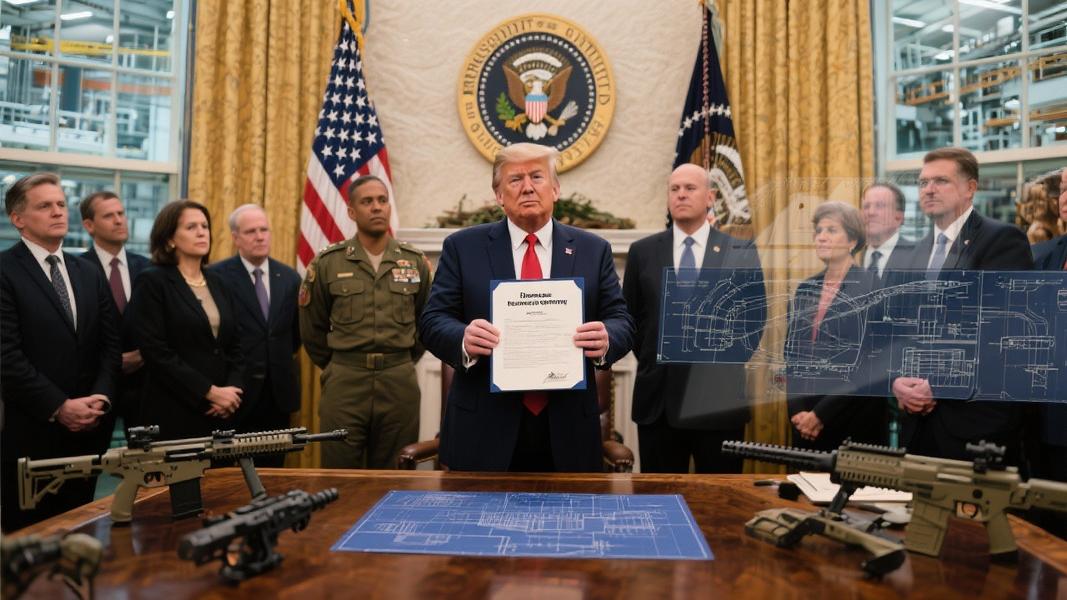
President Trump has issued a stark warning to the defense industry: invest more in production capacity and innovation, or face severe restrictions on shareholder payouts and executive compensation.
In an executive order signed January 7, Trump directed the Secretary of War to identify contractors that prioritize stock buybacks over meeting military needs. The order comes amid growing concerns about production delays and capacity limitations across the defense industrial base at a time of heightened global tensions.
“All United State Defense Contractors, and the Defense Industry as a whole, BEWARE,” Trump declared in language typical of his direct communication style. “While we make the best Military Equipment in the World (No other Country is even close!), Defense Contractors are currently issuing massive Dividends to their Shareholders and massive Stock Buybacks, at the expense and detriment of investing in Plants and Equipment. This situation will no longer be allowed or tolerated!”
Tough Remedies Ahead
What happens to contractors who don’t fall in line? The administration isn’t mincing words. The executive order authorizes a range of potential enforcement actions, from contract amendments to invoking rarely-used Defense Production Act authorities if remediation plans fail to produce results, according to defense industry publications.
The move represents a significant shift in how the federal government approaches its relationship with major defense contractors like Lockheed Martin, Boeing, and Raytheon Technologies. Industry analysts suggest the order could dramatically alter capital allocation strategies that have favored shareholders in recent years.
This isn’t the first time Trump has taken aim at defense contractors. During his previous administration, he frequently criticized companies over cost overruns and production delays, often using social media to apply public pressure.
But the formal executive order represents a more structured approach to forcing change in an industry that has grown accustomed to generous government contracts while maintaining significant autonomy in how they allocate capital.
Industry Response
Defense executives have yet to publicly respond to the order, though many companies may find themselves in a difficult position. The defense sector has enjoyed robust stock performance partly due to reliable dividend growth and share repurchase programs that investors have come to expect.
Wall Street analysts are already speculating about which contractors might be most vulnerable to scrutiny. Companies with significant buyback programs coupled with program delays could find themselves first in line for remedial action.
The timing raises questions about broader economic implications as well. Defense stocks, often considered safe havens during uncertain times, could face volatility if investors perceive a threat to dividend policies and share repurchase programs.
As the Department of Defense begins identifying companies that fall short of the administration’s expectations, the coming months will likely reveal whether this represents a fundamental reshaping of the defense industrial base or simply another round in the ongoing tension between government efficiency demands and corporate financial priorities.
