
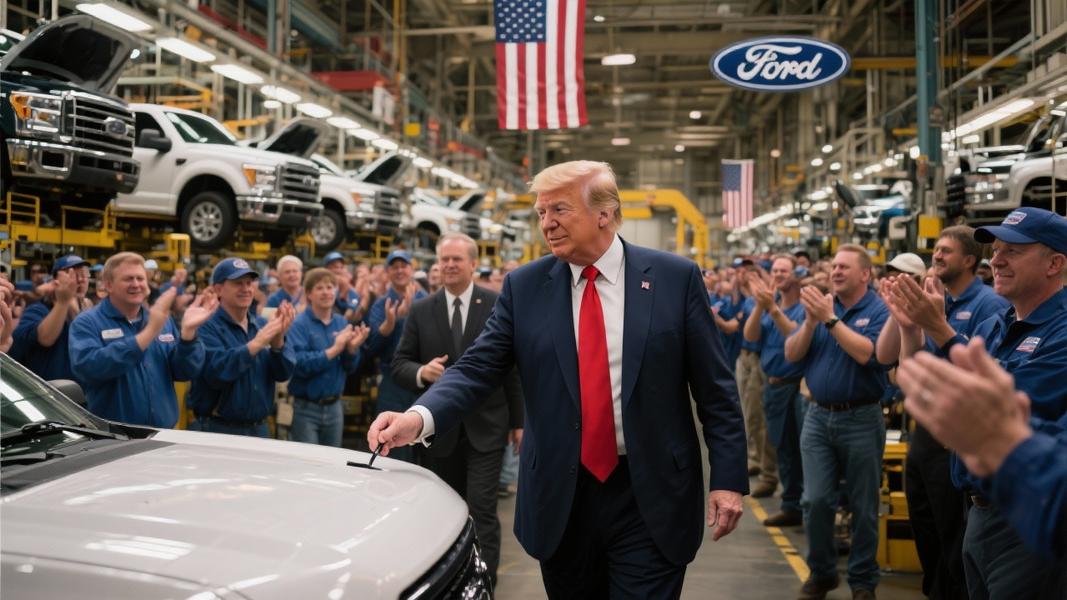
President Trump swept back into Michigan on Tuesday, touring Ford’s River Rouge Complex in a visit aimed at celebrating what he called “the strongest and fastest economic turnaround in our country’s history” — a claim that comes as his administration pushes for further economic relief despite mixed reactions from voters.
“After less than 12 months in office, I’m back in Michigan to report to you on the strongest and fastest economic turnaround in our country’s history,” Trump declared to applauding workers at the Dearborn plant, where he received a warm welcome from both employees and company leadership.
The January 13 visit marked Trump’s first trip to the key battleground state in 2026, highlighting the auto industry’s resurgence as a centerpiece of his economic agenda. White House officials touted the visit as evidence that manufacturing jobs are returning to the Midwest under Trump’s policies.
Economic Reality Check
But are things really as rosy as the president suggests? Local media has offered a more nuanced assessment. A Bridge Michigan analysis noted that while Trump accurately cited some economic improvements, the fact-check highlighted that many Michigan families continue to struggle with high costs of living despite progress on certain campaign promises.
During his tour of Ford’s historic manufacturing complex, Trump made his case directly to blue-collar workers, with Bloomberg characterizing the Detroit trip as a populist pitch focused primarily on affordability and economic policies that have resonated with the region’s manufacturing base.
The president also took aim at Federal Reserve Chair Jerome Powell, urging faster action on interest rates. “We have very low inflation. So, that would give ‘too-late Powell’ the chance to give us a nice, beautiful, big rate cut, which would be great for the country,” Trump remarked, referencing December’s 2.7% inflation figure.
Michigan’s Strategic Importance
Why Michigan? The state remains crucial to Trump’s political narrative of reviving American manufacturing. During his visit, company executives praised the administration’s policies while workers demonstrated production processes to the president, who spent considerable time engaging with employees on the factory floor.
The trip underscores the administration’s focus on economic messaging as it enters its second year. Trump’s populist economic pitch — combining boasts about the current recovery with promises of further relief — appears designed to address lingering voter concerns about affordability that have persisted despite the headline economic figures his team frequently cites.
Still, the contrast between the president’s triumphant rhetoric and the economic reality for many Michiganders creates a tension that may define much of the political landscape in 2026. As Trump pushes for further economic wins, the question remains whether voters in manufacturing hubs like Detroit will feel the benefits strongly enough to maintain their support through the coming midterms and beyond.
