
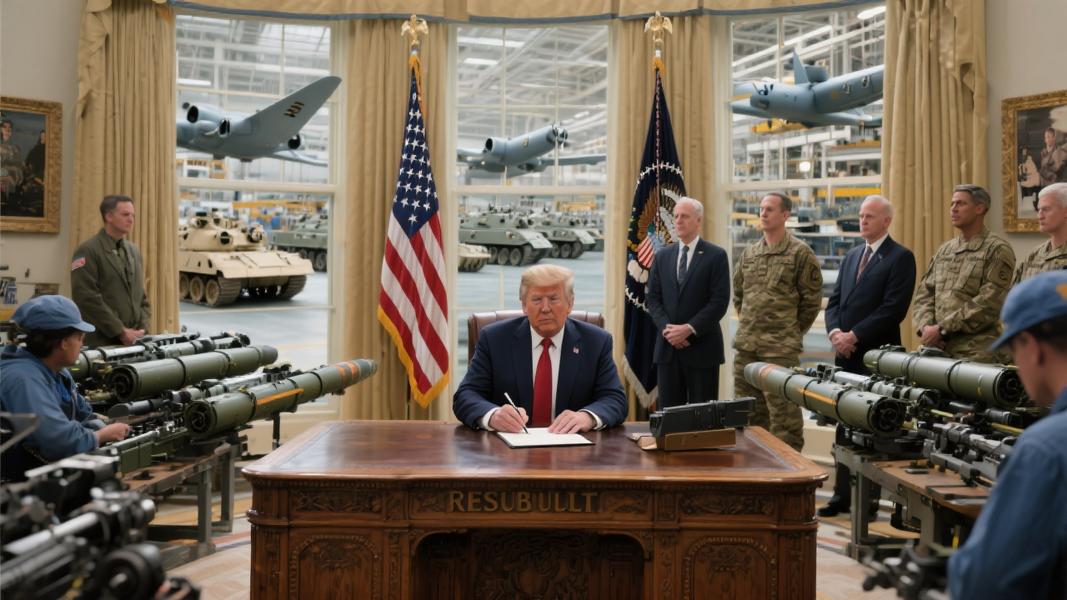
President Donald Trump has unveiled a sweeping new strategy to reshape how America sells weapons to allies, transforming the nation’s arms export system into what he calls “the Arsenal of Freedom” while boosting domestic manufacturing and streamlining sales to strategic partners.
The Executive Order, signed on February 6, 2026, establishes the America First Arms Transfer Strategy, which aims to leverage the billions of dollars in annual defense sales to strengthen U.S. industrial capacity and accelerate weapons delivery to key partners around the world. The initiative comes as global demand for American weapons systems has created significant production backlogs and delivery delays, according to White House officials.
Why the overhaul? Previous approaches to international arms sales were largely driven by partner countries’ wish lists rather than American strategic priorities, leading to inefficiencies, cost overruns and production bottlenecks that have frustrated both manufacturers and foreign buyers alike.
Strategic Reindustrialization
The new strategy represents a significant shift in how America approaches its role as the world’s leading arms exporter. “The America First Arms Transfer Strategy will now leverage over $300 billion in annual defense sales to strategically reindustrialize the United States and rapidly deliver American-manufactured weapons to help our partners and allies establish deterrence and defend themselves,” Trump stated during the signing ceremony.
Central to the plan is a directive for the Secretaries of War, State, and Commerce to develop a sales catalog of prioritized weapons platforms, enhance advocacy for American defense products, and collaborate more closely with industry. The order also establishes the Promoting American Military Sales Task Force to coordinate these efforts across government agencies.
The administration’s approach appears to be bearing fruit already. In 2025 alone, the Executive Branch notified Congress of $104.2 billion in proposed Foreign Military Sales transfers, with the majority coming after Trump’s return to office.
Prioritizing Strategic Partners
Not all allies will benefit equally from the new framework. The strategy explicitly tasks the government with prioritizing partners who are “invested in self-defense with critical roles in the National Security Strategy,” suggesting a more selective approach to arms transfers than in previous administrations.
Defense industry analysts note that this represents a substantial philosophical shift. Rather than treating arms sales primarily as diplomatic tools or commercial opportunities, the Trump administration appears to be integrating them more directly into its broader strategic competition with rival powers.
The emphasis on building production capacity for “operationally relevant weapons” also signals a focus on systems that could be useful in potential great power conflicts rather than counter-insurgency equipment that dominated sales during the War on Terror era.
What remains to be seen is how traditional U.S. allies who fall outside the administration’s strategic priorities will respond to potentially reduced access to American weaponry. Some defense experts worry this could push certain nations toward alternative suppliers like China or Russia, though administration officials dismiss such concerns.
As global tensions continue to simmer across multiple regions, Trump’s weapons export overhaul represents yet another example of his administration’s willingness to rewrite longstanding rules of engagement — this time in the high-stakes world of international arms sales.
