
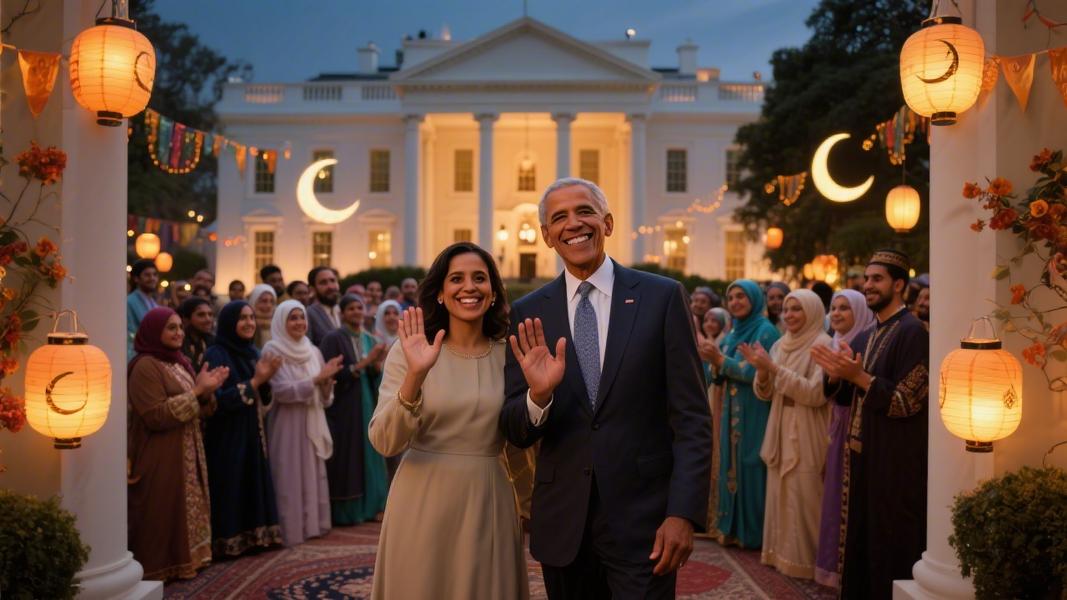
The White House marked Eid al-Fitr this week with a formal presidential message and a season of outreach to Muslim Americans that the Trump administration is framing as a cornerstone of its religious liberty agenda — a signal, officials say, that’s as much about geopolitics as it is about goodwill.
Dated March 18, 2026, the message from President Trump and the First Lady extended official greetings to Muslim Americans celebrating the end of Ramadan. “The First Lady and I send our best wishes to every American celebrating Eid al-Fitr,” the statement read — brief, warm, and carefully worded. But behind the pleasantries lies a broader political story that’s been building since the 2024 election.
A Holiday, a Message, and a Political Moment
Eid al-Fitr, as the White House noted, “unites Muslim families, friends, and communities in honor of their spiritual devotion at the conclusion of Ramadan.” It’s one of the most significant holidays on the Islamic calendar — a day of prayer, feasting, and communal celebration that follows a month of fasting. The administration’s decision to issue a formal statement, and to pair it with a season of high-profile events, reflects a deliberate effort to court a constituency that turned out for Trump in surprising numbers two years ago.
That’s not incidental. It’s the whole point.
The presidential message tied Eid directly to American constitutional values, calling it “a reminder of the foundational American principle of religious liberty, which my Administration is fighting for every day.” The framing is consistent with language Trump used during Ramadan, when the White House declared that his administration “recommits to upholding religious liberty that is such an integral part of the American way of life.” Religious freedom as a pillar of national strength — it’s a message that plays well across faith communities, and the administration knows it.
The Iftar Dinner That Spoke Volumes
Perhaps the most striking gesture came earlier in the Ramadan season, when Trump hosted an Iftar dinner at the White House — an annual tradition with roots going back decades, but one that carries particular weight under this administration given its complicated history with Muslim-majority nations. Ambassadors from the UAE, Jordan, and Egypt were among those in attendance, and discussions reportedly touched on the expansion of the Abraham Accords, according to accounts of the evening.
Trump didn’t mince words about why the moment mattered to him personally. “The Muslim community was there for us in November — and while I’m president, I’m going to be there for you,” he told guests ahead of the meal, adding, “I think you know that.” The line drew applause, and it also drew attention. It was candid in a way that official statements rarely are — a politician acknowledging a political debt and making a political promise, right there over dinner in the East Wing.
CBS Austin covered the event as a symbol of the administration’s stated commitment to both religious liberty and regional peace — though critics have been quick to note the tension between those stated values and ongoing U.S. policy in the Middle East. Still, the optics of the evening were unmistakable. This was a White House that wanted to be seen welcoming Muslim Americans, and it wasn’t being subtle about it.
A Longer Arc of Outreach
How does this compare to Trump’s earlier tenure? That’s where it gets complicated. During his first term, Trump and Melania issued warm Eid greetings — “On behalf of the American people, Melania and I send our warm greetings to Muslims as they celebrate Eid al-Fitr,” one statement read — but those years were also marked by reports of no formal White House Iftar or Eid gatherings, a notable departure from the tradition maintained by both Democratic and Republican predecessors. The contrast with the current, more engagement-heavy approach is hard to miss.
What’s changed? The 2024 election results, for one thing. Muslim American voters, particularly in key swing states, shifted toward Trump in ways that surprised many political analysts. The administration has made no secret of its awareness of that shift. The Iftar dinner, the Ramadan message, the Eid statement — taken together, they form a coherent outreach strategy, not just a series of ceremonial gestures.
At one gathering, a guest captured the significance of the White House setting itself. “Being hosted here is an important statement for our nation and for the world,” they said. “A statement that Islam is a welcome…” The sentence, as reported, trailed off — but the sentiment didn’t need finishing.
What It Means Going Forward
That said, symbolic gestures and formal statements only go so far. Muslim American advocacy groups have continued to press the administration on policy questions — immigration, foreign policy, civil liberties — that don’t resolve themselves with a well-worded holiday message. The gap between rhetoric and policy is a live debate, and it’s one that’s unlikely to quiet down regardless of how many Iftar dinners get hosted on Pennsylvania Avenue.
But for now, the White House is leaning into the moment. Eid al-Fitr, Ramadan, the Iftar table — these have become part of the administration’s public-facing identity in a way they weren’t before. Whether that reflects a genuine philosophical evolution or a sharp-eyed political calculation — or, as is often the case in Washington, both at once — may be the more enduring question.
As one diplomat at the Iftar dinner put it, the President’s words were simple and direct: “I’m going to be there for you.” In politics, promises made over dinner are easy to make. The harder part, as always, is what happens after the plates are cleared.
