
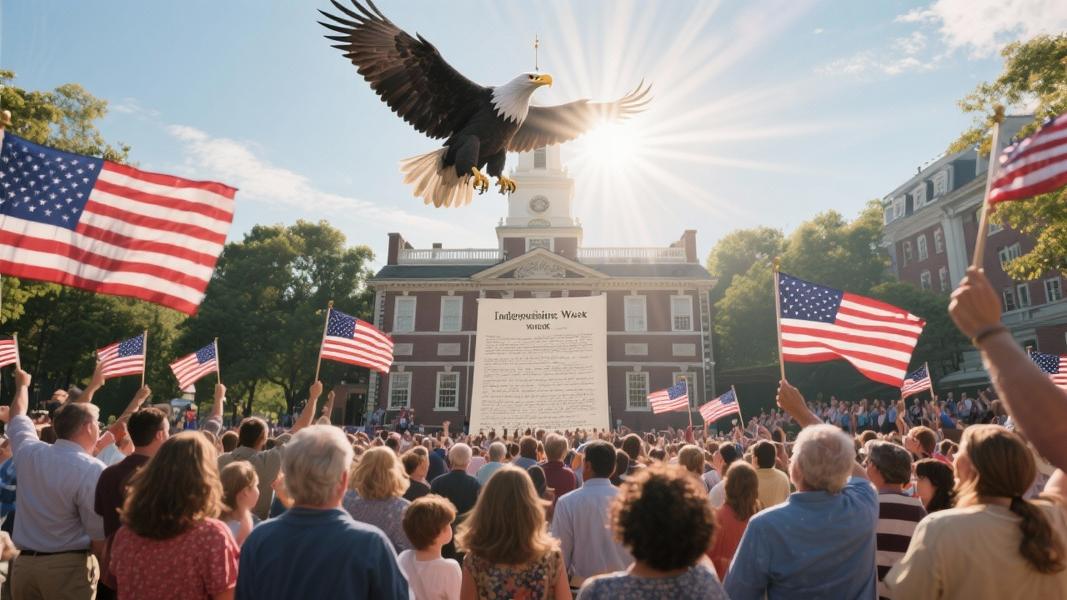
President Trump’s Constitution Week proclamation for 2025 has placed a spotlight on his administration’s commitment to defending American symbols and citizenship as the nation prepares to commemorate the 238th anniversary of the Constitution’s signing.
The proclamation, which designates September 17-23 as Constitution Week, highlights several executive actions taken during Trump’s return to office, including orders to “prosecute those who desecrate” the American flag and protect “the meaning and value of American citizenship” — themes that have been central to his political messaging.
“This week our Nation proudly celebrates the 238th anniversary of the signing of the United States Constitution,” Trump stated in the official document, adding that Americans “pledge allegiance to our beautiful American flag and everything for which it stands — and we vow to honor, revere, and safeguard our Constitution against all enemies, foreign and domestic.”
The presidential proclamation follows a tradition established by Congress through joint resolutions in 1952 and 1956, which formalized Constitution Day on September 17 and Constitution Week for the seven days beginning on that date. Local governments across the country, including the San Diego County Board of Education and the City of Woodcreek, Texas, have already issued their own proclamations in accordance with federal requirements.
Executive actions take center stage
What sets Trump’s 2025 proclamation apart from previous years is its explicit reference to controversial executive orders signed during his first days back in office. The document specifically mentions his directive to “prosecute those who desecrate our Stars and Stripes,” an action that has already drawn scrutiny from civil liberties groups concerned about First Amendment implications.
Trump also highlighted his executive order targeting “Diversity, Equity, and Inclusion” programs in the federal government, framing these actions as part of his constitutional defense agenda. “For this reason, on my first day in office, I signed an Executive Order to Protect the Meaning and Value of American Citizenship,” the proclamation notes.
The emphasis on citizenship and national symbols aligns with broader themes of Trump’s return to the White House, where he has positioned himself as a defender of traditional American values against what his supporters view as cultural erosion.
Educational significance
Beyond the political messaging, Constitution Week maintains its educational purpose across the country. The San Diego County Office of Education, in its own proclamation, emphasized that it “works collaboratively throughout the year with schools and districts to ensure equitable access to quality civic learning,” according to official documents.
Is this educational mission at risk of being overshadowed by political positioning? Some educators worry that the increasing politicization of civic holidays could undermine their classroom value, while others see the heightened attention as an opportunity for deeper engagement with constitutional principles.
The City of Woodcreek’s proclamation strikes a more traditional tone, stating, “It is the privilege and duty of the American people to commemorate the two hundred and thirty-eighth anniversary of the drafting of the Constitution of the United States of America with appropriate ceremonies and activities.” The city echoed the long-standing tradition of reflecting on citizens’ rights and responsibilities.
The week-long observance, falling in September 2025, comes at a time of heightened constitutional discourse nationwide, with debates about executive power, citizenship, and the limits of government authority regularly making headlines.
As Americans prepare to mark nearly two and a half centuries of constitutional governance, Trump’s proclamation serves as both a celebration of enduring principles and a reminder of how differently those principles can be interpreted in today’s polarized political climate.
