
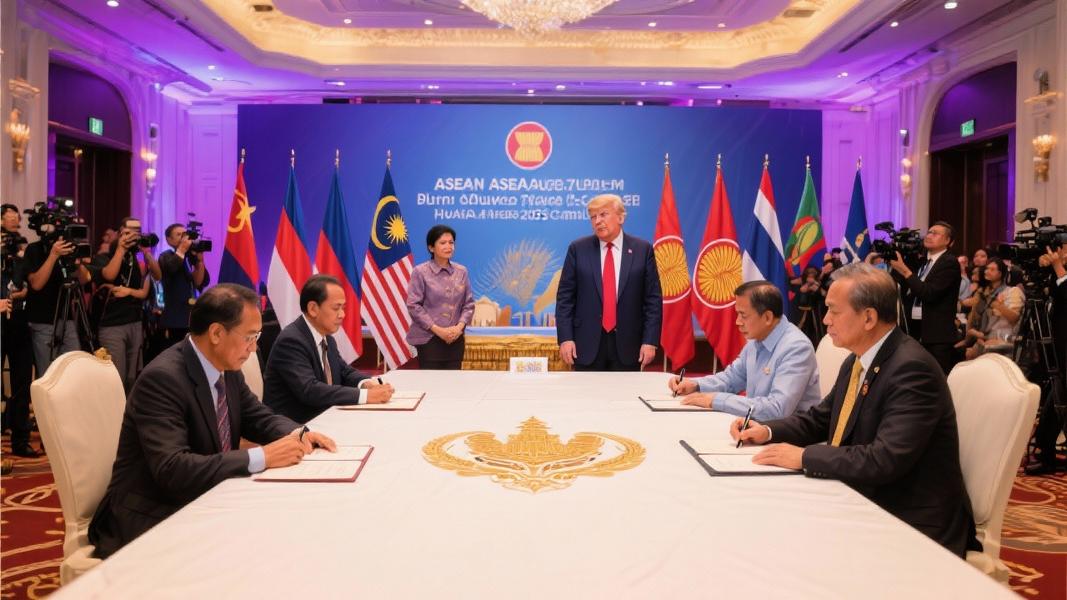
President Trump has kicked off his Asia tour with what his administration is calling a series of diplomatic victories in Malaysia, brokering peace deals and securing trade agreements that the White House claims will benefit American workers and strengthen national security.
During his visit to Kuala Lumpur, Trump oversaw the signing of the Kuala Lumpur Peace Accords between Cambodia and Thailand, aimed at ending military conflicts between the two nations. The administration has characterized the agreement as “historic” and credited Trump’s “decisive leadership” with saving “millions of lives.”
Trade Deals Take Center Stage
Beyond peacekeeping efforts, the trip has yielded several trade agreements. Trump secured deals with Malaysia and Cambodia that will eliminate or reduce tariffs across “a massive swath of U.S. exports,” according to White House statements. These agreements also address non-tariff barriers that have historically limited American access to these markets.
“In yet another bold display of strength and unmatched dealmaking ability, President Donald J. Trump kicked off his historic Asia tour with a powerhouse visit to Malaysia,” the White House claimed in a statement that reflected the administration’s characteristic flair for superlatives.
The deals didn’t stop there. Reciprocal trade frameworks were also established with Thailand and Vietnam, focusing on reducing tariff barriers and providing preferential market access for U.S. industrial and agricultural exports.
Critical Minerals: A National Security Focus
Perhaps most significant from a strategic perspective? The administration’s focus on critical minerals deals across Southeast Asia.
Trump negotiated what the White House describes as “transformative” critical minerals agreements with Malaysia, securing “groundbreaking investments worth billions” that aim to diversify global supply chains. The administration has positioned these deals as crucial for enhancing U.S. national security by reducing dependence on other sources.
A similar cooperation agreement with Thailand will “promote partnerships between U.S. and Thai companies, increase global supply chain resilience, and mitigate the negative impact of anti-competitive behavior and unfair trade practices,” according to White House documents.
The president’s visit to Malaysia included participation in ASEAN Summit meetings and several trade signing ceremonies before he departed for Tokyo on October 26, continuing his Asia tour.
While the administration has presented these agreements as major diplomatic victories, critics will likely scrutinize the details of these arrangements in the coming days to assess their actual impact on American workers and the broader geopolitical landscape. The success of Trump’s “America First” approach in these negotiations may not be fully apparent until the agreements are implemented and their effects measured in the months and years ahead.
