
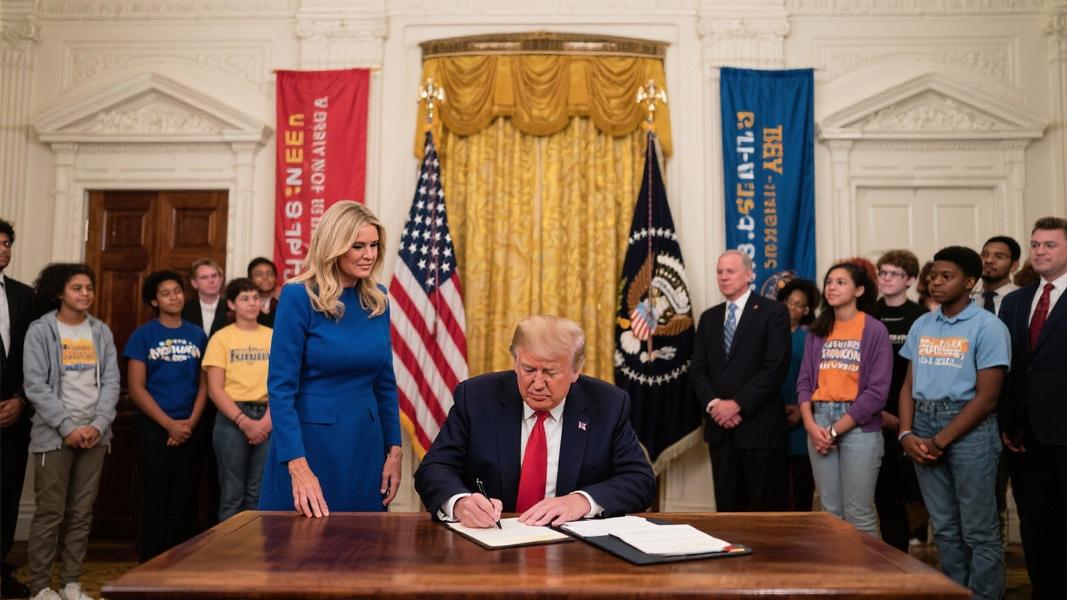
In a sweeping move to overhaul America’s foster care system, President Donald Trump and First Lady Melania Trump have signed an executive order that promises to reshape how the nation supports children in foster care through an ambitious public-private partnership initiative.
The order, titled “Fostering the Future for American Children and Families,” was signed on November 13, 2025, marking what the administration calls a “transformative approach” to addressing longstanding challenges facing the more than 400,000 children currently in the U.S. foster care system. The initiative builds upon the First Lady’s existing “Fostering the Future” program that has been operating since 2021, now expanding it with federal resources and broader coordination across government agencies and private sectors.
First Lady Takes the Lead
Melania Trump, who has quietly made foster care reform a cornerstone of her work since leaving the White House after her husband’s first term, spearheaded the development of the executive order. During the signing ceremony, she spoke passionately about the origins of her mission, which she revealed began in 2021 when she “developed the idea to establish an impactful platform with an important mission: to provide individuals from the foster care community the ability to secure an entry-level job position, and in turn… financial independence.”
The First Lady’s program has already established partnerships with several prominent academic institutions, including Vanderbilt University, University of Miami, and Villanova University, providing scholarships to former foster youth. Now, with the weight of an executive order behind it, the initiative aims to scale nationally.
“Too many people from the foster care community end up homeless, in danger on America’s streets,” Mrs. Trump stated during the ceremony. “This Executive Order is both empathetic and strategic. It will certainly be impactful.”
Four-Pronged Approach
What exactly does the executive order do? At its core, the directive establishes four main provisions designed to create a more cohesive support system for foster youth, particularly those aging out of the system who often face steep challenges in education, employment, and housing.
First, it establishes the “Fostering the Future Pledge & Future Commitments” program, which aims to secure commitments from government agencies, private companies, nonprofits and academic institutions to create educational and employment pathways specifically for youth transitioning out of foster care.
Second, the order authorizes the creation of an online resource hub where current and former foster youth can develop personalized plans for self-sufficiency, connecting them with resources across different sectors and programs.
The third provision increases access to Education and Training Vouchers and federal grants supporting time-limited and credentialed programs that promote educational success, workforce advancement, and financial literacy.
Finally, the order facilitates state use of scholarship programs funded by tax-credited donations to scholarship-granting organizations specifically for children in foster care.
Federal Agencies Mobilize
Already, multiple federal departments have announced specific commitments in response to the executive order. The Department of Health and Human Services, through its Administration for Children and Families, will implement the directive’s core elements while also launching a parallel initiative aimed at keeping children safely with their families when possible, potentially reducing unnecessary entries into the foster care system.
In an interesting tech-focused move, HHS also announced a pilot program to donate decommissioned federal laptops to youth in foster care—a practical approach to bridging the digital divide that often affects this population.
Meanwhile, the Treasury Department and Housing and Urban Development (HUD) have committed to hosting roundtables across the country, gathering input directly from transitioning youth about obstacles to financial literacy. They plan to establish new policies based on these findings, with initial reports expected in Spring 2026.
Perhaps most significant for immediate employment prospects, the Office of Personnel Management (OPM) announced a new opportunity for foster youth to obtain federal jobs through the Pathways Programs, a special hiring authority for early career talent. This includes a dedicated applicant portal and professional development activities.
Private Sector Called to Action
Can businesses make a meaningful difference in foster care outcomes? The administration clearly thinks so. The executive order explicitly invites private-sector organizations to join the initiative by signing the Fostering the Future Pledge, accessible through the White House website.
During her remarks, the First Lady directly challenged corporate America: “I call on leadership from these various organizations, including the private sector, to join my effort. Rise above the ease of inaction.”
She emphasized that the order aims to “establish a comprehensive network connecting federal departments and agencies, private sector businesses, higher-learning institutions, and charitable organizations” to create new opportunities nationwide.
Long-Term Vision
The First Lady painted an optimistic picture of what successful graduates from these programs might achieve: “Following graduation, scholarship recipients from my program are prepared to enter the workforce, and, ultimately, become leading executives. Predictably, they will manage thousands of employees and generate significant value for American communities.”
Faith-based organizations will continue playing what she called “a vital and consequential role” in the broader initiative, suggesting a multi-sector approach that leverages existing community resources alongside new federal commitments.
“I predict this small spark today will ignite a profound and lasting nationwide movement,” Mrs. Trump concluded. “Together, we will illuminate the pathway for today’s foster children to become tomorrow’s builders. And tomorrow’s builders will foster the future of America’s legacy.”
The executive order comes at a time when foster care systems nationwide face mounting challenges, including caseworker shortages, placement scarcity, and concerning outcomes for youth aging out of the system without permanent family connections. Whether this new federal-private partnership approach can address these systemic issues remains to be seen, but it represents one of the most coordinated efforts in recent memory to focus national attention on America’s foster children.
