
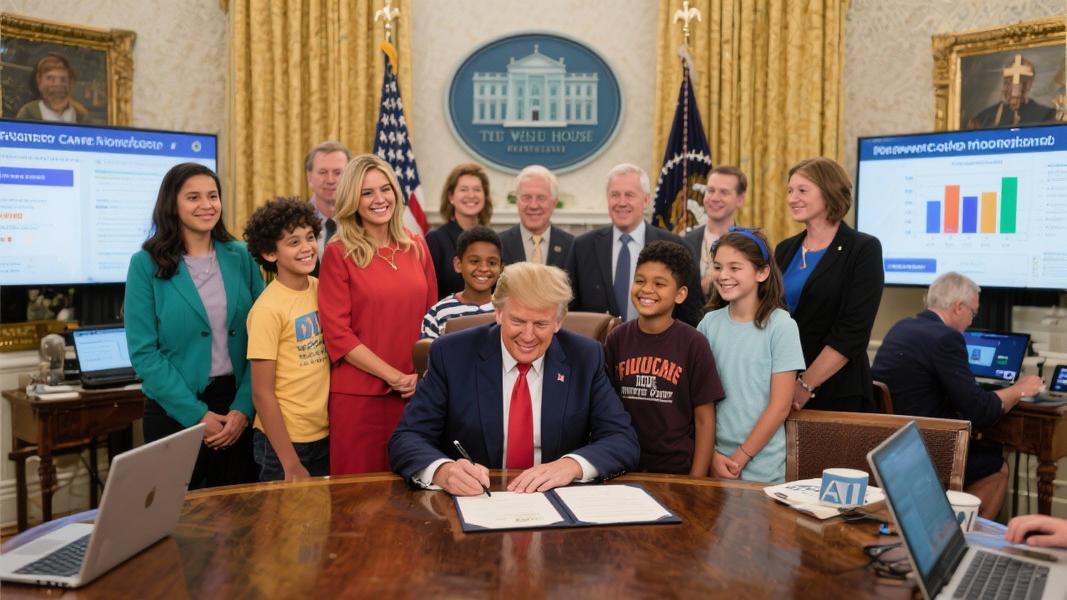
President Donald Trump signed an executive order Wednesday aimed at overhauling America’s foster care system, launching a new initiative spearheaded by First Lady Melania Trump that promises to transform how the nation supports youth aging out of the system.
The “Fostering the Future” initiative establishes a comprehensive framework to address the steep challenges facing approximately 20,000 young Americans who age out of foster care each year without permanent family connections, many of whom struggle with education, employment, and housing stability.
A Digital Hub for Foster Youth
At the heart of the executive order is the creation of an online platform designed to connect transitioning foster youth with critical resources. The digital hub will help users build personalized plans for education, housing and career development — areas where former foster youth have historically faced significant hurdles.
“Today, President Donald J. Trump signed an Executive Order to modernize America’s foster care system and empower young Americans transitioning out of foster care with greater tools, resources, and opportunities to promote lifelong independence and success,” the White House stated in a fact sheet accompanying the signing.
The statistics paint a sobering picture. Without proper support systems, only about half of foster youth complete high school. Fewer than 5% earn four-year college degrees. Roughly one in five experience homelessness upon leaving care, and just half find gainful employment by age 24.
Reallocating Resources, Expanding Opportunities
The order directs federal agencies to reallocate underutilized funds toward programs promoting educational success, career advancement, and financial literacy for former foster youth. It also increases flexibility in Education and Training Vouchers to cover short-term, career-focused programs rather than just traditional college pathways.
Why the shift toward career training? The Trump administration has increasingly criticized the “college for all” model, instead promoting workforce development programs that connect young people directly with employment opportunities.
“President Trump is modernizing America’s workforce programs to replace the failed ‘college for all’ model with career-focused training that meets the real needs of today’s youth,” the White House explained.
Faith-Based Partnerships and Religious Protections
The order contains provisions strengthening partnerships with faith-based organizations while directing action to prevent discrimination based on religious beliefs. This appears to address ongoing tensions in some jurisdictions where organizations have been prohibited from participating in foster care due to religious views.
“Some jurisdictions and organizations maintain policies that prohibit qualified families from fostering or adopting due to sincerely-held religious beliefs,” the White House noted.
Modernizing an Outdated System
Technology upgrades form another key component of the initiative. The order promotes modernization of state child-welfare information systems and encourages the use of AI-powered tools to improve caregiver recruitment, retention, and child matching.
Current systems are often outdated and inefficient, the administration argues, hampering caseworkers who are already overburdened with high caseloads and complex family situations.
An annual scorecard will evaluate state performance on metrics including reducing unnecessary foster care entries, shortening investigation times, reducing child injuries and placement disruptions, and accelerating permanent family placements.
First Lady’s Expanding Child Welfare Focus
For Melania Trump, the initiative builds on her previous “BE BEST” campaign from the first Trump administration, which focused on children’s social, emotional, and physical health. She has already chalked up a legislative win in the second term with the passage of the TAKE IT DOWN Act, which provides protections for children from online exploitation.
“The Order launches the ‘Fostering the Future’ initiative, led by First Lady Melania Trump, to enhance the quality of Federal resources and capabilities while developing public- and private-sector partnerships that expand educational, employment, and mentorship opportunities for youth transitioning from foster care to adulthood,” the statement explained.
The signing event included the president, First Lady, government officials, child welfare organizations, foster and adoptive families, and youth with foster care experience.
Part of Broader Family Focus
The administration has positioned the foster care initiative alongside other family-focused policies, including the Working Families Tax Cuts, which increased access to the Adoption Tax Credit, made permanent the Child Tax Credit, and established “Trump Accounts” for newborns to encourage early saving.
Will these changes be enough to address the complex challenges facing foster youth? Child welfare advocates have long argued that systemic reform requires sustained investment and attention across multiple presidential administrations, regardless of political party.
For the approximately 400,000 children currently in foster care — and especially the thousands aging out each year — the success of “Fostering the Future” may ultimately be measured not by executive actions, but by whether those young adults find stable footing in education, employment, and housing in the years ahead.
