
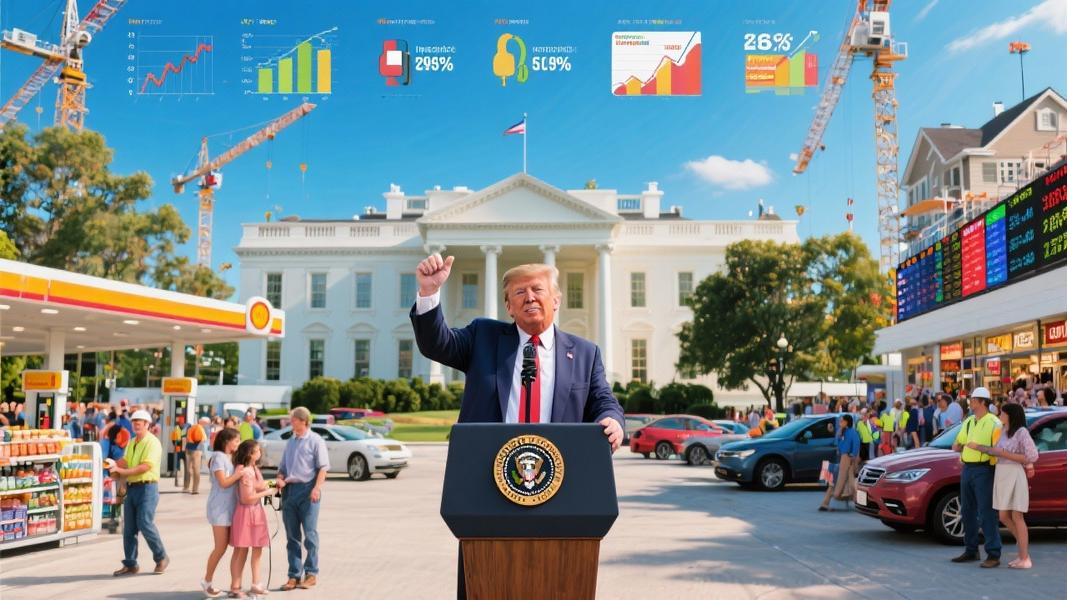
The Trump White House is claiming major victories in the battle against inflation, but economic data tells a more complicated story as the administration’s first year draws to a close.
According to recent White House statements, inflation has been cut by more than half during President Trump’s second term, averaging 2.7%, with Americans allegedly seeing the first overall price decline since 2020. “President Donald J. Trump took office on a promise to defeat inflation and bring down costs — and 11 months later, he has made substantial progress in reversing the inflation and cost-of-living disaster he inherited,” the administration declared in a recent release.
Mixed Economic Signals
But is that the full picture? CBS News reports that inflation has actually edged higher through much of Trump’s first year back in office, with the September rate hitting 3% annually. That September figure, the most recent available due to the government shutdown, represents the highest inflation rate since January 2025.
The White House has highlighted specific price decreases, particularly a dramatic 23.7% drop in egg prices since January. The administration has also emphasized that inflation has averaged 2.5% since Trump’s inauguration — significantly lower than the 5% average during President Biden’s term.
“Inflation has remained steady since President Trump took office, averaging just 2.5% — compared to an average of 5% under Biden,” reads one White House statement from October, before the latest inflation uptick.
A Closer Look at the Numbers
The reality appears more nuanced than either side’s talking points suggest. Trading Economics indicates inflation has followed a somewhat volatile path this year, dipping to 2.3% in April before gradually climbing back to the current 3% level. Key contributors to these fluctuations include energy prices, housing costs, and transportation expenses.
What’s driving these contradictory narratives? Part of the disconnect stems from the metrics being emphasized. The administration points to year-over-year improvements compared to the Biden years, while economic analysts focus on more recent month-to-month trends showing inflation’s upward momentum in the latter half of 2025.
Have Americans truly felt relief in their wallets? That depends largely on which goods and services they regularly purchase. While some grocery items have seen notable price decreases, housing costs continue to strain many household budgets.
Looking Ahead
The recent government shutdown has complicated efforts to fully assess the inflation picture, with some economic data releases delayed. Economists are closely watching how the Federal Reserve will respond to these mixed signals as it balances inflation concerns against growth objectives.
For everyday Americans, the technical debate over inflation percentages often matters less than their lived experience at the grocery store and gas pump. That sentiment likely explains why both the White House and its critics continue emphasizing different aspects of the same economic data.
As 2025 draws to a close, the Trump administration’s economic messaging faces its toughest test yet: convincing voters that statistical improvements are translating into meaningful financial relief for American families.
