
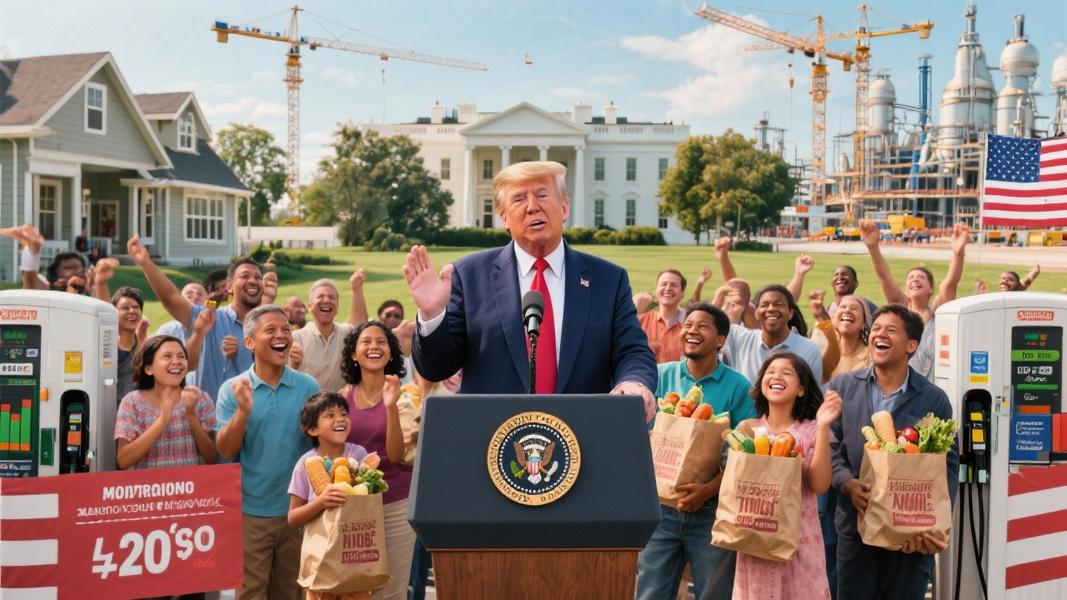
Inflation continues to be a thorn in the side of President Trump’s economic agenda, with American families feeling a sharper sting in their wallets than official statistics might suggest.
Nine months into his second term, Trump’s pledge to bring prices “way down” has yielded mixed results at best. While the White House touts an average inflation rate of 2.7% since January — including what it calls “the first overall price decline since 2020” — the numbers don’t tell the whole story for typical households.
The Gap Between Statistics and Kitchen Table Reality
According to a report from Democrats on the Joint Economic Committee, the average American family is spending approximately $700 more per month on essential items since Trump took office in January. The committee analyzed household spending patterns and found that despite moderate headline inflation figures, the cost of everyday necessities has continued to climb.
“JEC Democrats found that the average US family is spending roughly $700 more per month on basic items since Trump took office in January, pledging to bring prices ‘way down,'” as consumer advocates noted in their assessment of the economic data.
But wait — how can both the White House’s 2.7% figure and the $700 monthly increase be true simultaneously?
The answer lies partly in which prices are rising and which consumers are most affected. While some sectors have seen modest price declines, essentials like housing, healthcare, and food continue to strain family budgets.
The Upward Trend
Financial analysts indicate that “in the first nine months of Trump’s second term in office (January through September 2025), inflation edged upward by an average of around 2.7%.” That’s significantly below the painful peaks seen during the post-pandemic period, but the trend line is concerning.
September’s inflation reading hit 3.0% — the highest since January — suggesting the administration’s anti-inflation efforts might be losing steam rather than gaining momentum.
The White House maintains that these figures represent “the critical first step in reversing Democrats’ cost-of-living disaster.” Administration officials point to specific categories where prices have moderated or declined slightly.
That said, economists remain divided on whether the current policies will bring meaningful relief to consumers in the coming months, especially as the holiday shopping season approaches.
Political Fallout
For Trump, who campaigned heavily on economic issues and specifically promised to tackle inflation, the persistence of high prices presents both a policy and political challenge. The $700 monthly increase cited by the Joint Economic Committee has become a talking point for critics who claim the president’s economic approach isn’t delivering for everyday Americans.
Administration officials have pushed back against these characterizations, emphasizing that unwinding inflation takes time and pointing to specific policy initiatives they believe will bear fruit in 2026.
As winter approaches and heating costs begin to factor more heavily into household budgets, the gap between statistical inflation and lived economic experience may become an even more pressing issue for the White House to address.
