
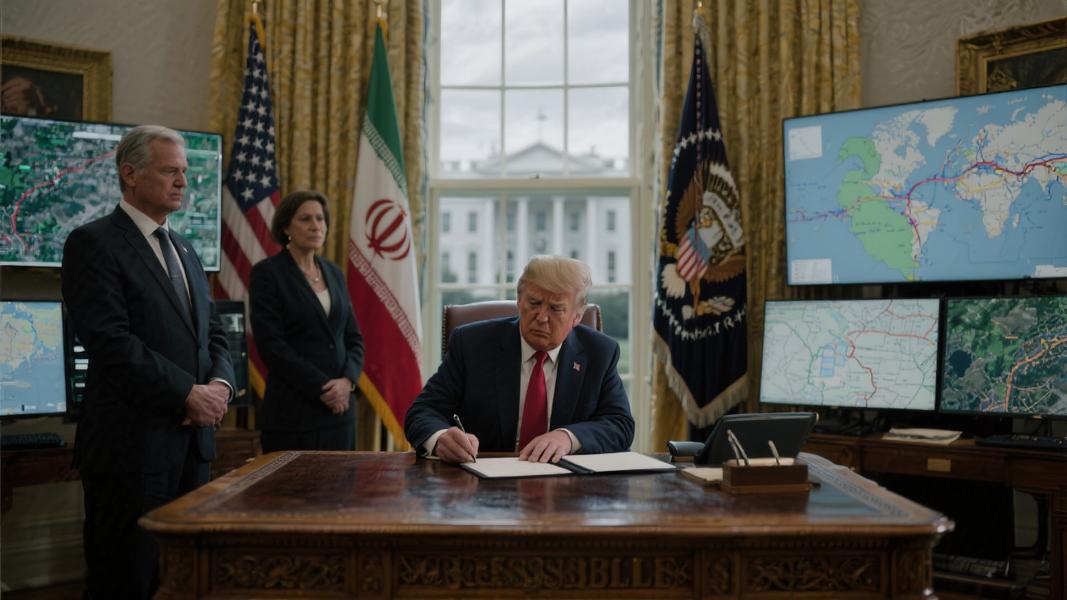
President Donald Trump has signed a new Executive Order that could significantly escalate economic pressure on Iran by targeting countries that do business with Tehran, marking another chapter in the administration’s hardline approach to the Islamic Republic.
The February 6 order reaffirms the national emergency with Iran while establishing a framework for imposing tariffs—potentially as high as 25 percent—on imports from nations engaged in commercial relationships with Iran, according to a White House statement.
New Pressure Amid Diplomatic Efforts
The timing is particularly notable. This escalation comes immediately following renewed diplomatic engagement between Washington and Tehran, with the two sides meeting in Oman recently. During those talks, Iranian Foreign Minister Abbas Araqchi maintained a firm stance, insisting discussions focus exclusively on nuclear matters and what he called “the rights that the Iranian people have,” sources confirmed.
Rather than signaling a softening approach, the administration has doubled down. Friday saw the Treasury Department announce sanctions against 15 entities and individuals connected to Iran’s oil trade, further tightening the economic vise around Tehran’s primary revenue source.
Why the multi-pronged approach? The administration appears to be acknowledging the limitations of its current sanctions regime. Secretary of State Marco Rubio admitted as much on January 28, noting that the U.S. has struggled to fully enforce sanctions against Iranian crude oil exports, partly due to Tehran’s capacity for retaliation, according to industry reports.
Tariff Threat Creates New Leverage
The Executive Order doesn’t immediately impose new tariffs. Instead, it establishes a process that begins after February 7 to determine which countries might face additional import duties based on their commercial relationships with Iran. This approach gives the administration flexibility while creating uncertainty for Iran’s trading partners.
“It’s essentially a shot across the bow,” said a Washington trade analyst who requested anonymity because they weren’t authorized to speak publicly. “The administration is signaling to countries like China that continuing to do business with Iran could have direct consequences for their U.S. export markets.”
The potential 25 percent tariff rate mentioned in policy discussions would represent a significant economic penalty for any nation caught in the crosshairs, particularly major exporters to the U.S. with ties to Iran.
That said, implementation remains uncertain. The order establishes a process rather than automatic penalties, giving the administration room to calibrate its approach based on diplomatic developments and the compliance of Iran’s trading partners.
With nuclear talks continuing in fits and starts, and regional tensions still simmering, the Executive Order represents yet another tool in what has become an increasingly complex economic pressure campaign—one that now extends beyond Iran itself to those who do business with it.
