
U.S. and Mongolia Deepen Defense Ties, Emphasize “Warrior Ethos” in Strategic Partnership
Mongolia’s embodiment of the “warrior ethos” and its significant contributions to international peacekeeping operations earned high praise from U.S. defense officials last week, as both nations moved to strengthen their military alliance amid shifting dynamics in the Asia-Pacific region.
Building on a “Third Neighbor” Strategy
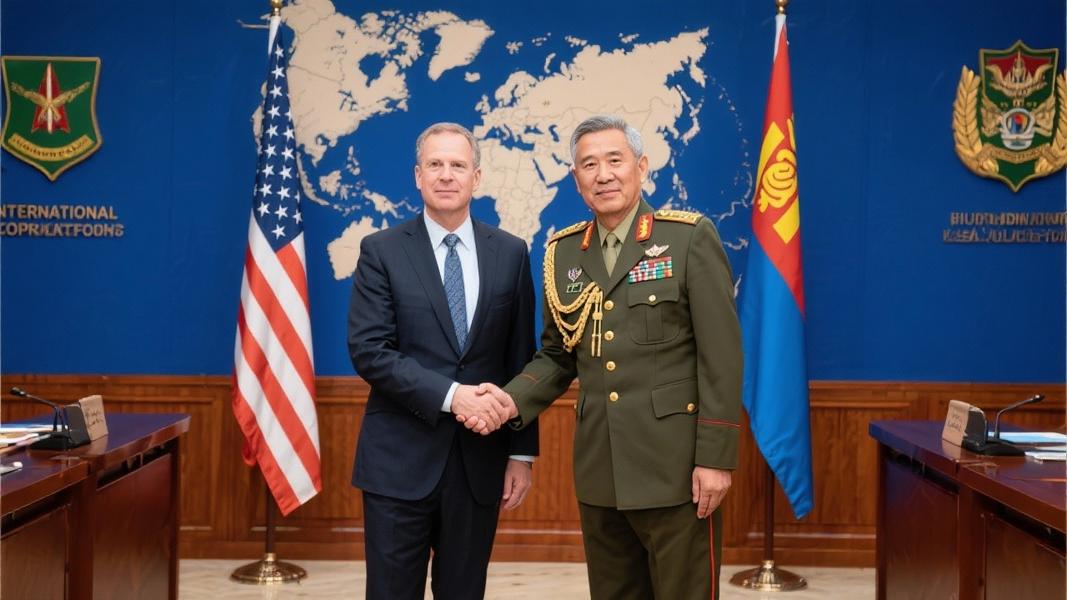
At the annual U.S.-Mongolia Bilateral Defense Forum held on September 19, 2025, Deputy Assistant Secretary of War for China, Taiwan, and Mongolia Alvaro Smith met with Major General Gankhuyag Davagdorj, State Secretary of Mongolia’s Ministry of Defense, to advance what officials from both sides described as their “Strategic Third Neighbor Partnership.”
“Mongolia and the United States emphasized the importance of their Strategic Third Neighbor Partnership in advancing the security and economic prosperity of both countries,” the War Department noted in a statement following the talks. The term “third neighbor” holds particular significance for Mongolia, a landlocked nation situated between Russia and China that has long sought to diversify its international relationships.
Smith commended Mongolia for what he called its “embodiment of the warrior ethos” and highlighted its expanding role in global peacekeeping missions. The discussions weren’t merely ceremonial — they covered concrete opportunities to enhance security cooperation through joint exercises, training programs, security assistance, and potential defense equipment sales, according to official statements.
Khaan Quest: Multinational Peacekeeping in Action
What does this partnership look like on the ground? Just three months earlier, more than 1,200 military personnel from 24 nations gathered near Ulaanbaatar for Khaan Quest 2025, a multinational peacekeeping exercise that has become a cornerstone of U.S.-Mongolian military cooperation.
Now in its 22nd iteration, the exercise demonstrates “the strength and resolve of all the countries involved to seek peace and prosperity through friendship and trust,” U.S. Ambassador Richard L. Buangan remarked during the event. “Khaan Quest doesn’t just build the capacity of Mongolia’s military in peacekeeping, but also that of partner countries who are investing military and security assistance to calm the world’s troubled hot spots.”
Lt. Gen. Joel B. Vowell emphasized the broader significance of such exercises in today’s geopolitical landscape. “We face increasingly complex security challenges, from regional conflicts to humanitarian crises,” he stated. “Khaan Quest prepares us to meet these challenges, equipping us with the skills and trust needed to operate in volatile environments.”
Defense Spending and Regional Security
Behind the diplomatic language and military exercises lies a more pragmatic conversation. The bilateral forum also addressed “areas where additional defense expenditure by Mongolia could significantly improve the Mongolian Armed Forces’ capabilities and readiness,” according to a War Department release.
Is this push for increased Mongolian military investment part of a broader U.S. strategy in the region? The timing certainly suggests so, coming amid increasing tensions with China and ongoing concerns about Russia’s global military posture.
Both sides emphasized that their approach to security cooperation is based on “mutual interest and a common-sense approach to security and prosperity in the Asia-Pacific region.” Regional security matters featured prominently in the discussions, though specific threats or scenarios weren’t detailed in public statements.
For Mongolia, the relationship offers a counterbalance to its powerful immediate neighbors. For the United States, it represents another link in a network of partnerships across the Indo-Pacific region at a time of increasing strategic competition.
As Lt. Gen. Vowell put it during Khaan Quest, this work is ultimately about “upholding the values of freedom, justice and human dignity, protecting vulnerable populations and creating conditions for lasting peace” — an aspiration that resonates far beyond the steppes of Mongolia.
