
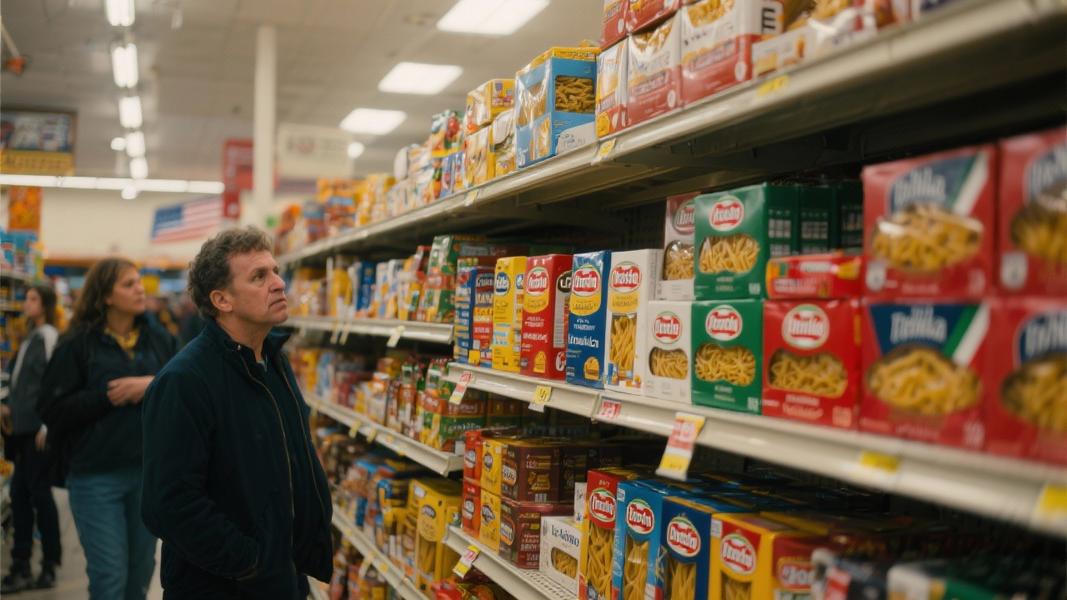
Italian pasta makers are facing a potential financial catastrophe as the U.S. Commerce Department moves toward imposing a 92% duty on imported Italian pasta — which, combined with an existing 15% tariff from the Trump administration, would create a staggering 107% levy that industry leaders call “a deal killer.”
The investigation, launched earlier this year after complaints from American pasta manufacturers, threatens to upend a significant export market for Italian producers. Italy exports approximately €4 billion ($4.65 billion) of pasta annually, with the United States representing about 15% of that total — making it Italy’s second-largest market after Germany.
Trade Tensions Boil Over
EU Trade Commissioner Maros Sefcovic has criticized the combined 107% duty as “unacceptable,” emphasizing the lack of evidence supporting the U.S. decision. The tariffs would represent one of the highest total duties on any product worldwide, a move that has alarmed trade experts and European officials alike.
Italian Agriculture Minister Francesco Lollobrigida told lawmakers in mid-October that the government was working with the European Commission while engaging in diplomatic efforts and supporting legal actions to oppose what many Italians see as unjustified sanctions. “The government is pursuing every possible avenue,” Lollobrigida stated during parliamentary proceedings.
What makes the situation particularly frustrating for Italian producers? The very premise of “dumping” — selling products abroad at artificially low prices — appears contradicted by market realities.
Margherita Mastromauro, president of the pasta makers sector of Unione Italiana Food, pointed out that prices for Italian pasta in the U.S. are already higher than American-made alternatives, which fundamentally undermines the dumping allegations. “The market data simply doesn’t support these claims,” she noted.
A Case of Procedural Missteps?
The Commerce Department’s investigation began after complaints from Missouri-based 8th Avenue Food & Provisions, which owns pasta brand Ronzoni, and Illinois-based Winland Foods, whose brands include Prince, Mueller’s, and Wacky Mac. Two Italian companies — La Molisana and Garofalo — were selected as primary respondents for the investigation.
The White House has defended the Commerce Department’s actions. “After they screwed up their initial responses, the Commerce Department explained to them what the problems were and asked them to fix those problems; they didn’t,” White House spokesperson Kush Desai explained. “And then Commerce communicated the requirements again, and they didn’t answer for a third time.”
The Commerce Department cited misreporting and withholding of information as justification for the 92% duty estimate, claiming the companies presented information incorrectly or withheld it, which significantly impeded their analysis.
Still, some industry insiders suggest the procedural issues mask a broader protectionist agenda. The sanctions would apply retroactively to imports over the 12 months through June 2024 and affect approximately 16% of total Italian pasta imports to the U.S., according to Commerce Department figures.
Economic Impact and Market Concerns
“A duty rate of 107% would definitely kill this flow of export,” warned Lucio Miranda, president of consultancy group Export USA. Speaking from New York, the Italian-born consultant was blunt: “It will definitely be a deal killer.”
Cosimo Rummo, CEO of Pasta Rummo, called the tariffs “completely senseless” in a recent interview. “These are fast-moving consumer goods… Who would ever buy a pack of pasta that costs 10 dollars, the same price as a bottle of wine?”
American retailers specializing in Italian goods are also concerned, though some remain cautiously optimistic about short-term impacts. Robert Tramonte, owner of The Italian Store in Arlington, Virginia, expressed worry over the tariffs but noted that current inventory levels might keep prices stable until at least Easter. He also highlighted the quality difference American consumers have come to recognize: “They’ve tried to make Italian products and use the same ingredients, but the source wasn’t Italy, and they just didn’t taste the same.”
The proposed tariffs represent a significant escalation in trade tensions between longtime allies, leaving both Italian manufacturers and American pasta lovers caught in the crossfire of a battle that seems as much about trade procedures as culinary preferences. For now, the future of authentic Italian pasta on American tables hangs in the balance — along with billions in trade and centuries of gastronomic tradition.
