
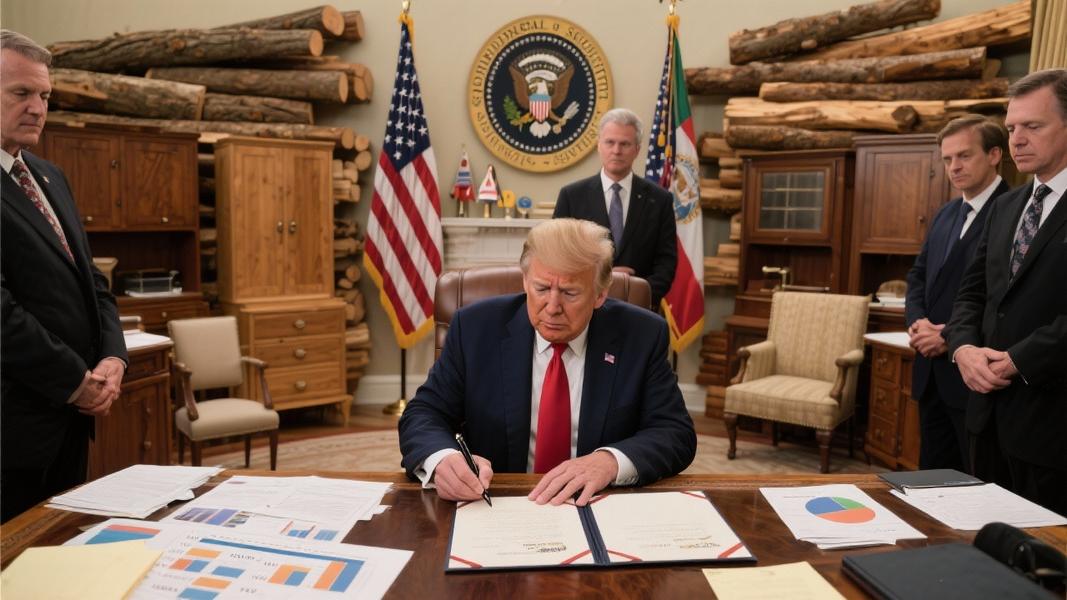
U.S. Slaps New Tariffs on Wood Products, Citing National Security Concerns
Lumber Industry Faces Major Shift as Commerce Department Findings Trigger Trade Action
The Biden administration has imposed sweeping new tariffs on imported timber and wood products, dramatically reshaping the lumber trade landscape in a move officials say is necessary to protect national security.
On October 14, 2025, following a months-long investigation, the administration implemented a 10% tariff on softwood timber and lumber imports, while slapping a heftier 25% duty on upholstered wooden products, kitchen cabinets, and vanities. The action comes after Commerce Secretary Gina Raimondo determined that these imports “threaten to impair national security” under Section 232 of the Trade Expansion Act.
“The domestic timber industry represents a critical component of our manufacturing infrastructure,” said Raimondo when delivering the report to the President on July 1. “Foreign practices have undermined our capacity to maintain essential production capabilities.”
But it’s not that simple. The United States consumes far more lumber than it produces, importing approximately one-third of its needs, with Canada supplying nearly 85% of those imports. The new 10% tariff comes on top of existing duties on Canadian lumber that recently jumped from 14.5% to 35%, creating what industry experts call a “tariff stack” that could dramatically increase costs.
Phased Implementation and Negotiations
While some tariffs took immediate effect in October, the administration has shown flexibility in its approach. The President recently extended the timeline for increasing tariffs on upholstered furniture, kitchen cabinets, and vanities by an additional year, pushing the implementation date to January 1, 2027.
“After considering the information the Trade Representative has provided me, among other things, I determine that it is necessary and appropriate to continue these negotiations and to delay for an additional year the increase in the duty rates,” the President stated in the proclamation.
The Commerce Department investigation began on March 10, 2025, following an Executive Order addressing perceived unfair foreign practices in the timber industry. By July 1, Raimondo had delivered a comprehensive report recommending phased duties to safeguard supply chains.
Can Domestic Production Fill the Gap?
Critics question whether U.S. sawmills can ramp up production quickly enough to meet demand. Industry data paints a concerning picture: American sawmills are currently operating at just 64% of their potential capacity in the first quarter, a figure that has been declining steadily since 2017.
“These tariffs may be well-intentioned, but they ignore the reality on the ground,” said Jerry Howard, CEO of the National Association of Home Builders. “Our members are already struggling with historically high lumber prices, and this action will only exacerbate the housing affordability crisis.”
There is some relief for North American trading partners. Approximately 70% of Canadian lumber and 85% of Mexican exports meet the North American content requirement under USMCA rules of origin, potentially exempting 40% of U.S. imports from the full brunt of duty stacking.
Market Impact and Industry Response
The housing industry has responded with alarm. “This is a tax on American homebuyers at the worst possible time,” said Robert Dietz, chief economist at NAHB. “With housing affordability at historic lows and mortgage rates still elevated, these tariffs will add thousands of dollars to the cost of a new home.”
Lumber futures jumped 8% on the Chicago Mercantile Exchange following the announcement, while shares in major U.S. timber companies like Weyerhaeuser and Potlatch DeltiPoint saw gains of 5% and 7% respectively.
Will the domestic industry rise to meet demand? That remains an open question. With U.S. sawmills operating well below capacity and housing starts projected to increase in the coming year, the gap between supply and demand could widen before it narrows.
For now, builders, manufacturers, and homebuyers alike will be watching closely as this latest chapter in America’s lumber trade saga unfolds—with billions of dollars and hundreds of thousands of jobs hanging in the balance.
