
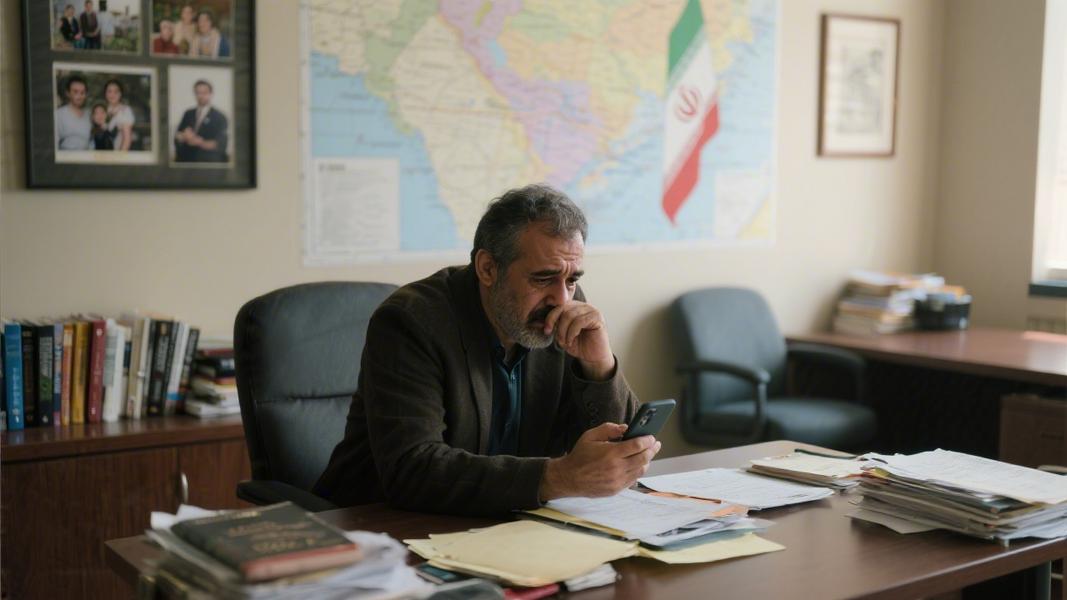
Six Americans are dead. Iran’s supreme leader is gone. And somewhere in Denton, Texas, a philosophy lecturer hasn’t heard from his family in days.
That’s where things stand on Day 3 of the U.S.-Iran war — a conflict that escalated with stunning speed and has already reshaped the geopolitical landscape of the Middle East. U.S. and Israeli forces launched coordinated strikes on February 28, 2026, and within hours, it became clear this wasn’t going to be a limited operation. More than 1,250 targets were hit in the first 48 hours alone. By early March 1, Supreme Leader Ali Khamenei was dead.
A Campaign Unlike Anything in Recent Memory
The scale of the military operation has been staggering, even by modern standards. B-2 stealth bombers, F-35 fighter jets, and MQ-9 Reaper drones have all been deployed across Iranian territory, with strikes concentrated heavily around Tehran. U.S. forces have established air superiority over the capital as of March 2 — a significant tactical milestone that typically signals the next phase of a broader campaign is imminent.
President Trump, for his part, hasn’t tried to minimize the timeline. He’s stated the campaign could last “four to five weeks” with the “capability to go far longer than that.” That’s not the language of a surgical strike. That’s the language of a war.
Six U.S. service members have been killed so far. The number is expected to rise. Still, administration officials have framed the operation as proceeding largely according to plan — though what that plan looks like beyond air superiority remains, at best, murky.
The Death of Khamenei and What Comes Next
Khamenei’s death — confirmed in the early hours of March 1 — sent shockwaves through Tehran and beyond. Iran has declared 40 days of official mourning and a seven-day national holiday, a response that underscores just how seismic the moment is for a country whose entire post-revolutionary identity was bound up in the clerical leadership he represented for more than three decades.
But it’s not that simple. Removing a supreme leader doesn’t remove a government, and it certainly doesn’t remove an ideology. The question of who — or what — fills the vacuum Khamenei leaves behind may well define the next chapter of this conflict more than any airstrike does.
90 Million People, Cut Off
How bad is the information blackout inside Iran right now? Bad enough that a 42-year-old lecturer at the University of North Texas doesn’t know if his family is alive.
Leo Moradi, who left Iran years ago to pursue a degree in philosophy and never went back, told FOX 4 he hasn’t been able to reach anyone since the operations began over the weekend. He’s not alone in that. A severe internet blackout has effectively severed communications for Iran’s 90 million residents, leaving diaspora communities across the United States — and the world — in an agonizing state of silence. No calls getting through. No messages. Nothing. Just waiting, and watching the news, and hoping the next headline isn’t the one you feared.
Moradi’s story is a single thread in what is already becoming a vast human tapestry of this conflict — one that stretches far beyond military briefings and bomb damage assessments. Every airstrike is also someone’s hometown. Every downed communications tower is also someone’s last connection to the people they love.
The Broader Coalition and Regional Stakes
Israel’s involvement in the strikes has complicated the diplomatic picture considerably. Gulf allies, already navigating a delicate balancing act between Washington and Tehran, are under intense pressure. The first 72 hours have made clear that this war — whatever its ultimate objectives — is not going to stay neatly contained within Iranian borders in terms of its regional consequences.
That’s the catch with operations of this magnitude. The military logic can be airtight on paper. The political and humanitarian fallout almost never is.
For now, the bombs are still falling, the internet in Iran is still dark, and Leo Moradi is still waiting for his phone to ring.
