
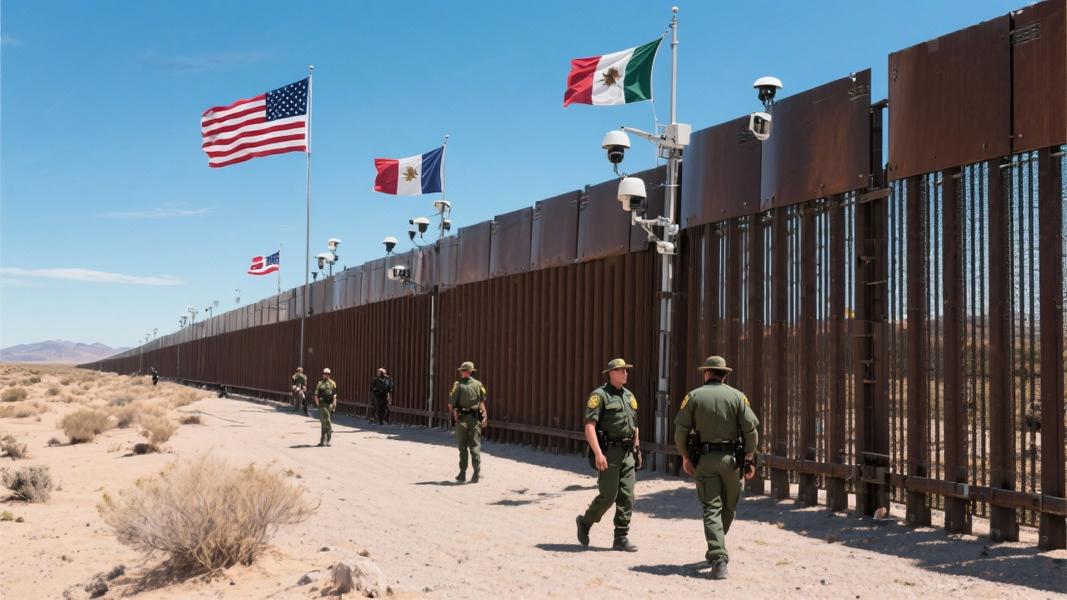
U.S. border crossings plummet to lowest level in over 50 years, federal data shows
Illegal crossings along the U.S.-Mexico border have crashed to their lowest point since the Nixon administration, with Border Patrol agents recording fewer than 240,000 apprehensions in the 2025 fiscal year — a dramatic reversal from the record-setting numbers seen just three years earlier.
The stunning decline comes amid what the White House has called a “sweeping clampdown” on illegal immigration under President Trump’s second administration. By July 2025, monthly encounters had dwindled to approximately 4,600 migrants — representing a staggering 91.8% decrease from the same period a year earlier, according to federal statistics obtained by USAFacts.
Historic Shift in Border Dynamics
The current figures stand in stark contrast to the situation during President Biden’s term, when Border Patrol recorded a historic high of 2.2 million apprehensions in fiscal year 2022 alone. That’s nearly ten times the current annual total.
“President Donald J. Trump’s relentless commitment to securing our homeland has crushed illegal crossings at the southern border to the lowest level in over 50 years — another historic victory for American sovereignty and safety under President Trump’s leadership,” the White House declared in a statement celebrating the figures.
What’s behind this dramatic turnaround? Migration policy experts point to a combination of intensified enforcement efforts on both sides of the border. The implementation of the “Secure the Border” rule has significantly altered migration patterns, while Mexican authorities have simultaneously stepped up their own enforcement operations, according to research from the Migration Policy Institute.
Regional Variations Persist
Despite the overall decline, the impact hasn’t been uniform across the entire 1,954-mile border. The San Diego sector has seen one of the most dramatic reductions in crossings, while El Paso remains a relative hotspot for encounters, though still at levels far below previous years, internal statistics reveal.
CBS News, which first reported on the internal federal data, noted that “unlawful crossings along the U.S.-Mexico border in fiscal year 2025 plummeted to the lowest annual level since the early 1970s, amid the Trump administration’s sweeping clampdown on illegal immigration.”
The dramatic shift raises questions about the sustainability of these policies and their broader humanitarian implications. Human rights organizations have expressed concern about the fate of asylum seekers who may be unable to present their claims under the new enforcement regime.
Looking Ahead
For border communities that have weathered years of fluctuating migration patterns, the sudden calm represents yet another adjustment. Local economies from Brownsville to San Diego have adapted to various immigration policies over decades, with each shift bringing its own economic ripple effects.
Still, the long-term implications remain unclear. Previous historical lulls in migration have eventually given way to new surges, often driven by changing conditions in Central and South America rather than U.S. policy alone.
As one veteran Border Patrol agent put it off the record: “We’ve seen the numbers go up and down before. What matters isn’t just today’s count, but whether we’re building systems that actually work tomorrow.”
