
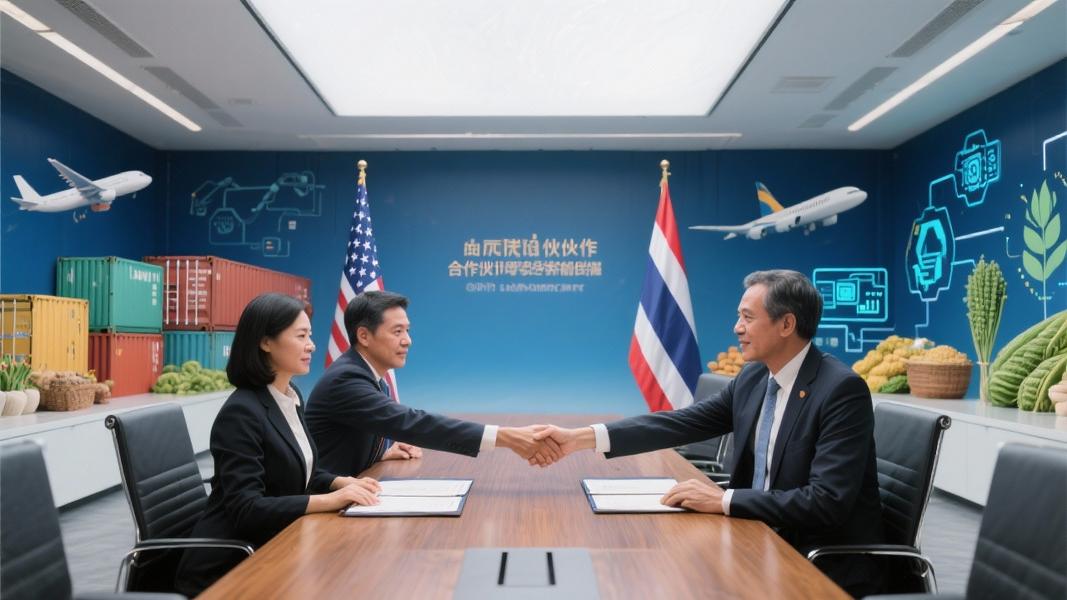
Thailand and the United States are closing in on a landmark reciprocal trade agreement that could reshape commercial ties between the two nations by year’s end. The deal promises to substantially reduce tariffs while expanding market access in both directions.
The agreement marks a significant shift in U.S.-Thai economic relations, coming after the United States initially imposed steep 36% tariffs on Thai goods earlier this year as part of broader efforts to address what it viewed as imbalanced trade relationships. Those tariffs have since been reduced to 19%, according to a recent order that took effect August 7, as documented by KPMG Thailand.
“The Minister of Commerce confirmed in her first policy statement to the Parliament that the Agreement represents a key component of her ‘Quick Big Win’ strategy, designed to expand international market access while safeguarding Thai producers and consumers,” The Legal Co. noted in its coverage of the developing deal.
Why the tariff battle began
What prompted this high-stakes trade negotiation in the first place? The answer lies in Washington’s growing concerns about trade deficits. The White House declared earlier this year that “conditions reflected in large and persistent annual U.S. goods trade deficits constitute an unusual and extraordinary threat to the national security and economy of the United States,” justifying the reciprocal tariff policy through Executive Order 14257.
That initial 36% tariff rate sent shockwaves through Thai export sectors. But following diplomatic engagement and Thailand’s willingness to negotiate, the U.S. reduced the rate to 19% — still significant, but substantially lower than the original figure.
For Thailand, the path forward involves substantial concessions. The kingdom will remove import tariffs on more than 10,000 U.S. items, including specialized foods and medical products, the Hong Kong Trade Development Council reports. This represents one of the most comprehensive tariff reduction packages Thailand has offered to any trading partner in recent years.
Balancing act for both economies
The agreement aims to foster more balanced trade while expanding market access for American goods and services in Thailand, according to analysis from PSL Business Law. For Thai exporters, the reduced 19% tariff rate offers some relief, though it still presents challenges for maintaining competitiveness in the crucial American market.
Both sides appear to be approaching the negotiations with pragmatism. Thailand’s “Quick Big Win” strategy suggests the government sees the agreement as an opportunity to secure improved market access while managing the potential impacts on domestic industries. Meanwhile, the U.S. has demonstrated flexibility by reducing its initial tariff demands.
Still, questions remain about implementation timelines and whether the promised benefits will materialize as expected. Trade experts note that the devil will be in the details, particularly regarding non-tariff barriers and regulatory harmonization.
If finalized by year-end as planned, the agreement would represent a significant diplomatic achievement amid increasing global trade tensions and protectionism. For Thailand, it offers a path to preserve access to its second-largest export market; for the U.S., it addresses long-standing concerns about trade imbalances while potentially opening new opportunities for American businesses in Southeast Asia’s second-largest economy.
