
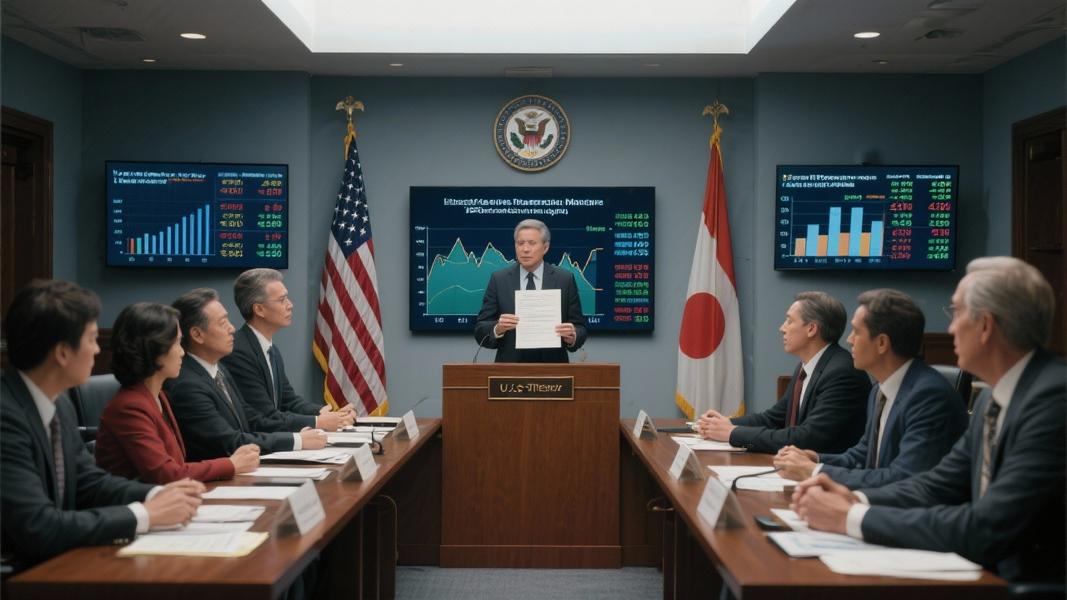
The U.S. Treasury Department has determined that none of America’s major trading partners manipulated their currencies to gain unfair advantages during the year ending June 2025, according to its latest semiannual report to Congress.
The assessment, which covers economies comprising approximately 78 percent of U.S. foreign trade in goods and services, found no violations of exchange rate manipulation criteria established under the Omnibus Trade and Competitiveness Act of 1988. However, the Treasury has placed ten economies on its “Monitoring List” for enhanced scrutiny — with Thailand being the newest addition to a group that already included China, Japan, Korea, Taiwan, Singapore, Vietnam, Germany, Ireland, and Switzerland.
Expanded Monitoring Efforts
What exactly puts a country on this watchlist? The Treasury evaluates major trading partners against three key criteria specified in the 2015 Trade Facilitation and Trade Enforcement Act. These include having a significant bilateral trade surplus with the United States, a material current account surplus, and engaging in persistent, one-sided intervention in foreign exchange markets.
Fifteen major trading partners were found to have bilateral goods and services surpluses of at least $15 billion with the U.S. during the assessment period. That’s a substantial number of economies running significant trade surpluses against America, though the Treasury noted that no single country met all three criteria for enhanced analysis during the four quarters ending December 2024.
The report represents a continuation of the Treasury’s ongoing diplomatic efforts to address currency practices. In recent months, the department has released joint statements with six major trading partners — Japan, Switzerland, Malaysia, Thailand, Korea, and Taiwan — signaling increased engagement on currency and macroeconomic issues.
Consistency Amid Economic Tensions
The findings largely mirror those from previous reports. Nine of the ten economies currently on the Monitoring List were also flagged in the prior assessment, suggesting a degree of stability in the Treasury’s evaluations despite ongoing global economic uncertainties.
Thailand’s addition to the list marks the only significant change in this report’s lineup of monitored economies. The consistency comes at a time when currency valuations remain a sensitive topic in international trade relations, particularly as many countries navigate post-pandemic economic recovery challenges and shifting trade patterns.
The Treasury’s assessment carries significant weight in international economic diplomacy, as being labeled a currency manipulator could potentially trigger trade restrictions or other economic measures. For now, America’s major trading partners have avoided this designation, though the expanded Monitoring List signals that the U.S. continues to closely watch currency practices around the globe.
As global economic headwinds persist, these semi-annual reports will likely remain a crucial barometer of U.S. trade relations and a tool for addressing perceived imbalances in the international monetary system.
