
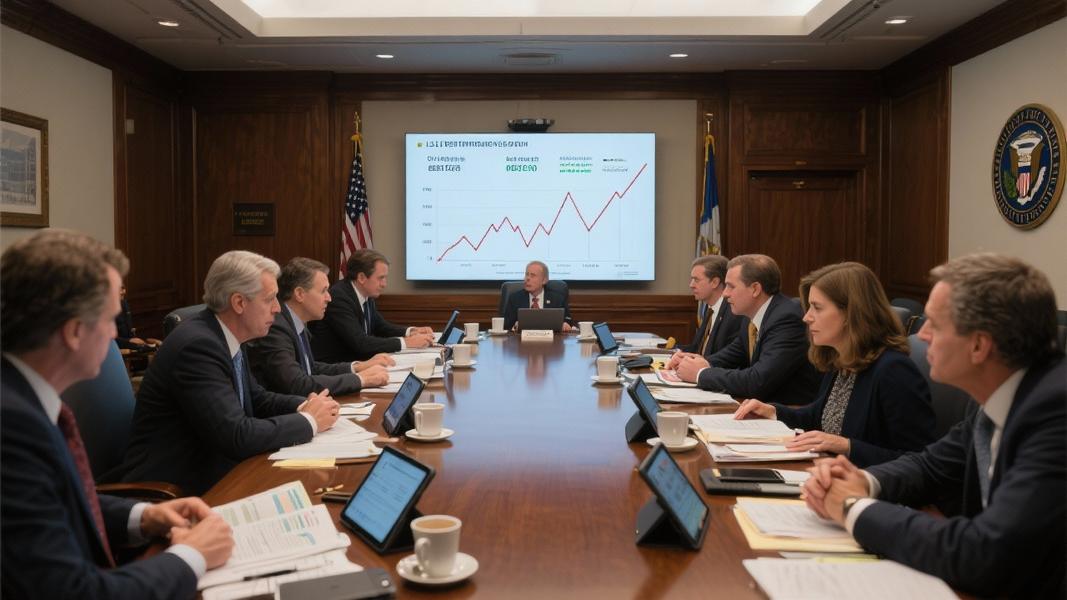
Treasury receipts surged to $5.235 trillion in fiscal year 2025, jumping 6% from the previous year as wage growth and skyrocketing tariff collections padded government coffers. Despite the revenue bump, the federal balance sheet remains deep in the red with outlays reaching a staggering $7.01 trillion.
The figures, released by the Treasury Department this week, highlight the persistent gap between government income and spending, driven largely by climbing interest costs on the national debt and inflation-indexed benefit payments. Customs deposits saw a remarkable 142% increase, reflecting the impact of higher tariff rates that have been a point of contention in trade discussions.
Debt Management Strategy Takes Shape
To address ongoing financing needs, the Treasury has announced a $125 billion securities offering to refund approximately $98.2 billion of notes maturing in mid-November. The package includes $58 billion in 3-year notes, $42 billion in 10-year notes, and $25 billion in 30-year bonds, with auctions beginning November 10.
“The current auction sizes leave Treasury well-positioned to meet projected financing needs through FY2026,” noted feedback from primary dealers, who expect the real crunch to come later. Dealers anticipate larger issuance increases in fiscal years 2027 and 2028, particularly in shorter-term 2-year and 5-year notes.
What’s behind this cautious approach? The Treasury Borrowing Advisory Committee’s analysis suggests that the current issuance mix is near what they call the “efficient frontier” — balancing costs against risks in various economic scenarios.
Cash Balance Hits Trillion-Dollar Mark
In a notable development, the Treasury’s cash balance in its General Account reached $1 trillion on October 30. This massive cash position, consistent with Treasury’s longstanding balance policy, comes as the department prepares for end-of-month obligations and maturing securities.
The Treasury has opted to maintain nominal coupon and floating rate note auction sizes at current levels in the coming quarter, while making a modest $1 billion increase to the December 5-year Treasury Inflation-Protected Securities (TIPS) reopening. This mirrors a similar adjustment made in October, according to committee recommendations.
Meanwhile, the Federal Reserve’s October 29 decision to end redemptions of Treasury securities from its System Open Market Account (SOMA) portfolio aligns with market expectations. The Fed will now reinvest principal payments from agency securities into Treasury bills, helping to align the SOMA portfolio’s composition more closely with overall market proportions.
Funding Markets Under Pressure, But Functioning
Despite recent tightening and higher rates, committee members emphasized that the repo market for Treasury securities has remained “orderly” and “functioned reasonably.” This relative stability comes even as regulatory constraints, increased T-bill issuance, and the trillion-dollar Treasury General Account balance put pressure on reserve balances.
The situation bears watching. While funding markets haven’t seized up, the committee noted that the Federal Reserve has tools at its disposal to address any sustained repo market pressure, should intervention become necessary.
For now, Treasury officials appear content with their current course, maintaining most auction sizes while keeping an eye on long-term financing needs. But as primary dealers’ forecasts suggest, the real test of this strategy may still be a few fiscal years away.
