
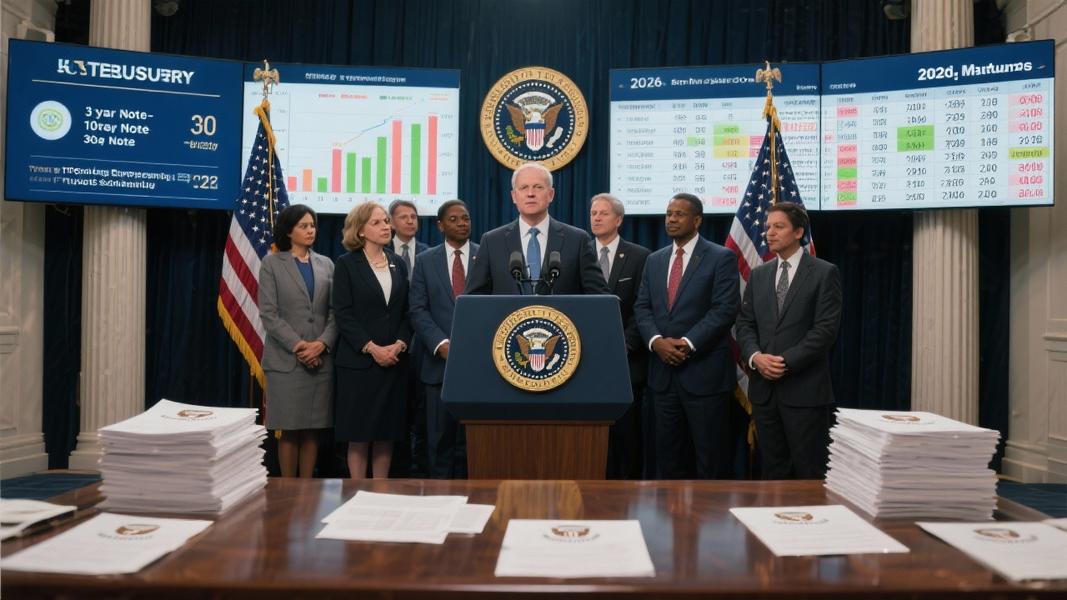
The U.S. Treasury Department is ramping up its borrowing to unprecedented levels, announcing plans to offer $125 billion in securities as part of its quarterly refunding operation — a move that will raise nearly $35 billion in new cash beyond what’s needed to cover maturing debt.
This substantial offering, detailed in Treasury’s February refunding statement, comes as the department faces mounting pressure to finance government operations amid persistent budget deficits. The securities will refund approximately $90.2 billion of privately-held Treasury notes and bonds that mature on February 15, 2026.
Borrowing Surge Continues
Looking at the bigger picture, Treasury officials anticipate borrowing a staggering $1,147 billion over the next two quarters — from October through March. That’s $158 billion more than what was borrowed during the same period last year, according to analysis from budget watchdogs.
Why such aggressive borrowing? The government continues to operate with significant budget shortfalls, requiring constant debt issuance to fund everything from military operations to Social Security payments.
For the current January-March quarter alone, Treasury expects to borrow $574 billion in privately-held net marketable debt. These projections assume an end-of-March cash balance of $850 billion — essentially the government’s checking account balance.
The Refunding Process
The quarterly refunding represents one of the most important regular financial operations conducted by the U.S. government. Each quarter, Treasury announces its funding needs for the next six months, outlining which securities will be offered and when auctions will take place.
Documents for the 2026 first quarter refunding were released on February 2 at 3:00 PM, including financing estimates and economic policy statements to the Treasury Borrowing Advisory Committee (TBAC) — a group of private-sector financial market experts who consult with Treasury officials on debt management strategies.
What’s next? Market participants will be closely watching the next update, scheduled for February 4th at 8:30 AM, when Treasury will provide more detailed information about upcoming auctions and potentially revise its borrowing estimates based on the latest economic data.
Treasury publishes a variety of documents and data related to its borrowing and debt management policies through this quarterly process, making it a critical window into the government’s financial operations for investors, economists and policymakers alike.
As the national debt continues to climb past $34 trillion, these quarterly refunding announcements have taken on heightened importance in financial markets, with each new borrowing projection potentially influencing interest rates, inflation expectations, and the value of the dollar.
