
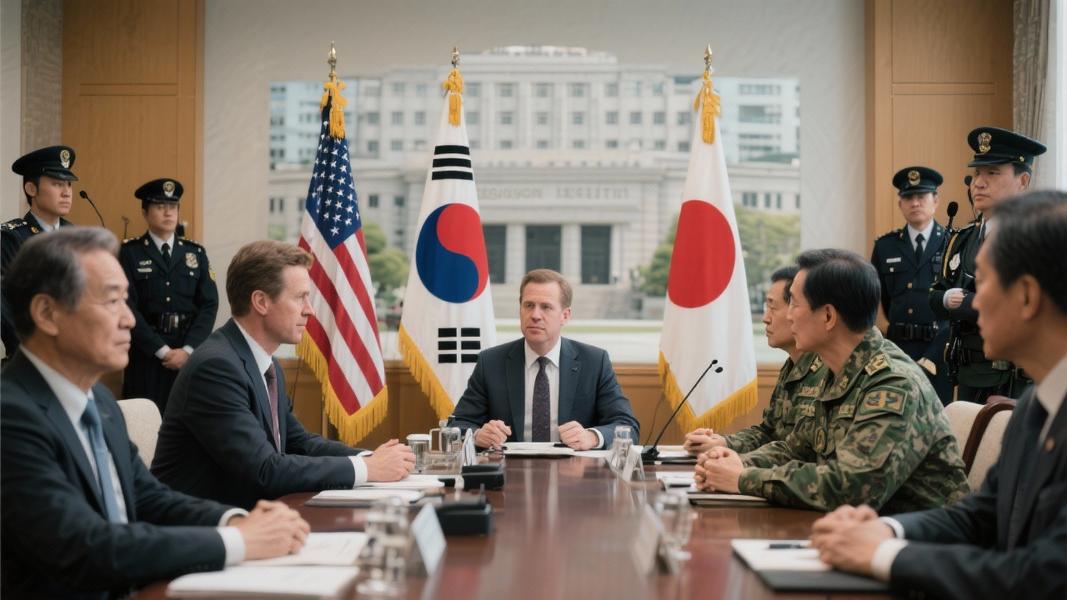
U.S. Under Secretary Elbridge Colby has urged American allies in Asia to substantially boost their defense spending, calling for commitments of up to 5% of GDP as part of Washington’s evolving National Defense Strategy.
During a high-profile tour of South Korea and Japan this week, Colby praised Seoul’s recent decision to increase military expenditure while pushing for a broader rebalancing of defense responsibilities among U.S. partners in the region. The diplomatic push comes as the Pentagon finalizes its 2026 National Defense Strategy, which reportedly calls for allied nations to shoulder more of the collective security burden in the Indo-Pacific.
Seoul’s “Clear-Eyed Realism” Draws Praise
Colby specifically lauded South Korean President Lee Jae Myung’s commitment to raise defense spending to 3.5% of GDP, calling it a “very wise and realistic decision” during meetings with senior officials in Seoul. The under secretary’s visit, first reported by South Korean media, signals growing American expectations for allies to take on expanded roles in regional security.
“Such adaptation, such clear-eyed realism about the situation that we face and the need for greater balance in the sharing of burdens will ensure that deterrence remains credible, sustainable and resilient in this changing world,” Colby stated during his visit. He emphasized that President Lee’s decision to expand responsibility for conventional defense on the Korean Peninsula would strengthen the alliance at a critical juncture.
What’s driving this push for increased spending? The forthcoming 2026 National Defense Strategy reportedly sets an ambitious target of 5% of GDP for defense spending among key allies, according to Japanese media sources. That figure represents a significant jump from current expenditure levels across most U.S. partners in Asia.
Japan Discussions Center on Alliance Capabilities
Following his South Korea stop, Colby traveled to Tokyo where he met with Japanese Vice Foreign Minister Takehiro Funakoshi. The two officials “concurred on reinforcing the Japan-U.S. Alliance capabilities” according to a statement released after their discussions.
Colby’s itinerary also included a January 28th visit to Japan’s Ministry of Defense for meetings with Vice-Minister Yamato, as confirmed by the ministry. While specific commitments from the Japanese side weren’t immediately disclosed, the talks likely centered on Tokyo’s response to the Pentagon’s calls for increased defense spending.
The diplomatic push comes amid growing concerns about regional stability and questions about long-term U.S. military sustainability across multiple theaters. Defense analysts note that Washington’s strategy increasingly relies on allies developing more robust independent capabilities while maintaining interoperability with American forces.
Still, the ambitious 5% GDP target may face political headwinds in both South Korea and Japan, where domestic priorities and fiscal constraints could complicate implementation. South Korea’s 3.5% commitment, while falling short of the reported American target, represents one of the stronger responses among U.S. allies to date.
As the Pentagon finalizes its 2026 strategy, these high-level diplomatic exchanges signal that burden-sharing will remain at the forefront of America’s approach to Asian security architecture — with allies increasingly expected to foot more of the bill for their own defense.
