
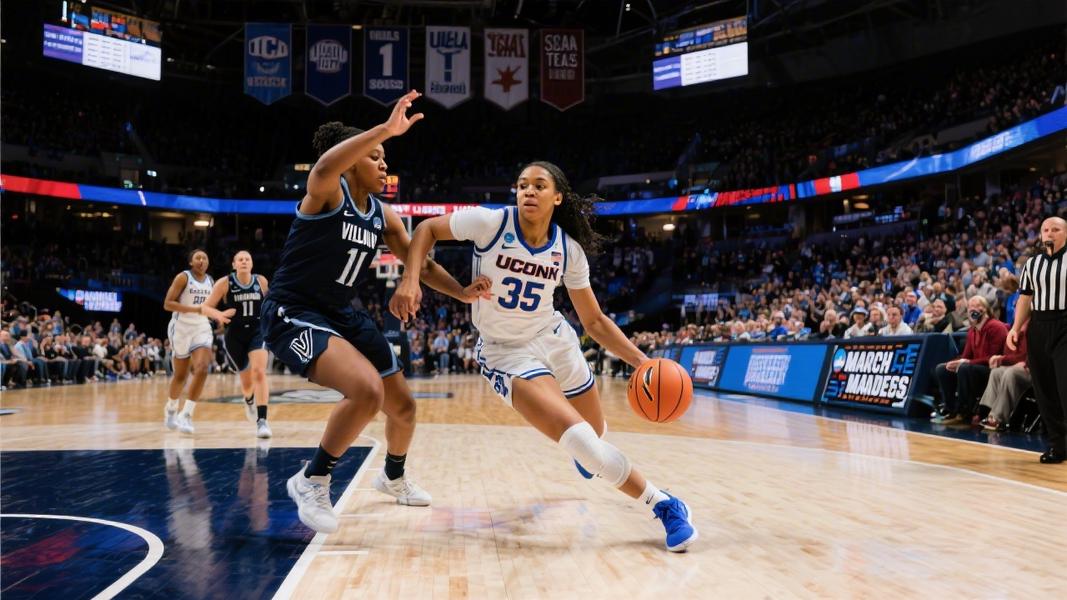
UConn is back on top — all the way on top. The Huskies claimed the overall No. 1 seed in the 2026 Women’s NCAA Tournament bracket, edging out a surging UCLA squad in what came down to a committee vote on Selection Sunday, March 16.
It’s the kind of distinction that carries weight in women’s college basketball, where seeding lines can shape an entire tournament path. UConn, a perfect 34-0 entering the field, earned the top spot for the 23rd time in program history — and the first since 2021. The bracket also confirmed what had been widely expected for weeks: UCLA, Texas, and South Carolina rounded out the four No. 1 seeds, setting up what could be the most competitive women’s tournament in years, as CBS News reported.
A Close Call at the Top
Don’t let the clean narrative fool you — this wasn’t a runaway decision. NCAA selection committee chair Amanda Braun said the debate between UConn and UCLA was tight from start to finish. “The debate was pretty close the whole time between the two teams,” Braun explained. “Went to a committee vote, watched a lot of UCLA and UConn — the vote went to UConn. The observable component is the way we watched UConn win throughout the year. UCLA did a lot of winning as well. The committee felt the observable component gave UConn the edge.”
That “observable component” is a polite way of saying: UConn looked dominant, week after week, against everybody. The Huskies, led by sophomore sensation Sarah Strong — who averages more than 18 points and 7 rebounds per game — and sharpshooting guard Azzi Fudd, never lost. Not once. They open tournament play against 16th-seeded UTSA in the Fort Worth Regional, a matchup that, on paper, isn’t exactly a nail-biter. The NCAA noted as far back as the March 1 top-16 reveal that there wasn’t much daylight separating the field’s elite teams — but UConn sat at the top then, too.
Head coach Geno Auriemma, never one to get swept up in seeding ceremonies, kept his perspective measured. “We have been in that situation before, not that much different than being a No. 2 seed or a No. 1 seed somewhere else,” he said. “I think it is important that we recognize that there are a lot of good teams out there and there are times I felt like we deserved a No. 1 seed based on our wins, our record, who we have beaten and it didn’t pan out that way. This year it did.”
UCLA’s Rise and the Big Ten’s Historic Haul
UCLA at 31-1 is no consolation prize. The Bruins, anchored by do-everything center Lauren Betts, won 25 consecutive games after their only loss — a road defeat to Texas — and looked every bit like a team capable of cutting down nets in April. Their bracket places them in a region that includes No. 2 LSU, No. 3 Duke, and No. 4 Minnesota. There’s no easy path there.
The broader storyline surrounding UCLA’s bracket? The Big Ten’s unprecedented presence in the field. The conference landed 12 teams — a record — signaling a seismic shift in the sport’s power structure that Fox Sports had previewed heading into Selection Sunday. The Big Ten, long seen as a football-first league, is now a legitimate women’s basketball empire. Minnesota at No. 4 in a No. 1 seed’s region is just one example of how deep the conference runs this year.
In the AP Top 25 on March 10, UCLA had even managed to chip away at UConn’s unanimous No. 1 status, collecting three first-place votes while UConn held 28 — a sign of just how seriously the Bruins were being taken down the stretch, as Fox Sports covered.
Texas and South Carolina Round Out the Top Line
Then there’s Texas. The Longhorns — 31-3 on the season — made perhaps the loudest statement of the final weeks by winning the SEC Tournament and beating South Carolina twice during the regular season. That résumé was enough to vault them to the third overall seed and a spot in the Fort Worth Regional alongside No. 2 Michigan, No. 3 Louisville, and No. 4 West Virginia. Deadspin confirmed their placement among the four No. 1 seeds following Sunday’s reveal.
South Carolina, meanwhile, continues a streak that borders on absurd. The Gamecocks — 31-3 — claimed the No. 1 seed in the Sacramento Regional for the sixth consecutive season. Dawn Staley’s program has become so reliably positioned at the top of the bracket that it almost goes without saying. Their region features No. 2 Iowa, No. 3 TCU, and No. 4 Oklahoma. Conference representation across the full field tells its own story: the SEC placed 10 teams, the ACC nine, and the Big 12 eight.
Three Weeks, No Shortcuts
So who wins it all? That’s the question everyone’s asking — and, frankly, the one nobody can honestly answer right now. The final NET rankings entering the tournament had UConn first, UCLA second, South Carolina third, and Texas fourth, as Female Athlete News had documented. But seeds don’t win championships. Games do.
Auriemma, for his part, seemed almost amused by the pre-tournament chatter. “When you break it all down, in the next three weeks, if we are lucky enough to play all three weeks, you have to beat the best teams,” he said. “It doesn’t matter if you are the 1, 2, 3 or whatever (seed) you are. There are some teams in there that we have already played or just recently played. Everybody is going in front of the media and say our bracket is the toughest, what our matchups are and it is just pointless.” Boston25 News had noted that projections had locked in these four programs long before the official reveal, making the bracket announcement feel more like a formality than a surprise.
Still, there’s something worth sitting with here. UConn is perfect. They haven’t lost. And yet the committee nearly gave the top overall seed to someone else. That’s not a knock on the process — it’s a testament to just how good women’s college basketball has become in 2026. Four teams could plausibly win a national championship. Maybe five. The sport doesn’t have a clear heir apparent anymore. It has a tournament.
As Auriemma might say — it’s not pointless at all. It’s exactly the point.
