
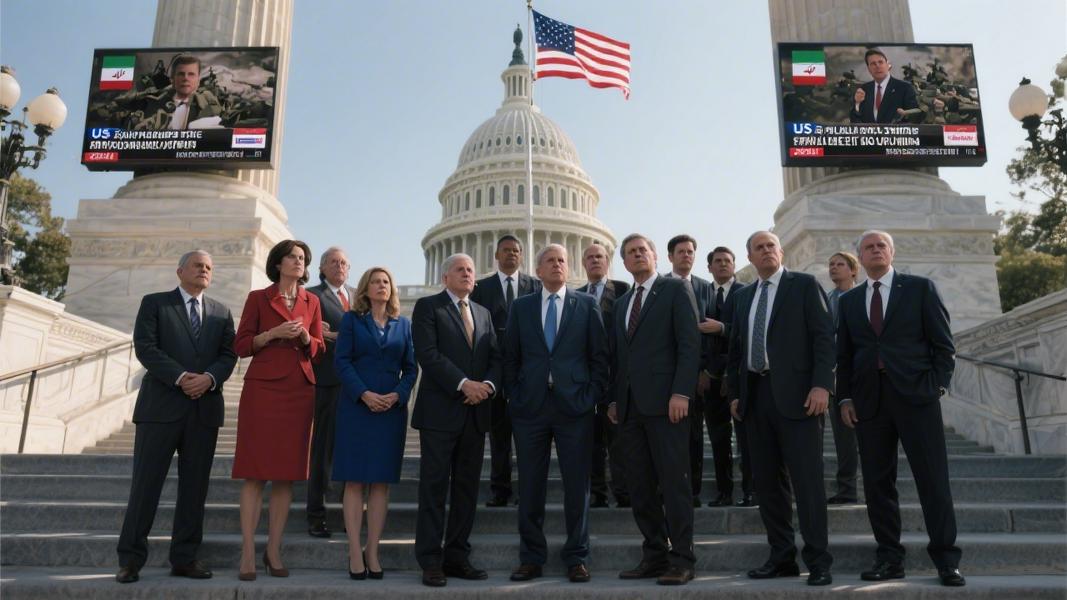
The United States and Israel have launched a sweeping military campaign against Iran — and the White House isn’t mincing words about what it wants to happen next.
In a dramatic escalation that has sent shockwaves through the Middle East and beyond, President Donald Trump announced the joint operation on February 28, 2026, framing it not merely as a targeted strike but as a full-scale campaign to dismantle Iran’s military infrastructure and, ultimately, bring down the Islamic Republic’s government. The operation, dubbed Operation Epic Fury by the Pentagon and Operation Roaring Lion by the Israel Defense Forces, marks one of the most consequential military actions in the region in decades.
What Was Struck — and Where
The strikes weren’t limited to one or two high-profile targets. Coordinated attacks hit locations across Tehran, Isfahan, Qom, Karaj, and Kermanshah — a geographic spread that signals the breadth of what both governments are calling a comprehensive degradation campaign. The IDF said it struck “hundreds of Iranian military targets, including missile launchers in western Iran,” acting on intelligence guidance from within its own ranks.
Trump, never one for understatement, made the mission’s ambitions crystal clear. “We are going to destroy their missiles and raze their missile industry to the ground,” he declared. Early reports indicated that initial strikes landed near the offices of Iran’s Supreme Leader — a detail that, if confirmed, would represent a pointed and deliberate message to Tehran’s highest authority.
Weeks in the Making
This didn’t happen overnight. The joint operation followed weeks of extensive planning between Washington and Jerusalem — coordination described by officials as unprecedented in its depth and complexity. That kind of logistical groundwork suggests this was no impulsive strike. Both governments appear to have been building toward this moment methodically, even as public attention remained fixed elsewhere.
Still, the sheer scale of what unfolded caught many observers off guard. Hitting hundreds of targets across multiple cities in a single operation is not a surgical strike — it’s a campaign. And Trump’s language made it hard to argue otherwise. The White House confirmed U.S. participation in what the Pentagon formally classified as a “major combat operation.”
Regime Change on the Table
Here’s where it gets complicated. Beyond the military objectives — destroying missile infrastructure, setting back nuclear development — Trump went a step further, publicly calling on the Iranian people to overthrow their government once the fighting subsides. That’s a significant rhetorical leap, one that blurs the line between a targeted military strike and something that looks a lot more like a regime-change operation.
The response from foreign policy analysts has been intense, with questions swirling about what comes next — diplomatically, militarily, and politically. Iran has not historically responded to external pressure by collapsing inward. But the scale of destruction being reported, if it holds, could represent a genuinely different kind of pressure than Tehran has faced before.
A New Chapter — Or an Old Nightmare?
What does a post-strike Iran look like? Nobody really knows yet. The IDF’s framing of “Roaring Lion” suggests a confident, forward-leaning posture from Israel, which has long viewed Iran’s missile program as an existential threat. The strikes on western Iranian missile launchers, in particular, directly address what Israeli defense officials have called their most urgent concern — the ability of Iran to project lethal force across the region.
But it’s not that simple. Military campaigns that begin with overwhelming force don’t always end on the attacker’s terms. The broader consequences — for oil markets, for regional allies, for the Iranian population caught in the middle — remain deeply uncertain. What is clear is that the United States and Israel have crossed a threshold that can’t be uncrossed.
As one analyst put it quietly after the first wave of strikes: the question was never whether this would happen. The question was always what happens the morning after.
