
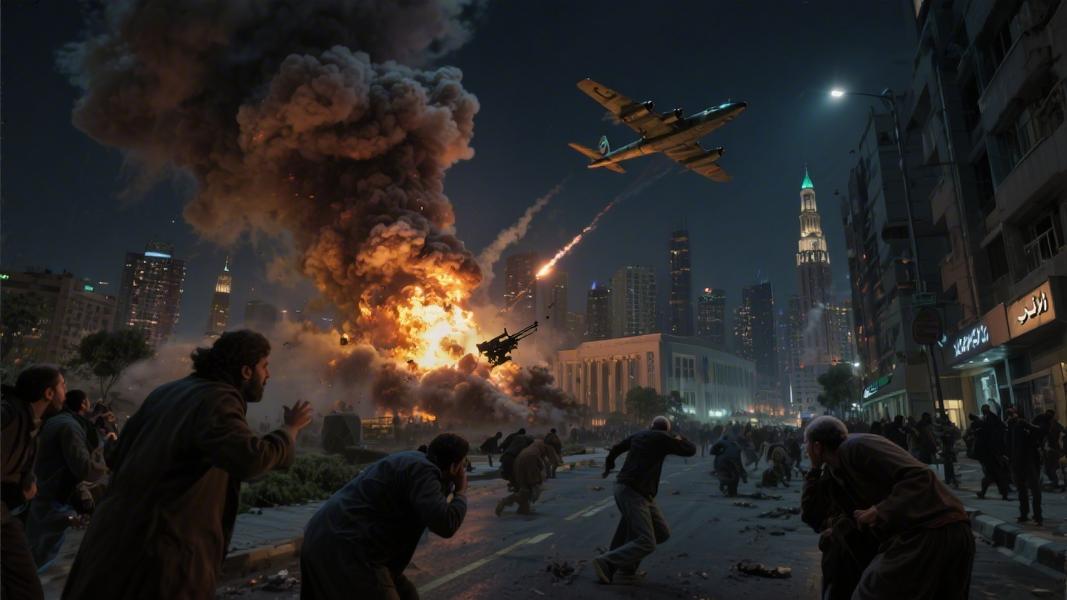
The Middle East crossed a threshold on Saturday that many had feared for years and few believed would actually come. The United States and Israel launched coordinated military strikes against Iran on February 28, 2026, hitting multiple cities in what both governments described as a necessary and decisive blow against a regime they say poses an existential threat to regional and global stability.
What Happened — and Where
The strikes weren’t limited to a single facility or symbolic target. Cities across Iran were hit, including Tehran, Isfahan, Qom, Karaj, and Kermanshah — a geographic spread that signals the operation was designed to be sweeping, not surgical. Israel’s military dubbed its campaign “Roaring Lion.” The U.S. Department of Defense went with something more cinematic: “Operation Epic Fury.” The names alone tell you something about the tone each government was going for.
The targets, according to early reports, included key military installations and regime infrastructure. This wasn’t a warning shot. As CBS News reported, the strikes were described as an effort at “undertaking a massive and ongoing operation to prevent this very wicked, radical dictatorship from threatening America and our core national security interests.” The language was blunt, almost deliberately so.
A Long Time Coming
How long has this been building? Decades, depending on who you ask. But the more immediate pressure has been Iran’s nuclear ambitions, its proxy network stretching from Lebanon to Yemen, and a series of escalations that left diplomacy looking increasingly like theater. The joint nature of the assault — American and Israeli forces operating in concert — documented extensively in real time, marks a fundamental shift from the years of coordinated pressure campaigns, sanctions, and covert operations that preceded it.
Still, the scale of what unfolded Saturday is difficult to overstate. Multiple Iranian cities struck in a single night. Two of the world’s most capable air forces operating together over sovereign Iranian airspace. Whatever comes next, the old framework — deterrence, ambiguity, plausible deniability — is gone.
The Immediate Fallout
Early footage and communications out of Iran painted a chaotic picture. Tehran, a city of nearly 10 million people, was among the primary targets. The strikes hit what officials characterized as military and regime sites, though independent verification of damage and casualties remained limited in the hours that followed. Video circulating online and captured by journalists on the ground showed large explosions and smoke rising over urban areas.
Iran’s government had not issued a formal public response as of the initial reports, though that silence is unlikely to last. Tehran has long promised retaliation for any direct military strike on its soil — and now that promise is being put to the test in the most serious way imaginable.
What It Means
That’s the question rattling around every foreign ministry, every intelligence service, every newsroom right now. A strike of this magnitude doesn’t end a conflict — it begins one, or at least transforms it into something far harder to contain. Iran’s allies, its proxies, its missile arsenals: all of it is now a live variable in a situation that was already volatile enough to keep analysts up at night.
It’s also worth noting the domestic dimension. For the United States, launching a major military operation against Iran is a decision with enormous political, legal, and human consequences. The authorization, the intelligence behind the target selection, the contingency planning for what happens next — all of that will face intense scrutiny in the days ahead. It always does. And it should.
For now, the world is watching a region that’s no stranger to war absorb the opening act of something that doesn’t yet have a name — only two code names, and a very long list of unanswered questions.
